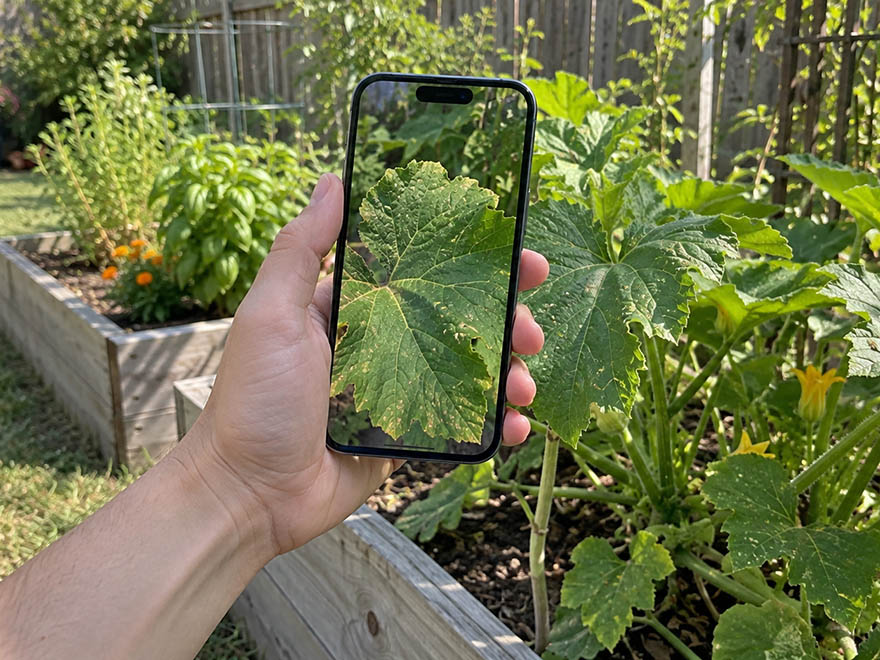
You have a plant in your yard and no idea what it is. Maybe it appeared on its own, maybe it came with the house, and maybe your cat keeps chewing it. You want a name, and you want to know if it is safe. You can identify a plant from a photo for free in about a minute, and this guide shows how, plus the safety check most people skip.
TL;DR: To identify a plant from a photo for free, use a free plant ID app or a reverse image search, take clear photos of the leaves, flowers, and whole plant, then confirm the result against a trusted source before you act.
How to identify a plant from a photo for free
Take good photos first, because the ID is only as good as the picture. Snap three shots: a close-up of a single leaf, the flower or fruit if there is one, and the whole plant in its setting.
Then use one of these free methods.
- A free plant identification app. Several apps let you point your camera and get a name in seconds. Most give a free identification, though some push a paid plan for extra features.
- A reverse image search. Upload your photo to a general image search tool. It matches your plant against millions of photos online.
- A gardening community. Post your clear photos to a gardening forum or subreddit. Real people are often faster than software at odd plants.
Always cross-check. Apps guess, and a confident wrong answer is common. Match the app result against a second photo online before you trust it.
Why one photo is not enough
The best identification uses more than a single leaf. Software reads shape, color, leaf edges, flower structure, and growth habit together. A lone leaf can match a dozen plants.
Give the tool context. Photograph the leaf top and underside, the stem, any flowers or berries, and how the plant grows overall. A trailing vine and an upright shrub can share a leaf shape but nothing else.
If the plant has flowers or fruit, that is your best clue. Flower structure is far more distinctive than foliage, so a bloom photo lifts your accuracy the most.
Is this plant toxic to cats? Check before you relax
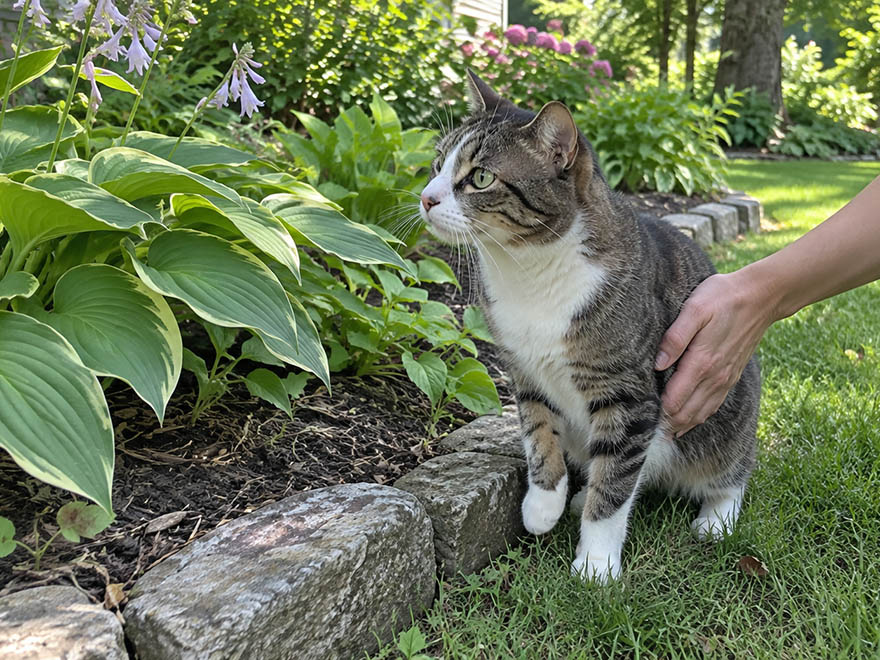
If you have pets, name the plant, then check its toxicity right away. A free plant ID gives you the name, but it does not always warn you about danger.
Hostas are toxic to cats. They contain saponins and can cause vomiting, diarrhea, and low energy if a cat eats them. The upset is usually mild, but it is real.
True lilies are the serious one. Asiatic lilies, Easter lilies, and daylilies can cause sudden kidney failure in cats, and even the pollen or the vase water is dangerous. Not every plant called a lily is a true lily, so confirm the exact type. If your cat has eaten any part of a lily, treat it as an emergency. Call a vet or the ASPCA Animal Poison Control line at (888) 426-4435 right away.
For a full safety check, look the plant up on the ASPCA toxic and non-toxic plant list after you identify it. It is free and covers hundreds of common plants.
What to do once you know the plant
A name is just the start. The real question is what the plant needs, or whether it belongs in your garden at all. This is where identification and care split apart.
If it is a weed, pull it before it seeds. If it is a volunteer vegetable or herb, you may have a free plant to grow on. If it is a keeper, look up its light, water, and spacing needs and give it a spot that fits. Our garden sun mapping guide helps you check the light.
If the plant looks sick rather than mysterious, identification apps often miss the cause. Our guide to how to identify plant diseases walks through the early signs. For chewed leaves and bugs, our common garden pests guide helps you match the damage to the culprit.
Best photos for which plants
- Leafy plants and grasses. Shoot a single leaf flat, plus the whole clump for growth habit.
- Flowering plants. Get one sharp flower head straight on. This is the strongest clue.
- Vines and climbers. Capture how it attaches and climbs, not just the leaves.
- Trees and shrubs. Photograph the bark, a leaf, and the overall shape from a few steps back.
- Vegetable volunteers. Photograph the seed leaves and first true leaves together. Our companion planting guide helps you place a keeper crop well.
New to growing what you found? Our first vegetable garden guide covers the basics of getting a keeper plant established.
From "what is this" to "what do I do"
Identifying a plant answers one question. Growing it well answers a harder one. easyDacha is not an ID app. It tells you what to do and when, once you know what you are growing.
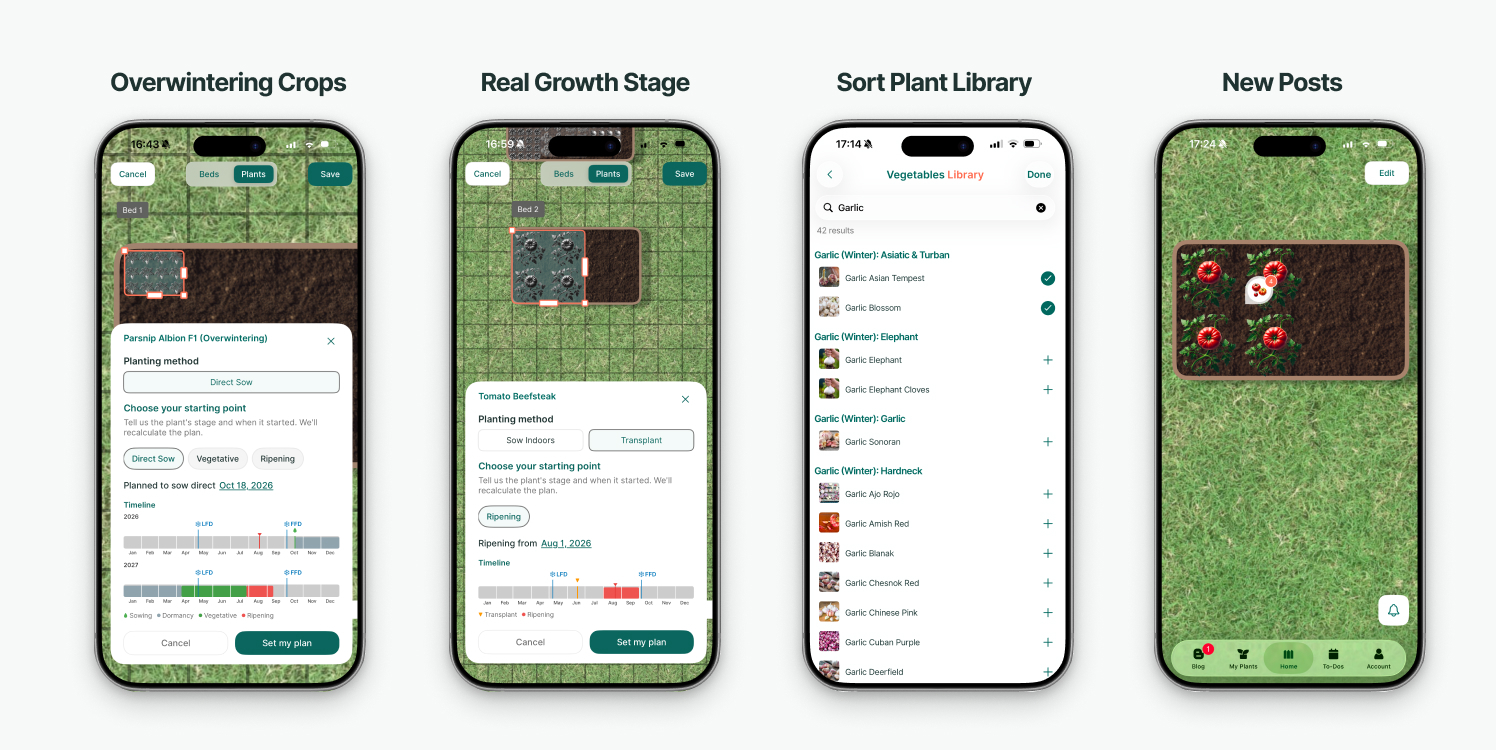
Add a plant to your garden in the garden planner app and it builds a full care plan from your ZIP code. You get exact planting dates, a two-week task list tied to your beds, and reminders before each job. If your plant is not in the library, add it as a custom plant and it still gets a plan.
Try easyDacha, the gardening app that turns a plant name into a season-long plan. Cancel anytime.
FAQ
How do I identify a plant from a photo for free?
Take clear photos of a leaf, a flower, and the whole plant, then run them through a free plant identification app or a reverse image search. Confirm the result against a second trusted source before you act on it.
What is the best free plant identification app?
The best free plant identification app is the one that gives a clear result and lets you check details without paying. Most free apps identify common plants well, but accuracy drops on rare species, so always cross-check the name.
Is this plant toxic to cats?
Many common garden and house plants are toxic to cats, including hostas and true lilies. After you identify a plant from a photo, look it up on the ASPCA toxic plant list. If your cat ate a lily, call a vet immediately, since lilies can cause kidney failure.
Are hostas toxic to cats?
Yes, hostas are toxic to cats. They contain saponins that can cause vomiting, diarrhea, and low energy. The reaction is usually mild, but keep curious cats away from hosta beds and watch for symptoms if they nibble.
Is there an app that tells me how to care for a plant, not just its name?
Yes. easyDacha is a garden planner app that focuses on care, not identification. Once you know what you are growing, it builds a personalized plan with planting dates and a two-week task list for your exact location.