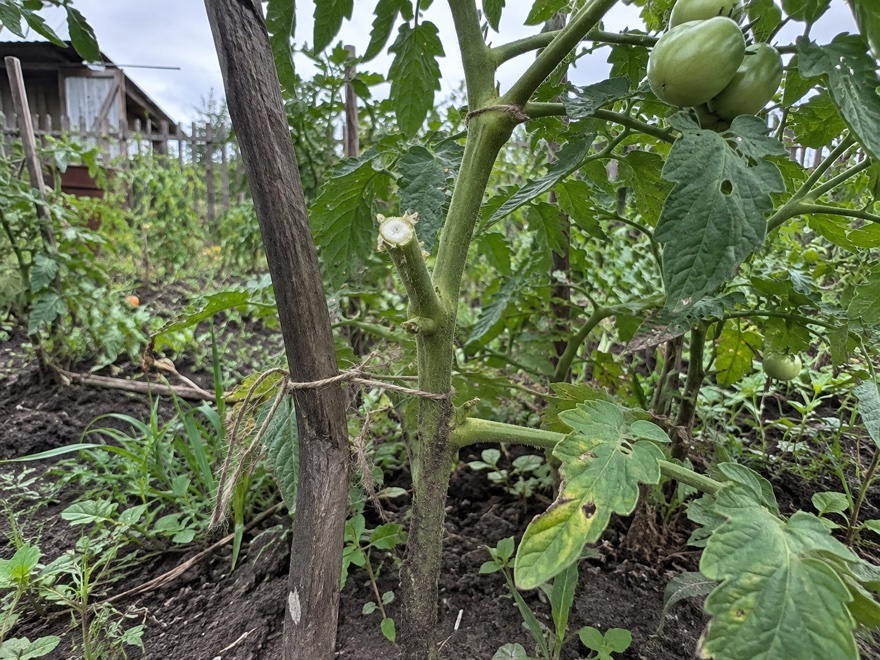
Every time you pull a sucker off a tomato plant or prune back a diseased-looking branch, you leave an open wound that bacteria and fungal spores can move straight into. An iodine and hydrogen peroxide antiseptic spray, the same idea as a first-aid kit for people, gives you a fast way to disinfect that fresh cut and cut off early bacterial and fungal infections before they take hold.
TL;DR: For an iodine hydrogen peroxide plant spray, mix a few drops of 5% iodine with hydrogen peroxide and a pinch of citric acid in water, then use it as a preventive foliar spray or dab it directly on fresh pruning cuts to guard against bacterial infection, early powdery mildew, and Botrytis.
The recipe
For 1 quart (1 L) of water:
- 5 to 6 drops of 5% iodine tincture, the standard pharmacy antiseptic solution
- ¾ cup (200 mL) of 3% hydrogen peroxide, the common household strength sold at any pharmacy
- A pinch of citric acid, to stabilize the mixed solution
Mix it: Combine the water and hydrogen peroxide first, then add the iodine drops and citric acid, stirring gently. Pour into a clean spray bottle for foliar use, or keep a small amount in a separate container for dabbing directly onto cuts.
Shelf life: Mix fresh for each use. Hydrogen peroxide breaks down over time, even in a sealed bottle, so a solution that has been sitting for more than a day or two loses much of its antiseptic strength.
How to apply
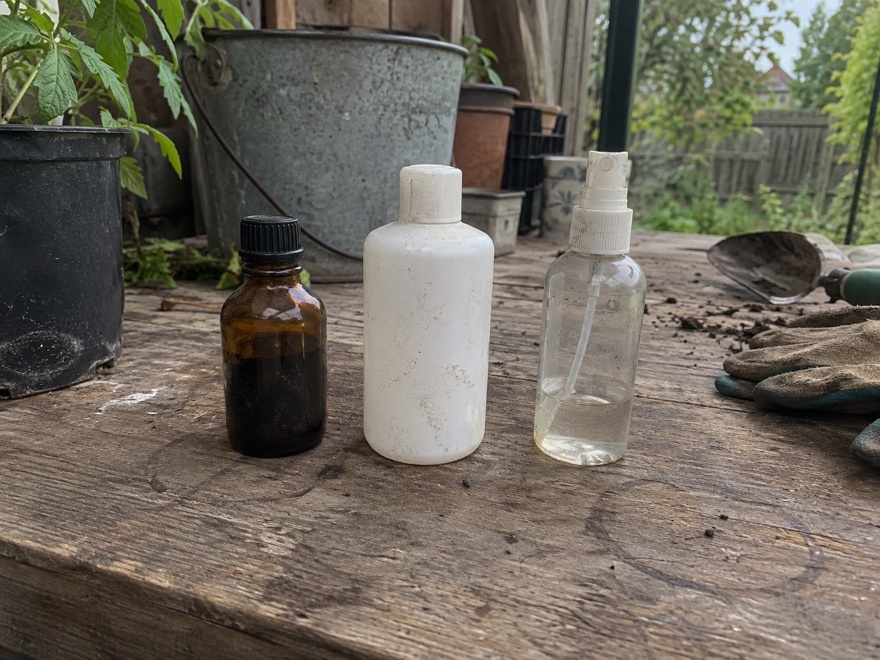
For fresh pruning cuts, dab the solution directly onto the cut surface right after you remove a sucker, branch, or diseased leaf. This is the moment when the plant is most vulnerable to opportunistic infection, and treating it immediately makes the biggest difference.
For preventive foliar use, spray the solution lightly over the whole plant, covering both the top and underside of the leaves, as a general precaution during humid or disease-prone stretches of the season.
The iodine and hydrogen peroxide combination works through direct antimicrobial and antiseptic action, killing bacteria and fungal spores on contact rather than through a systemic mechanism. The citric acid keeps the mixed solution stable so the iodine and peroxide do not degrade each other too quickly once combined.
Use this spray as needed after pruning sessions rather than on a fixed weekly schedule, since it is tied to specific pruning events more than a calendar. Keeping track of every pruning session across multiple tomato, pepper, and cucumber plants, and remembering to treat each fresh cut, is easier with a running task list. easyDacha's care plan includes pruning and maintenance tasks for each plant, so you know exactly when a plant is due for suckering and can treat the cuts right away. Download and try easyDacha, a garden planner app that keeps your full maintenance schedule in one place.
Expect fresh cuts to heal cleanly without the dark, wet-looking infection that sometimes follows unprotected pruning, and preventive sprays to reduce the early appearance of powdery mildew or gray mold spots.
Why this spray works
Iodine is a broad-spectrum antiseptic that kills bacteria and many fungal spores on contact, which is why it has been a staple first-aid antiseptic for people for over a century.
Hydrogen peroxide releases oxygen as it breaks down, which also has an antimicrobial effect and helps clean the wound surface of debris and microbial buildup.
Citric acid stabilizes the combined solution, since iodine and hydrogen peroxide can otherwise react with and weaken each other faster once mixed together, shortening how long the solution stays effective.
Is this safe for plants?
Yes, this spray is safe for plants at the concentrations above, using the same over-the-counter strengths sold for human first aid. Neither iodine tincture nor hydrogen peroxide at these dilutions is a systemic fungicide replacement, but both are effective as contact antiseptics.
- Use only 5% iodine tincture and 3% hydrogen peroxide, the standard drugstore strengths, not stronger concentrations
- This spray does not replace a systemic fungicide once an infection has already spread through the plant's tissue; it works best as prevention and immediate wound care
- Store the components labeled and away from children, since these are pharmacy products
- Apply to cuts promptly after pruning rather than waiting, since the wound is most vulnerable in the first few hours
What NOT to do
Don't use a stronger iodine or peroxide concentration hoping for a bigger effect. The standard 5% iodine and 3% peroxide strengths are calibrated for this use; stronger concentrations risk damaging plant tissue.
Don't wait to treat a fresh cut. The window right after pruning is when the plant is most vulnerable to infection, so treat cuts immediately rather than at the end of a pruning session.
Don't rely on this spray alone for an already-spreading infection. This is a preventive and first-response tool, not a substitute for a systemic treatment once disease has taken hold.
Don't mix a large batch to store for later. Hydrogen peroxide degrades quickly once mixed with the other ingredients, so make only what you need for the current session.
Best for which plants
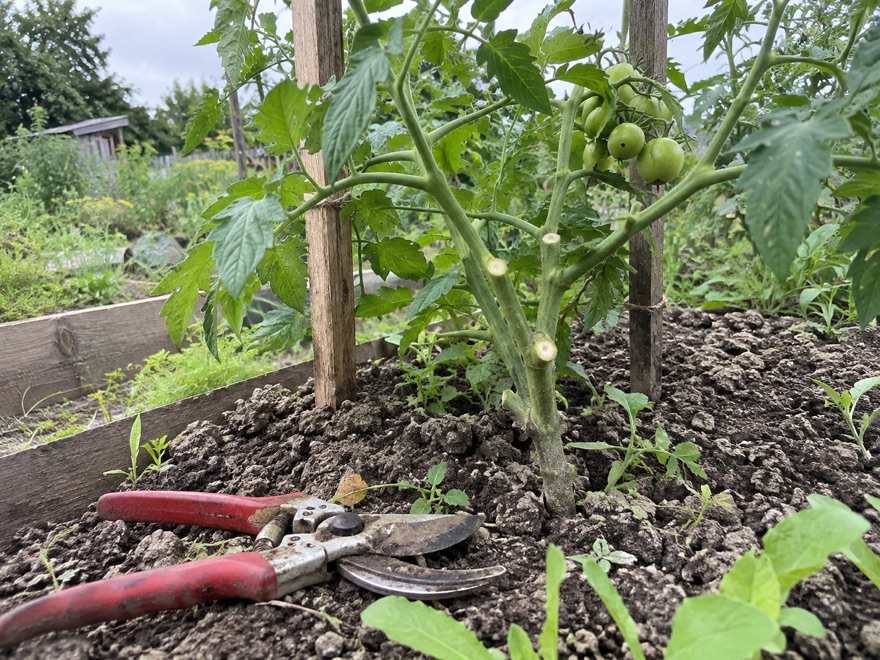
- Tomato and pepper - especially useful after suckering or removing lower leaves, a routine task that creates frequent small wounds
- Cucumber and squash - benefit from cut treatment after vine training or removing damaged leaves
- Fruit trees - useful on fresh pruning cuts from spring or summer pruning sessions, in addition to any dormant-season treatment
This spray works on any plant with a fresh cut or wound, making it a general-purpose tool across the vegetable garden and fruiting trees alike.
When infections keep showing up after pruning
If cuts keep getting infected despite this spray, check three things. Look at your pruning tools, since a dirty or rusty blade can reintroduce bacteria and fungal spores right back into a treated cut. Check the weather timing of your pruning sessions, since pruning right before a rain or heavy dew gives pathogens more moisture and time to establish before the cut has a chance to callus over. Finally, confirm you are treating the cut immediately rather than hours later, since delayed treatment gives opportunistic infection a head start.
Try easyDacha for your pruning and maintenance schedule
Suckering, pruning, and treating fresh cuts are easy to forget between everything else in the garden. easyDacha, a vegetable garden app, keeps maintenance tasks for every plant on one schedule. Download and try easyDacha.
For related disease prevention, see how to make iodine-milk spray against late blight, how to use hydrogen peroxide in the garden, and how propolis tincture works as a plant shield. For a related antistress recovery treatment, see how to use succinic acid for plant stress relief, and for broader disease identification, how to identify plant diseases: early signs and what to do.

FAQ
Can I use this spray on fresh pruning cuts and as a general foliar spray?
Yes, both. Dab it directly on fresh cuts right after pruning, or spray it lightly over the whole plant as a preventive measure during disease-prone stretches of the season.
What strength of iodine and hydrogen peroxide should I use?
Standard drugstore strengths: 5% iodine tincture and 3% hydrogen peroxide. Do not substitute a stronger concentration of either.
Does this spray cure powdery mildew or Botrytis once it has spread?
No. It works best as prevention and on early, localized infection. Once mildew or gray mold has spread across the plant, a dedicated systemic treatment works better.
How often should I use this spray?
As needed after pruning sessions, and as a preventive spray during humid or disease-prone periods, rather than on a fixed weekly schedule.
Is it safe to eat fruit from a plant treated with this spray?
Yes, wash harvested fruit as you normally would. The concentrations used here are standard first-aid strengths applied in small amounts.
Is there an app that reminds me when to prune and treat cuts?
Yes. easyDacha is a gardening app that includes pruning and maintenance tasks in each plant's care plan, so you know when suckering or pruning is due.
Can I make a bigger batch and store it for the whole season?
No. Mix this solution fresh each time you use it, since hydrogen peroxide loses its antiseptic strength within a day or two once combined with the other ingredients.