
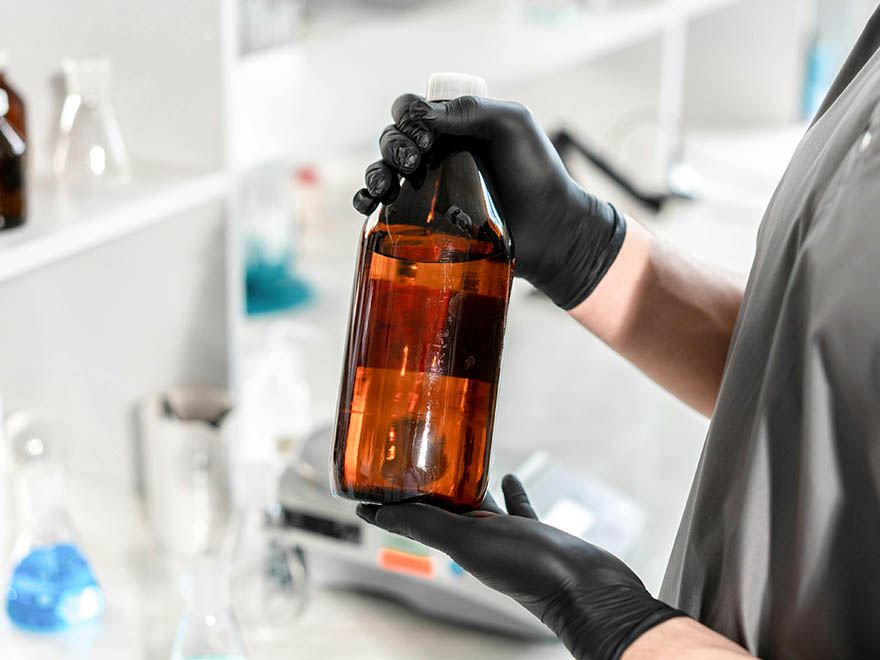
A bottle of 3% hydrogen peroxide from the pharmacy does three jobs in the garden. It disinfects seeds before planting. It kills fungal spores on leaf surfaces. And it delivers oxygen to roots sitting in waterlogged soil. The active ingredient breaks down into water and oxygen, leaving nothing behind.
TL;DR: Three recipes, one bottle. Seed soak: undiluted 3% H2O2 for 15 to 20 minutes, then rinse. Foliar spray: 2 tablespoons (30 ml) per 1 quart (1 L) water, spray every 5 to 7 days. Soil drench: same ratio for routine oxygenation, or 1 part peroxide to 10 parts water for active root rot. Always mix fresh. H2O2 breaks down in light.
The recipes
Three separate recipes for three separate problems. Use the one that fits your situation.
Recipe 1: Seed soak (disinfection before planting)
You need:
- 3% hydrogen peroxide (standard pharmacy bottle)
- A small bowl or cup
- A timer
- A strainer or paper towel
Do it:
- Pour enough undiluted 3% hydrogen peroxide into a bowl to fully cover your seeds.
- Drop the seeds in. Set a timer for 15 to 20 minutes.
- After soaking, pour the seeds through a strainer and rinse under clean water for 30 seconds.
- Plant immediately or dry on a paper towel.
The peroxide kills surface mold and bacteria on the seed coat. It also softens hard seed coats by releasing oxygen bubbles against the surface. Seeds with tough coats (parsley, cilantro, beets) benefit most from this treatment.
One thing to know: the peroxide works on pathogens sitting on the outside of the seed. If a seed carries an internal bacterial infection, surface treatment alone will not reach it. For most garden seeds, surface disinfection is all you need.
Recipe 2: Foliar spray (fungal disease prevention)
You need:
- 2 tablespoons (30 ml) of 3% hydrogen peroxide
- 1 quart (1 L) of water
- A spray bottle (opaque or dark-colored is best)
Do it:
- Mix 2 tablespoons (30 ml) of 3% hydrogen peroxide into 1 quart (1 L) of clean water.
- Pour into a spray bottle.
- Spray leaves top and bottom until wet. Full coverage matters.
- Apply in the morning or evening. Not in direct midday sun.
This spray kills active fungal spores on contact through oxidation. It works against powdery mildew, leaf spot, and early-stage blight. The peroxide oxidizes the spore's cell membrane before breaking down into water and oxygen.
Apply every 5 to 7 days during humid conditions. After heavy rain, spray again within 24 hours. The protection does not persist on the leaf surface the way Bordeaux mixture does. It kills what it touches and disappears. That means more frequent application, but zero residue.
Recipe 3: Soil drench (root oxygenation and root rot treatment)
You need:
- 2 tablespoons (30 ml) of 3% hydrogen peroxide per 1 quart (1 L) of water (routine use)
- Or 1 part 3% peroxide to 10 parts water for active root rot (heavier treatment)
- A watering can
Do it:
- Mix the solution in a watering can. Use the lighter ratio for routine oxygenation. Use the heavier ratio when you see root rot symptoms: wilting despite wet soil, brown mushy roots, or a sour smell from the pot.
- Pour at the base of each plant. Drench the root zone thoroughly.
- For root rot, apply once every 3 days for 2 weeks. For routine oxygenation, apply once every 2 weeks.
The peroxide releases oxygen directly into the soil. This is the same oxygen that healthy soil provides through good structure and drainage. In compacted or overwatered soil, roots suffocate because water fills the air pockets they depend on. The oxygen burst from peroxide gives them temporary relief while you fix the underlying drainage problem.
Which plants benefit most
Hydrogen peroxide is safe for most plants at the dilutions above. But some crops benefit more than others depending on which recipe you are using.
Best results (foliar spray): Tomatoes, cucumbers, and squash. These crops are magnets for powdery mildew and leaf spot during humid weather. The foliar spray kills spores on contact without leaving copper or sulfur residue. Spray every 5 to 7 days from mid-summer through harvest. Rotate with milk spray or baking soda spray to hit different mechanisms.
Strong results (seed soak): Parsley, cilantro, beets, and carrots. These seeds have hard or rough coats that trap mold spores. The peroxide soak cleans the surface and softens the coat, which speeds up germination. Combine with the seed soaking guide for best results.
Good results (soil drench): Peppers and basil in containers. Container-grown plants are prone to overwatering and root rot because drainage is limited. A biweekly peroxide drench delivers oxygen to the root zone. Also useful for any seedlings showing damping off symptoms in trays.
Useful for: Roses and ornamental shrubs with recurring powdery mildew or black spot. The foliar spray is a quick intervention between more persistent treatments.
Less useful for: Root vegetables in raised beds with good drainage. If your soil drains well, the roots already have enough oxygen. Peroxide drenches add nothing in well-structured soil.
Skip for: Plants already treated with Bacillus subtilis or Trichoderma. Peroxide kills beneficial microbes the same way it kills pathogens. If you are using biological protectants, do not drench or spray with peroxide on the same day. Space applications at least 3 to 4 days apart.
Why it works
Hydrogen peroxide (H2O2) is water with one extra oxygen atom. That extra atom is unstable. It wants to detach. When it does, it creates a burst of reactive oxygen that destroys the cell membranes of bacteria, fungi, and mold spores on contact. This is the same oxidation process your white blood cells use to kill pathogens inside your body.
After the oxygen detaches, all that remains is water (H2O). No chemical residue on the leaves. No buildup in the soil. No waiting period before harvest.
In soil, the reaction is slightly different. Soil microbes produce an enzyme called catalase that breaks down H2O2 almost instantly. The breakdown releases dissolved oxygen directly into the root zone. This is why peroxide works as a soil oxygenator. The same enzyme that makes it a weak long-term disinfectant makes it an excellent oxygen delivery system for roots.
The foliar spray works because leaf surfaces have far less catalase than soil. Fungal spores sitting on a leaf get hit with oxidation before any enzyme can neutralize the peroxide. That is why peroxide sprays kill surface infections but do not penetrate into plant tissue. It is a contact killer, not a systemic treatment.
What NOT to do
Do not store diluted solutions. Hydrogen peroxide breaks down in light and heat. A diluted spray loses its potency within hours. Mix fresh every time you spray. Keep the pharmacy bottle sealed in a dark cabinet.
Do not use concentrations above 3%. Industrial hydrogen peroxide (10%, 30%, or higher) causes severe leaf burn and can damage skin on contact. Pharmacy 3% is the correct strength for garden use. No exceptions.
Do not spray in direct midday sun. The peroxide breaks down too fast in UV light and can scorch wet leaves. Apply in the morning or evening.
Do not combine with biological treatments on the same day. Peroxide kills Bacillus subtilis, Trichoderma, and other beneficial microbes just as effectively as it kills pathogens. If you use biologicals, apply peroxide at least 3 to 4 days before or after.
Do not expect it to cure deep infections. Peroxide kills what it touches on the surface. It does not travel inside plant tissue. For active late blight or systemic fungal infections, use Clonostachys rosea or copper-based treatments instead.
Do not use metal containers for mixing. Peroxide reacts with metal. Use glass, ceramic, or plastic containers and spray bottles.
FAQ
What strength hydrogen peroxide should I use in the garden?
Standard pharmacy 3% hydrogen peroxide. Do not use industrial concentrations (10% or higher). The 3% solution is strong enough to kill fungal spores and disinfect seeds at the dilutions in this article. Higher concentrations burn leaves and damage roots.
Does hydrogen peroxide kill beneficial soil bacteria?
Yes. Peroxide is not selective. It kills beneficial microbes the same way it kills harmful ones. This is why you should not combine it with biological treatments like Bacillus subtilis or Trichoderma on the same day. Space applications at least 3 to 4 days apart to let beneficial colonies recover.
How often should I spray hydrogen peroxide on plants?
Every 5 to 7 days during humid conditions for fungal prevention. After heavy rain, spray again within 24 hours. The peroxide breaks down into water and oxygen within hours, so it provides no lasting residual protection. Frequent reapplication is the trade-off for zero chemical residue.
Can hydrogen peroxide help with root rot?
Yes. Root rot is caused by waterlogged, oxygen-starved soil. Peroxide delivers oxygen directly to the root zone when soil microbes break it down. For active root rot, use a heavier ratio (1 part 3% peroxide to 10 parts water) and drench every 3 days for 2 weeks. Fix the drainage problem at the same time.
Is hydrogen peroxide safe for seedlings?
Yes, at the standard dilution (2 tablespoons per quart). A soil drench helps prevent damping off in seed trays by killing surface fungi and oxygenating wet starting mix. Do not use undiluted peroxide on seedlings or young roots.
Can I mix hydrogen peroxide with other garden sprays?
Do not mix it with anything. Peroxide is a strong oxidizer. It reacts with soap, oils, and biological preparations. It degrades neem oil and breaks down microbial products on contact. Use it on its own and schedule other treatments on separate days.
Is there a gardening app that schedules disease prevention sprays?
Yes. The easyDacha garden planner app schedules protection tasks by growth stage for your ZIP code. It tracks weather patterns and alerts you when fungal disease conditions are approaching. Download at easydacha.com/download.
The cheapest fungicide in the pharmacy aisle
A bottle of 3% hydrogen peroxide costs about $1. It disinfects seeds, kills mildew, and rescues overwatered roots. It breaks down into water and oxygen and leaves nothing behind. The trade-off is that it disappears fast, so you spray more often. For the price, that is a trade worth making.
The easyDacha gardening app schedules disease prevention tasks and sends weather alerts so you spray before the pathogens arrive.
Try easyDacha app →. The garden planner app that plans your season in 60 seconds. Cancel anytime.
Related reading on easydacha.com
- How to Use Milk Spray Against Powdery Mildew (It Actually Works) — milk spray prevents powdery mildew through a different mechanism (lactoferrin and UV-activated radicals). Rotate it with hydrogen peroxide for broader coverage.
- How to Make Baking Soda Spray for Powdery Mildew — baking soda raises leaf pH to block spore attachment. Peroxide kills spores through oxidation. Two different angles on the same problem.
- How to Use Cinnamon to Prevent Damping Off and Soil Fungus — cinnamon powder on seed starting mix prevents damping off. Pair with a peroxide soil drench for double protection in humid conditions.
- Seed Starting Tips: When to Soak Seeds and When to Skip It — when soaking helps germination and when it does not. The peroxide seed soak fits into this decision framework.
- How to Make Bordeaux Mixture at Home (Copper Fungicide Recipe) — copper provides longer-lasting leaf protection than peroxide but accumulates in soil. Peroxide is the zero-residue alternative for light disease pressure.