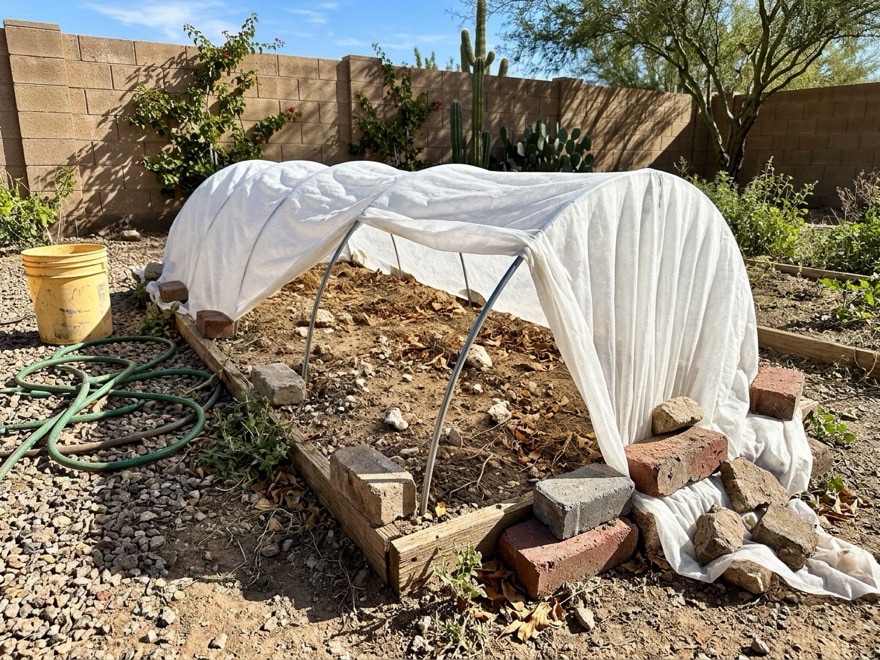
Your days are 75 degrees F, so a frost warning feels like a mistake. Then you walk out at daybreak and the tomato leaves are black. Low desert frost protection for vegetables is a night job: a few cold hours decide the season. A short, simple routine saves most of your garden.
TL;DR: For low desert frost protection of vegetables, water the soil and cover plants with cloth before sunset. Hold it to the ground, then take it off when it warms up. Skip plastic.
When does frost hit the low desert?
Frost comes late and leaves early, but it still comes. An older University of Arizona guide gives average first frost dates in Maricopa County from November 21 in Buckeye to December 12 in central Phoenix. Average last frost runs from February 7 in central Phoenix to April 3 in Mesa.
The dates vary with elevation and with how much pavement is nearby. Those averages come from a 1998 publication, so check your county extension office for current numbers. Our Arizona fall planting guide shows what to sow before the cold.
Normal winter lows in the area are in the 40s. Frost shows up only on the coldest nights, which is why it catches gardeners off guard.
Why desert nights are dangerous
The sun warms the soil by day, and the soil radiates that heat away at night. The University of Arizona says calm, clear nights pose the greatest danger of frost. There is no wind to mix warm air in, and no clouds to reflect heat back.
Dry desert air makes the drop quick. The coldest temperatures occur about daybreak.
Cold air also settles to the lowest point, so a low corner of your yard is colder than a bed near the house wall. Take a yard temperature reading daily and compare it with the forecast. Your yard may run about 4 degrees colder than the airport.
What to do before the cold night
Do these in the afternoon, before the sun goes down.
- Water the beds. The guide says to keep plants well watered. Frost injury is worse in drought-stressed plants. Moist soil also holds heat better than loose, dry soil.
- Pick the ripe fruit. Tender produce will not survive a hard freeze. Our green tomato guide shows what to do with the rest.
- Move pots near a south or west wall. Block walls, rocks, and patios collect heat by day and give it back at night.
- Bring in tender container plants. Peppers can come inside for the season. See how to overwinter peppers.
How to cover plants
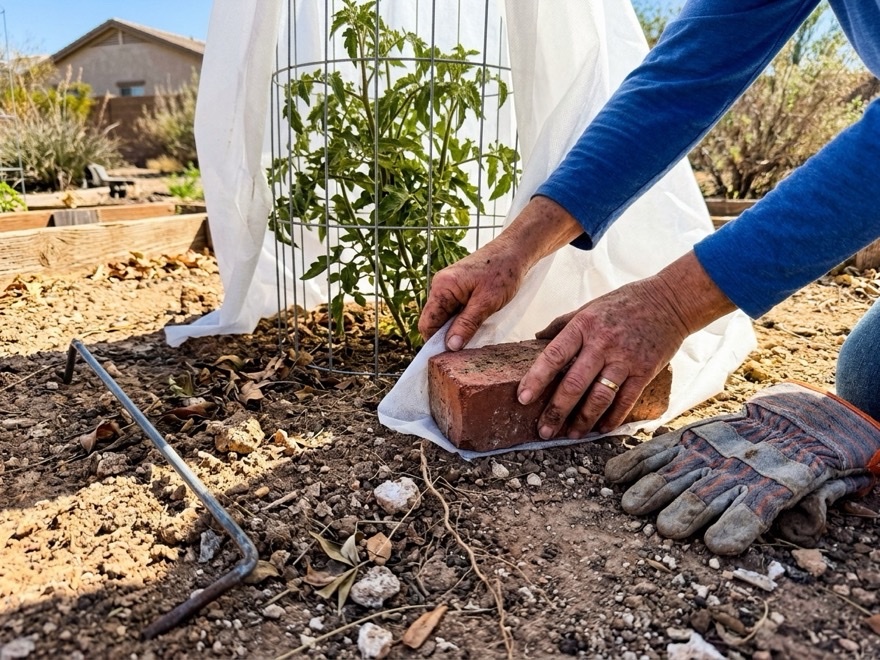
Use cloth or paper, not plastic. The University of Arizona says a properly applied frost cloth protects plants down to 30 degrees F. Some fabrics go down to 20 degrees F.
Follow these steps:
- Drape from top to ground. Leave no openings where warm air can escape.
- Use a frame. Hoops or stakes keep the cloth from touching the leaves.
- Seal at the soil. The goal is to trap heat from the ground, so the cloth should touch the soil all around the plant.
- Use sheets or blankets for light frost. They give minimal protection.
For trees, do not gather the drape around the trunk. The cloth must reach the ground.
Take the cover off in the morning
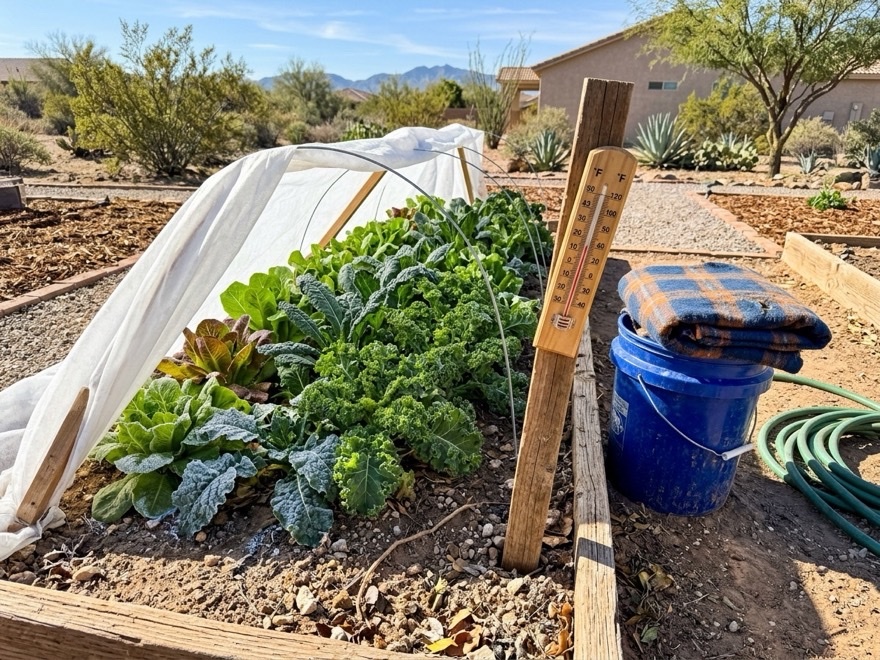
Remove sheets and blankets every morning when the temperature under them reaches 50 degrees F. The guide says covering plants all winter with sheets is not recommended in southern Arizona. A warm cover can make plants start growing again, and new growth is more vulnerable to the next frost.
Some frost cloths can stay on for longer without harm. Check the product label.
Extra heat on a very cold night
For short, hard freezes, you can add a little heat. A 100-watt electric bulb in an approved outdoor fixture under the cover adds heat. Hang it below the foliage so the warmth rises. Keep it away from branches and the cloth.
A trickle of water at the base of a tree late at night and in the early morning also helps. Use it for no more than three nights in a row, since longer than that drowns the plant.
What does not work
The University of Arizona lists a few ideas that fail.
- Smudge pots. They block 90 percent of the sun's heat and trap only 20 percent of the heat stored in the earth.
- A large fire. It sends warm air upward and pulls in cold air from around it.
- Mulch on tender plants. Mulch prevents the soil from warming, so frost-sensitive plants lose the heat that could protect them.
- Frost chemicals. The guide says no commercial product has withstood scientific scrutiny.
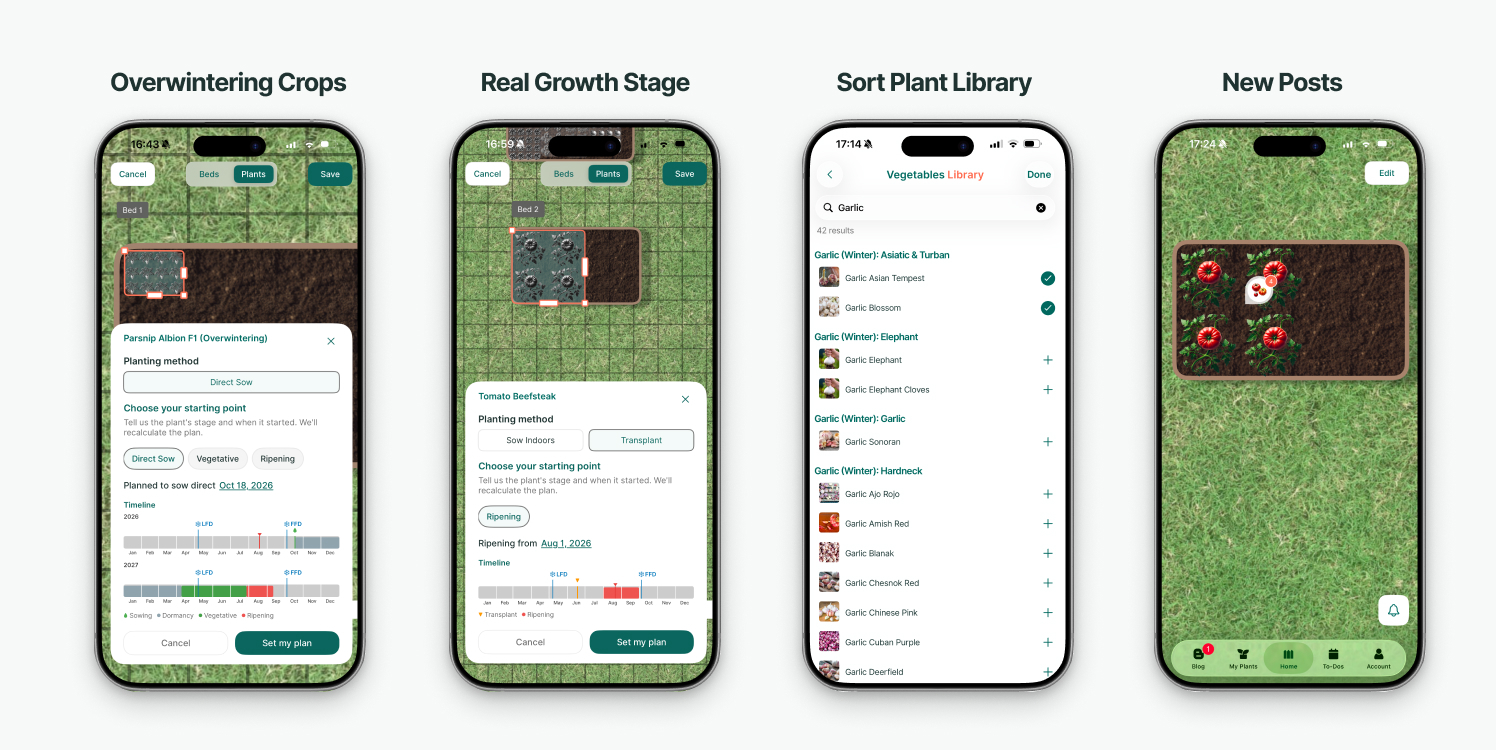
Frost dates vary a lot across the desert. easyDacha is a gardening app that calculates your planting dates from your ZIP code and your local frost dates. It builds a task list for the next two weeks around your own beds, so you see when to cover and when to harvest. Download easyDacha and add your beds before the first cold night.
What NOT to do
Do not use plastic as a night cover. The University of Arizona says to use cloth or paper.
Do not leave a blanket on all winter. Take it off once it warms to 50 degrees F under the cover.
Do not prune frost-damaged woody plants right away. The University of Arizona says wait until spring growth starts.
Do not over-protect. Plants stay hardier if they are kept used to the cold. Our winter planting guide shows which crops handle chill.
When frost keeps surprising you
If frost surprises you each year, check three things. First, compare your yard temperature with the forecast so you know your margin. Second, look at where you grow tender plants, since low spots get colder. Third, set your cover plan before the first warning, with cloth and hoops ready. A calendar helps, and our guide to a personal planting schedule explains how.
Get ready before the first frost
Set cloth and hoops aside now. easyDacha, a vegetable garden app, builds a two-week task list for your own garden. Try easyDacha and stay ahead of the cold.
FAQ
When is the first frost in the low desert?
An older University of Arizona guide lists average first frost dates from November 21 in Buckeye to December 12 in central Phoenix. Check with your county extension office for current dates.
What temperature does frost cloth protect against?
According to the University of Arizona, a properly applied frost cloth protects plants down to 30 degrees F. Some fabrics protect down to 20 degrees F.
Should I use plastic to cover plants for frost?
No. Use cloth or paper. The University of Arizona recommends cloth or frost cloth, not plastic.
Should I water plants before a freeze?
Yes. Keep plants well watered. Frost injury is worse in drought-stressed plants.
When should I take the frost cover off?
Remove sheets and blankets in the morning, once the temperature under the cover warms to 50 degrees F.
Is there an app that tells me when to cover my garden?
Yes. easyDacha is a gardening app and garden planner app. It uses your ZIP code and local frost dates to build a task list for your beds.