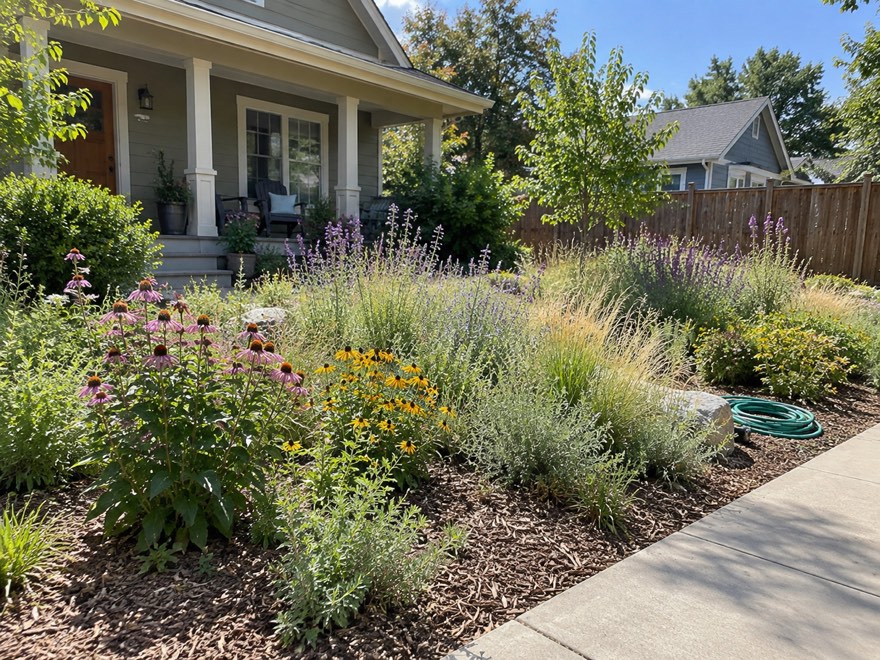
You are done spending Saturdays behind a mower, and the water bill in summer stings. A native plant garden instead of lawn fixes both. Native plants evolved in your region, so once they root in they need far less water, no weekly cutting, and none of the fertilizer and weed killer a grass lawn demands. The trade you make is one season of setup for years of a yard that mostly takes care of itself.
TL;DR: To grow a native plant garden instead of lawn, smother the grass with cardboard over fall and winter, loosen the bare soil, then plant a mix of native grasses, wildflowers, and shrubs chosen for your USDA zone. It needs almost no mowing or watering once established.
What you need to start
A native plant garden instead of lawn takes simple materials, not special gear.
- Plain cardboard or newspaper to smother the grass. Use unwaxed boxes with the tape pulled off.
- A few inches of mulch or compost to weigh the cardboard down and feed the soil.
- Native plants for your USDA zone, ideally a mix of grasses, perennial wildflowers, and low shrubs.
- A garden fork or a rented core aerator to loosen the soil before planting.
- A hose for the first season only, to water new plants while their roots settle in.
Start in fall if you can. The grass dies over winter under the cardboard, and the bed is ready to plant in spring. Fall is also when many native perennials establish best, since the soil is still warm and rain does the watering for you. Fall is a busy planting window in general, as our guide on planting vegetables for winter explains.
How to convert lawn to native plant garden, step by step
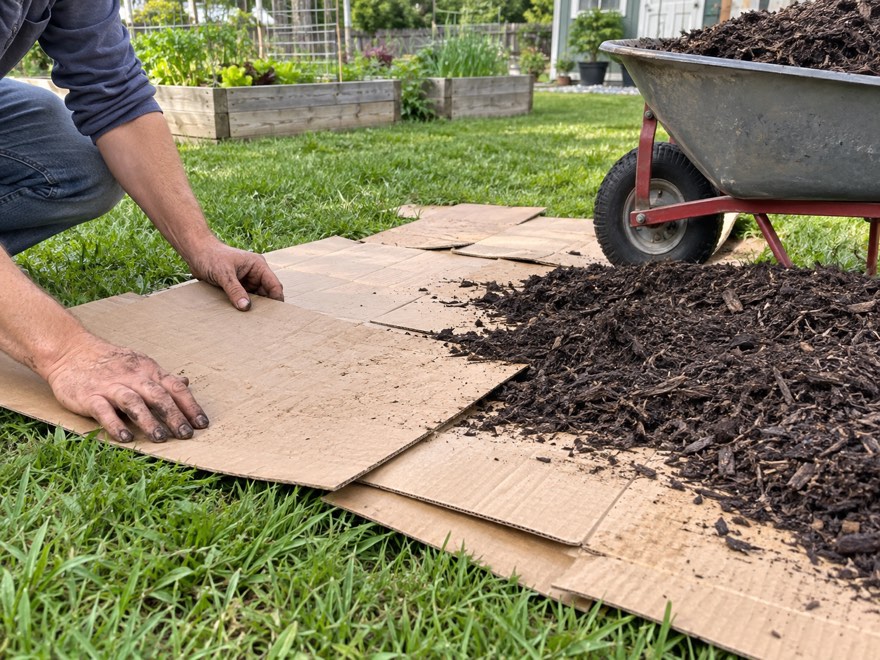
Killing the grass is the first job, and smothering beats digging. Lay cardboard flat over the area you want to convert, overlapping the edges by several inches so no grass sneaks through the gaps. Wet it down, then cover it with 2 to 3 inches (5 to 8 cm) of mulch or compost. Over fall and winter the grass underneath dies and starts to break down. This no dig method feeds the soil instead of stripping it, the same idea behind our guide on how to turn your lawn into a vegetable garden without digging it all up.
If you want the bed ready faster, a sod cutter slices the grass off at the roots and exposes bare soil the same day. It is more work up front and removes the organic matter, so most home gardeners choose the cardboard route.
Once the grass is gone, loosen the soil so young roots can move. Rent a core aerator and run it over the bare ground, or work a garden fork across the bed. The holes only need to be 1 to 2 inches (2.5 to 5 cm) deep, but you want a lot of them.
Now plant. Set your natives in drifts of the same species rather than dotting single plants around. Water them in well. A layer of mulch between plants holds moisture and blocks weeds while everything fills in.
Why native plants beat a grass lawn
A native plant garden instead of lawn wins because the plants already fit your climate. Turf grass is a high input crop. To keep it green it wants regular mowing, steady watering, fertilizer, and often weed killer and pesticide. Native plants evolved with your local rainfall and soil, so once established they skip most of that.
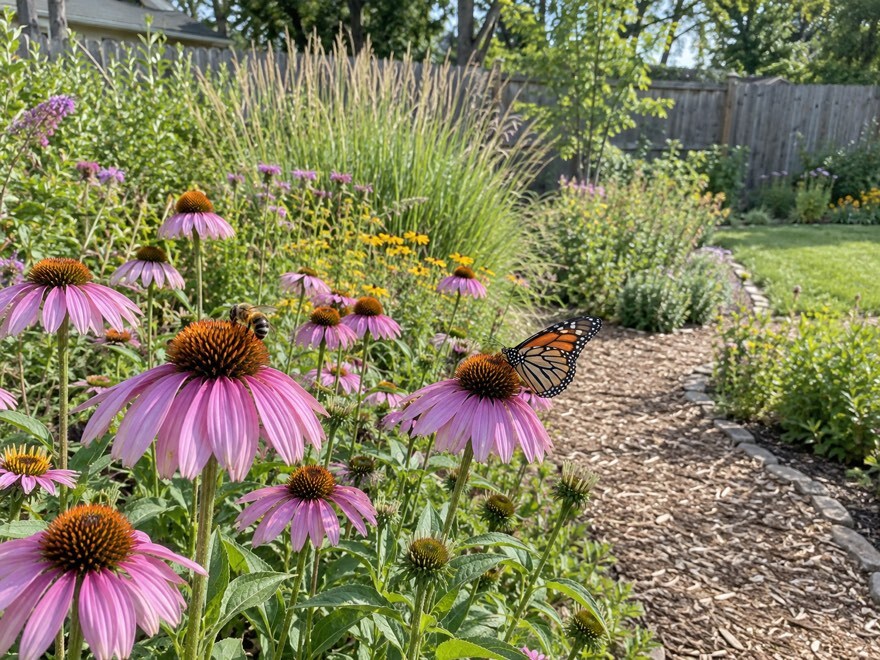
The payoff is not just less work. The yard turns into habitat. Native grasses, shrubs, and wildflowers feed bees, butterflies, and birds in a way a mowed lawn never does. Pulling in beneficial insects also cuts pest pressure, the same logic behind keeping ladybugs in your garden. Deep native roots also hold soil in place and soak up rain, which cuts erosion and runoff. If you want to pull pollinators in even faster, pair the planting with a few of the best flowers for a vegetable garden along the edges.
Is a native plant garden safe for a small or shared yard?
Yes, and you do not have to convert the whole lawn at once. You can replace grass with native plants in your yard one bed or one strip at a time and expand as you learn what thrives. This staged, no mow lawn alternative of native plants is the low-risk way to start. A native planting is not a weed patch. Keep a mowed or mulched edge around it so it reads as intentional to neighbors and any HOA. That clean border is the difference between a garden and an overgrown lot. The same planning mindset behind a good garden sun map helps you place sun lovers and shade plants in the right spots.
Keep new plants watered through their first summer. After that, most natives handle normal rainfall in their home range on their own.
What NOT to do
Don't till the whole lawn under. Tilling brings up buried weed seeds and destroys soil structure. Smothering keeps the soil biology alive.
Don't buy plants that are not native to your area. A plant sold as low maintenance somewhere else can become a water hog or a spreader in your zone. Check what is actually native locally.
Don't plant into unkilled grass. If the turf is still alive, it outcompetes young natives fast. Wait until the grass is fully dead.
Don't skip the first year of watering. Established natives are tough, but the roots are not deep yet in year one.
Best plants for a native lawn alternative
Group your choices by role, and pick the species from your own region.
- Native grasses and sedges form the low, no mow base that replaces turf and stays green with little care. A native plant lawn built on these needs far less water than grass once it roots in.
- Perennial wildflowers bring the color and the pollinator food. Choose a spread of bloom times so something flowers spring through fall.
- Low native shrubs add structure and give birds cover and berries.
- Groundcovers fill gaps and shade out weeds in spots you do not want to mow at all.
Your county extension office keeps lists of plants native to your area, and it is the most reliable place to check before you buy. If you plan to tuck a few vegetables among the natives, our beginner vegetable gardening guide walks through the basics.
When the native garden looks patchy
A new native bed can look thin in year one, and that is normal. Native perennials spend their first season growing roots, not top growth, so the show comes in year two and three. If you see bare spots, add more plugs in the gaps and keep the mulch topped up. If weeds push through, pull them by hand early before they seed. Warm season natives also green up later in spring than turf, so do not assume a slow start means failure.
Plan your native plant garden by zone with easyDacha
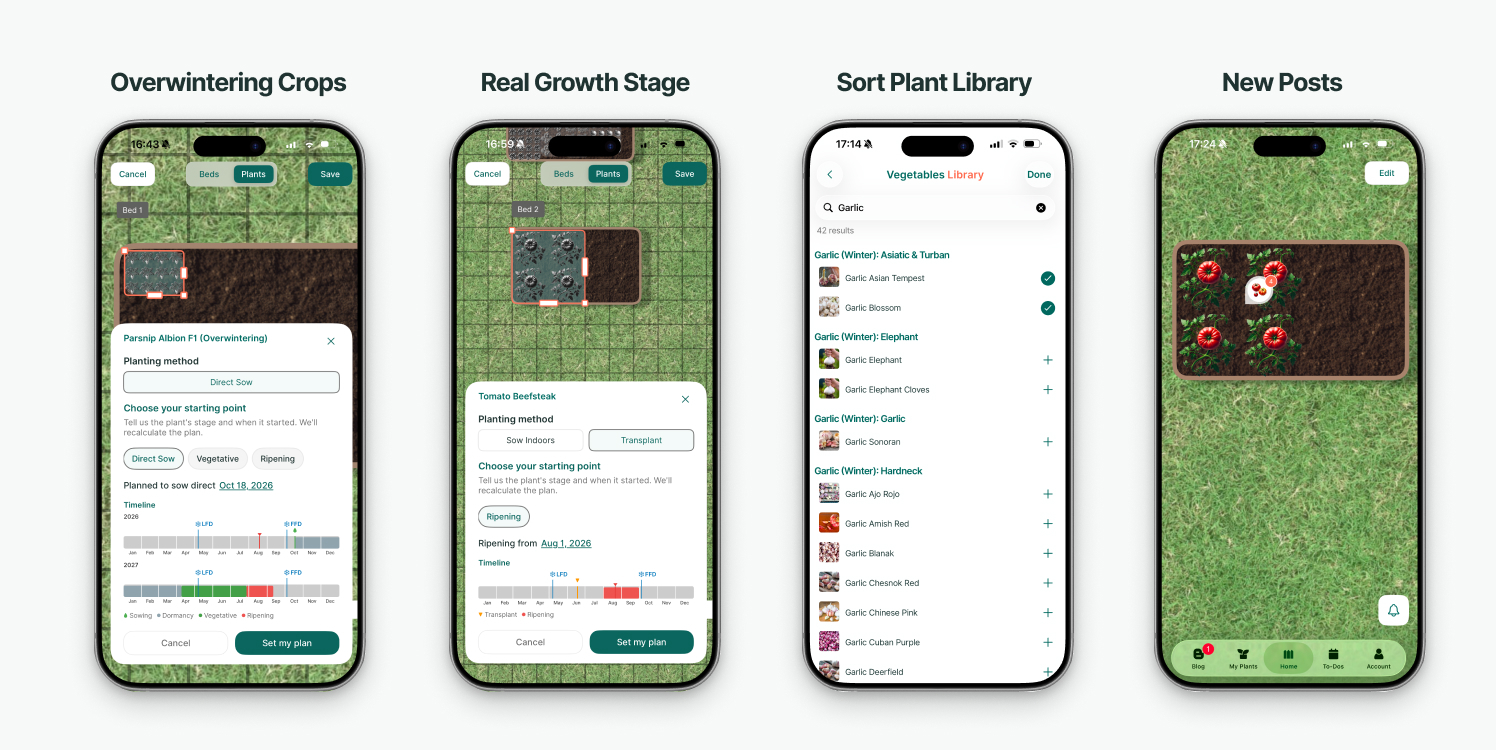
The hardest part of a native plant garden instead of lawn is not the digging. It is knowing what to plant and when your planting window opens where you live. easyDacha calculates your exact planting dates from your ZIP code and its local frost dates, not national averages, so you set out plants at the right time for your zone. Draw your new bed on the garden map and the app spaces plants for you and builds a task list tied to that bed. It works as a garden planner app for the whole conversion, from prep to your first full season.
FAQ
How do I kill grass before planting native plants?
The easiest way is to smother it. Lay overlapping cardboard over the lawn, wet it, and cover it with a few inches of mulch. Over fall and winter the grass dies and breaks down, leaving plantable soil with the biology intact.
How much money does a native plant garden instead of lawn save?
You stop buying gas, fertilizer, weed killer, and most irrigation water once the planting is established. There is an upfront cost for plants and mulch, but the yearly maintenance cost drops well below a grass lawn after year one.
Do native plants really need no mowing?
Most need no weekly mowing. Some native grass lawns get one cut a year to reset them, and you may trim spent wildflower stems in late fall or early spring. Compared with a turf lawn cut every week, it is close to no mowing.
Will a native plant garden look messy to my neighbors?
Not if you frame it. Keep a mowed or mulched border around the planting and add a path or a low fence. A clear edge signals the yard is designed, not neglected, and keeps most HOAs satisfied.
Is there an app that helps plan a native plant garden?
Yes. easyDacha is a garden planner app that calculates planting dates for your ZIP code, maps your beds with automatic spacing, and gives you a task list. It keeps a lawn to native conversion on schedule for your specific USDA zone.