
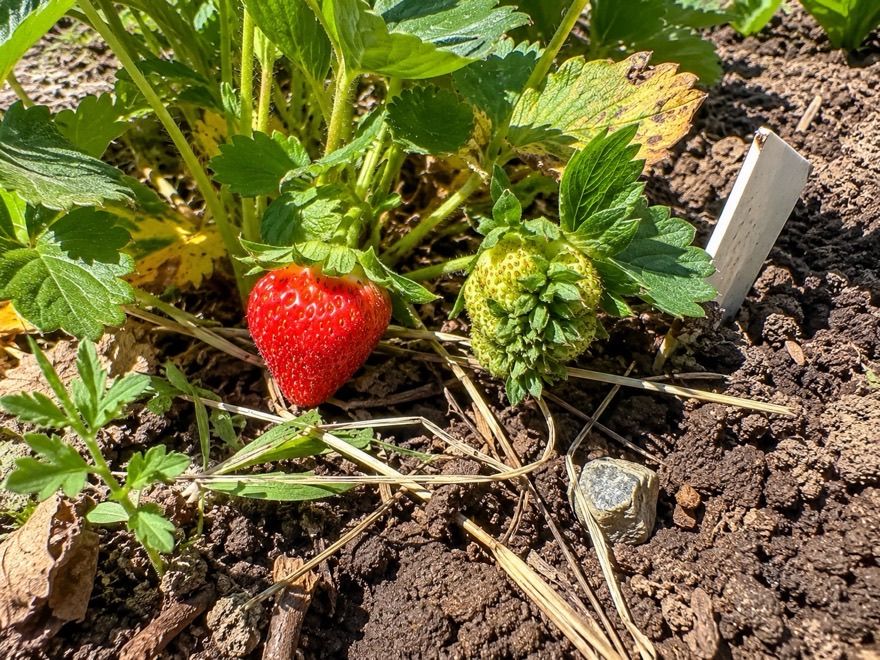
You go out to pick berries and find a green, leafy tuft where a strawberry should be. The fruit looks like a tiny plant. This is strawberry phyllody, and it is rarely your fault. It has four possible causes, and only one of them means the plant has to go.
TL;DR: Strawberry phyllody is when flowers or fruit turn into leafy growth. It is caused by a leafhopper-spread phytoplasma, or by weather stress, weedkiller, or heavy foliar feeding. Check for stunting and extra crowns, then decide.
What strawberry phyllody looks like
Phyllody means a flower or fruit grows leaf-like parts instead of normal ones. On strawberries, petals turn green and the berry can sprout small leaves.
NC State Extension says the early signs of the phytoplasma form are plant stunting and multiple crowns. Fruit may produce leaves later. Many gardeners call this "viviparous" strawberries, but that term describes seeds sprouting inside fruit. What you are seeing is phyllody.
The 4 causes of leaves on strawberry fruit
1. Phytoplasma carried by leafhoppers
A phytoplasma is a tiny organism that lives in a plant's veins and moves from plant to plant on leafhoppers. NC State Extension notes that this disease spreads plant to plant by leafhoppers. It can resemble herbicide injury, which is why it often gets misdiagnosed.
2. Weather stress during flowering
The Royal Horticultural Society says late frost, hot weather, or water stress while flowers form can cause hormonal imbalance that leads to phyllody. If weather is the cause, the plant will make normal flowers later in the season.
3. Weedkiller contamination
Herbicide drift, or residues in compost and mulch, can twist new growth. Check whether neighbors sprayed, or whether you added manure, hay, or grass clippings that came from treated fields. Affected plants often recover, but it may take time.
4. Too much foliar feed
The RHS notes that a heavy application of foliar feed can stimulate abnormal growth in strawberries. If you sprayed liquid fertilizer on the plants often this season, cut back.
How to tell which cause you have
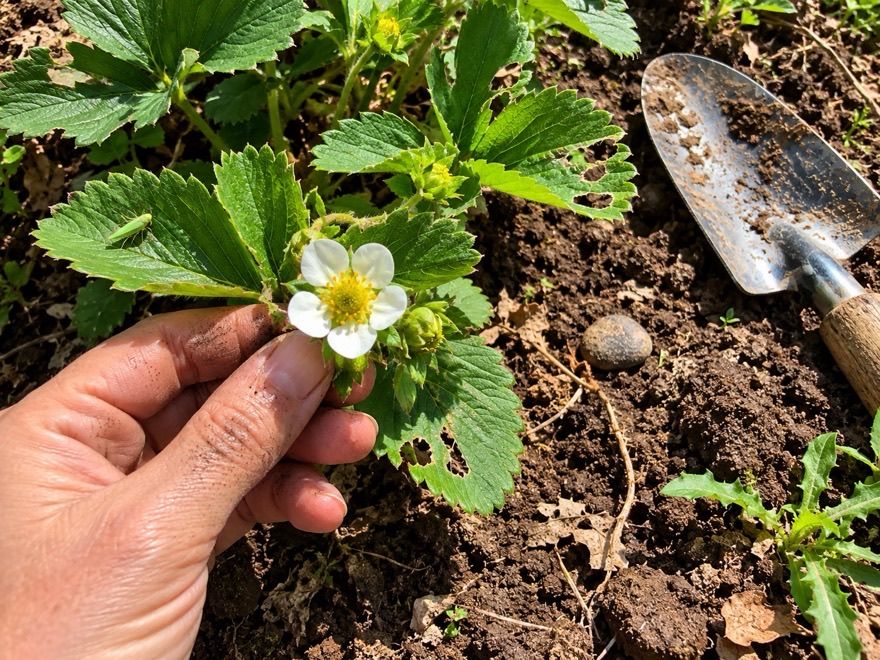
Use this quick check. It will not replace a lab test, but it points you the right way.
- Whole planting stunted, many small crowns, thin runners: likely phytoplasma. Look for leafhoppers, tiny green or tan insects that hop sideways when disturbed.
- Only the first flush of flowers was odd, later flowers normal: likely weather.
- Curled, twisted new leaves on many different plants: think weedkiller, especially after a spray nearby or new compost.
- You sprayed foliar feed often: think overfeeding.
If you are not sure, take clear photos and call your county extension office. A lab can confirm phytoplasma by PCR testing, according to NC State.
What to do with the plant
If it is weather, feed, or weedkiller: remove the odd flowers and keep the plant. Water evenly, stop foliar feeding, and watch new growth. It should return to normal.
If it looks like phytoplasma: the RHS says there is no cure and the plant is best destroyed. Pull it out, bag it, and put it in the trash, not the compost pile. Then protect the rest of the bed.
Extension advice varies on this. NC State says the disease occurs at very low levels in annual strawberry systems. Other extension sources advise destroying symptomatic plants. In a home garden, pulling a clearly stunted plant is the safe choice, and it costs you one plant.
Do not take runners from a plant that showed symptoms. Phytoplasma travels in the plant tissue, so daughter plants can carry it.
How to protect strawberries from leafhoppers
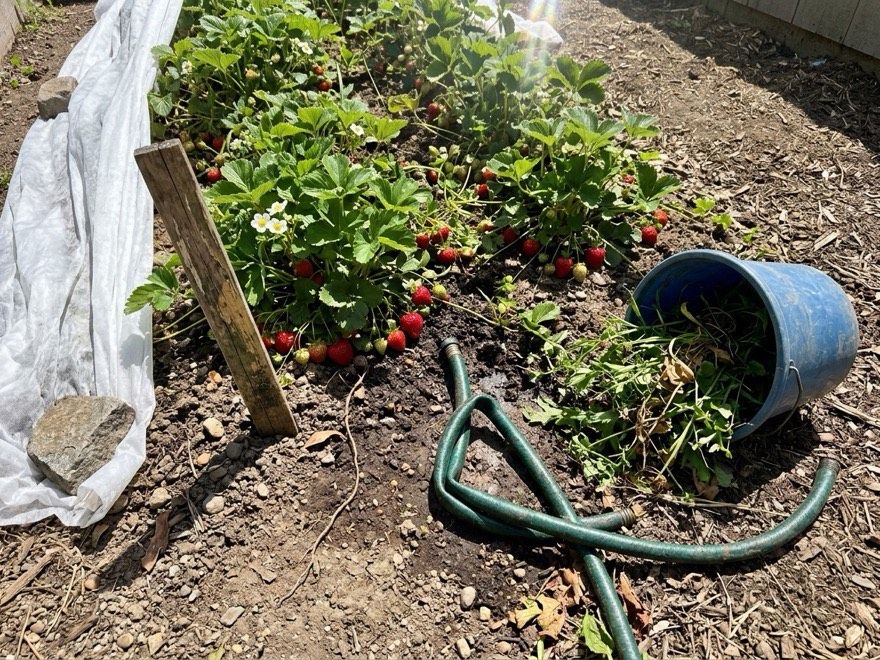
You cannot spray away the disease, but you can limit the insects that spread it.
- Pull weeds in and around the bed. Weeds can be hosts for phytoplasma and shelter for leafhoppers.
- Buy certified clean plants from a reputable nursery each time you refresh the bed. NC State notes that plants in certification programs are evaluated to be free of phytoplasma.
- Check plants weekly in spring and learn the look of common pests with our garden pest identification guide. For organic sprays that target sap-sucking insects, see getting rid of aphids organically.
Is it safe to eat strawberries with leaves on them?
The sources we reviewed do not say whether the fruit is safe. Leafy fruit is also tasteless and misshapen, so most gardeners skip it. Normal berries from the same plant or the next plant over are fine to eat if they look normal. Wash them as you always do.
What NOT to do
Do not compost the plant. Pull it, bag it, and put it in the trash.
Do not keep taking runners from it. Daughter plants may carry the problem.
Do not spray weedkiller near the bed. Even drift can twist new strawberry growth. Be careful with lawn products nearby.
Do not keep fertilizing to "fix" it. Extra foliar feed can make phyllody worse.
Which strawberries does this affect?
Phyllody can show up on June-bearing, everbearing, and day-neutral types. It is not tied to one variety. When you replace plants, start with clean nursery stock. Our strawberry planting guide covers bed setup, and a fermented milk foliar feed should be used lightly, not on a weekly schedule.
In USDA zone 5 and zone 6, a late frost during flowering is a common weather trigger. Cover blooms on cold nights. In USDA zone 9, heat during flowering is the more likely stress.
Keep track of what happened
When a strawberry plant acts strangely, you need to remember what changed. Did a neighbor spray? Did you add new compost? When did the frost hit?
easyDacha is a gardening app that keeps a two-week task list built around your beds and plants. You draw your beds on a map and add each plant, so you always know what grows where. Download easyDacha and map your strawberry bed. For help diagnosing other problems, see how to identify plant diseases.
Plan a healthier strawberry bed
A clean start, weed control, and regular checks stop most strawberry problems. easyDacha builds the schedule for you around your ZIP code. Try easyDacha and keep every bed on track.
FAQ
What is strawberry phyllody?
Strawberry phyllody is when flowers or fruit grow leafy parts instead of normal ones. It can come from phytoplasma, weather stress, weedkiller, or too much foliar feed.
Why are strawberry leaves growing on fruit?
The most common disease cause is a phytoplasma spread by leafhoppers. Weather stress, herbicide contamination, and heavy foliar feeding can look the same.
Is strawberry phyllody contagious?
The phytoplasma form is. Leafhoppers carry it from plant to plant. Weather, herbicide, and feeding causes are not contagious.
Can I save a strawberry plant with phyllody?
If the cause is weather, weedkiller, or feeding, yes. It usually recovers. If it is phytoplasma, there is no cure and the plant is best destroyed.
Should I pull my strawberry plants?
Pull plants that are stunted, with many small crowns and leafy fruit. Keep plants with a few odd flowers that otherwise look healthy, and watch them.
Is there an app that helps me track strawberry problems?
Yes. easyDacha is a gardening app and vegetable garden app that keeps a task list for your beds. It reminds you when to check plants, weed, and refresh your strawberry bed.