
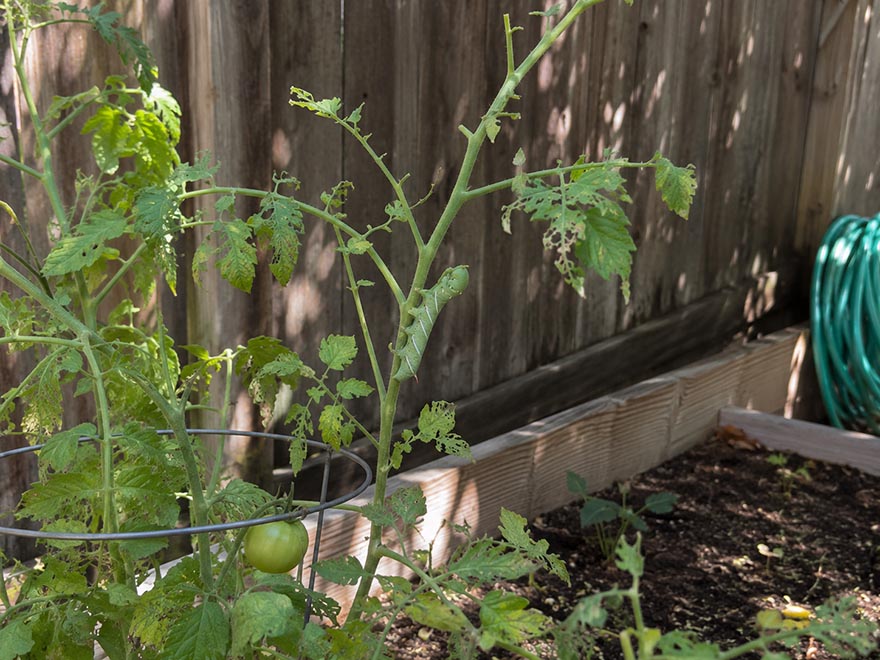
You walk out to your tomatoes and find whole branches stripped bare, dark pellets on the leaves below, and green fruit with chunks chewed out. Tomato hornworms hide in plain sight and can defoliate a plant in a day or two. They blend into the stems so well that most gardeners only spot the damage, not the caterpillar. Here is how to get rid of tomato hornworms with organic methods that actually clear them out and keep them off next season.
TL;DR: The fastest way to get rid of tomato hornworms is to handpick them into soapy water, then spray Bacillus thuringiensis (Bt) on heavy infestations, and leave any hornworm covered in white cocoons so the braconid wasps inside finish the job.
How to Get Rid of Tomato Hornworms
Handpicking is the single most effective control, and it costs nothing. Hornworms are big, up to 4 inches (10 cm) long, so once you find one you can pull it off by hand. Drop each one into a bucket of soapy water to kill it. Check your plants every day during peak weeks, because a hornworm eats fast and a missed one does real damage overnight.
The hard part is finding them. They match the green stems exactly. Look for three clues: dark green or black droppings on the leaves, stripped stems with bare midribs, and chewed holes in green fruit. Follow the frass and the damage upward and the hornworm is usually right above it.
Handpicking tomato hornworms works better than any spray for a heavy pest this size. You remove the whole feeding caterpillar in one motion. On a small garden, a daily two-minute check keeps them under control all season.
The Blacklight Trick for Finding Them
Hornworms glow under ultraviolet light, which makes them easy to spot after dark. Take a cheap handheld blacklight out to the tomatoes at night. The caterpillars light up bright against the dull foliage, and you can pick off the ones you missed in daylight. This one trick turns the hardest part of hornworm control into a quick evening walk.
The Bt Spray for a Heavy Infestation
When a whole bed is under attack and picking cannot keep up, spray Bacillus thuringiensis. Bt is a soil bacterium that acts as a stomach poison on caterpillars and harms nothing else in the garden. The caterpillar has to eat treated leaves, so full coverage matters.
For 1 gallon (3.8 L) of water:
- Bacillus thuringiensis subspecies kurstaki (Bt), at the label rate, usually 1 to 4 teaspoons (5 to 20 ml)
- 1 teaspoon (5 ml) mild liquid soap, as a spreader so the spray sticks
You will find Bt at most garden centers, sold as a caterpillar biocontrol.
Mix it: Stir the Bt and soap into the water right before spraying.
Spray it: Coat the tops and undersides of every leaf, plus the stems. Spray in the evening. Bt breaks down in sunlight, so a dusk application lasts longer.
Shelf life: Mix fresh each time. Bt loses strength once diluted, so do not store leftover spray.
Spinosad for the Stubborn Cases
If Bt is not clearing a severe outbreak, spinosad is the next organic step. Spinosad comes from a naturally occurring soil microbe and kills caterpillars on contact and by ingestion. It works faster than Bt on large hornworms. Spray the same way, in the evening, coating both leaf surfaces. Spinosad can harm bees for a few hours after spraying, so never apply it to open flowers during the day. The same spinosad works on other summer pests, from spider mites in hot, dry weather to soft-bodied feeders in our aphid control guide.
Leave the Wasp-Covered Hornworms Alone
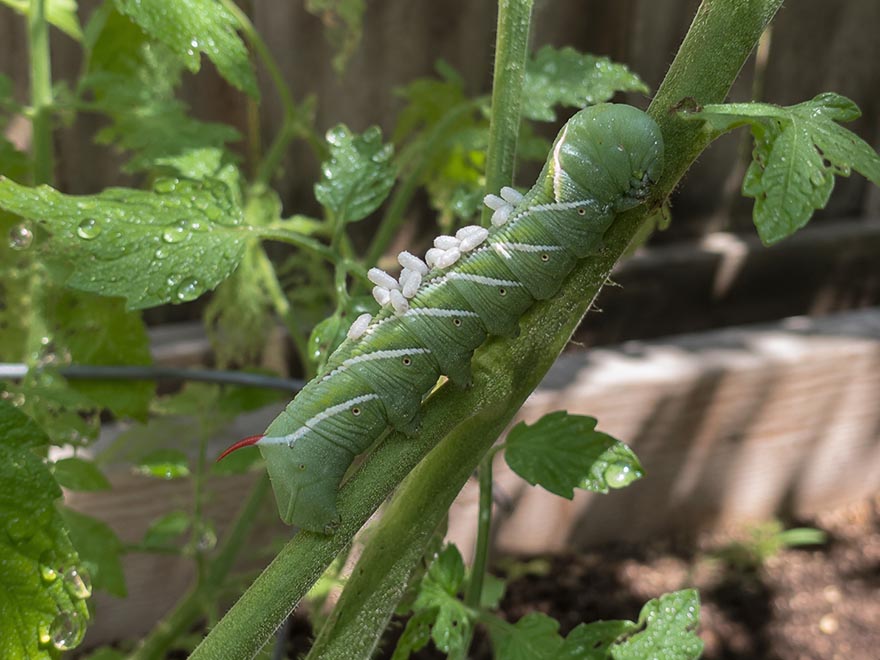
Here is the rule that saves you the most work. If you find a hornworm studded with rows of white, rice-like cocoons on its back, do not kill it. Those cocoons belong to a braconid wasp called Cotesia congregata, a common natural enemy of the tomato hornworm. The wasp laid eggs inside the caterpillar, its larvae fed within, and now they have spun cocoons on the surface.
That hornworm is already dying and has stopped feeding. Leave it on the plant. When the new braconid wasp adults hatch, they hunt down the other hornworms in your garden for free. Killing a parasitized hornworm throws away your best long-term ally.
How to Apply and What to Expect
Build a simple summer rhythm. Check your tomatoes every morning and handpick anything you find into the soapy bucket. Walk the bed with a blacklight once or twice a week after dark to catch the hidden ones. Spray Bt in the evening only when picking cannot keep up, and repeat every 5 to 7 days and after rain until the damage stops. Save spinosad for a severe outbreak that Bt is not holding.
That is a daily check, a couple of night walks, and an on-and-off spray cycle all running through the hornworm weeks. The garden planner app easyDacha builds the schedule and sends reminders for each spray day. The follow-up stays on track while you focus on the picking. You should see new damage stop within a few days of consistent removal.
Why Handpicking and Bt Work
Handpicking works because it removes the entire pest in one step. A hornworm does all its damage as a caterpillar, so taking it off the plant ends its feeding instantly. There is no waiting for a spray to act.
Bt works through the caterpillar's gut. Once eaten, it releases proteins that paralyze the digestive tract, and the hornworm stops feeding within hours and dies in a day or two. It targets caterpillars only, which is why bees, ladybugs, and people are unaffected.
The braconid wasp closes the loop. Each parasitized hornworm becomes a nursery for dozens of new wasps that patrol your garden and parasitize the next generation. That is biological control you get without buying anything.
Is This Safe for Bees and Pets?
Yes. Handpicking and Bt are among the safest pest controls you can use. Bt affects only caterpillars, so it does not harm bees, beneficial insects, pets, or people. That makes it a strong choice for a food garden.
Follow a few simple rules to keep it that way:
- Spray Bt and spinosad in the evening, when bees are inactive.
- Never spray open flowers during the day.
- Keep the soapy handpicking bucket out of reach of pets.
- Wash tomatoes before eating, as you would with any garden produce.
What NOT to Do
Do not kill hornworms covered in white cocoons. Those are braconid wasp pupae, and letting them hatch controls future hornworms for free.
Do not reach for a broad-spectrum insecticide. It kills the braconid wasps and other beneficials that keep hornworms in check, which makes outbreaks worse next year.
Do not spray Bt in bright midday sun. Sunlight breaks it down fast. An evening spray stays active far longer.
Do not stop checking after you find one. Hornworms feed in groups, and where there is one there are usually more hiding on the same plant.
Which Plants Tomato Hornworms Attack

Their main targets: tomatoes take the worst damage, so check them first and most often. Growing tomatoes anyway is worth it, and our guide to tomatoes from seed covers the rest of the season.
Other nightshades hit hard: peppers, eggplant, and potatoes are all on the menu, since hornworms feed across the nightshade family. If you grow peppers from seed, scout them the same way you scout tomatoes.
Rarely touched: beans, squash, lettuce, and most herbs get left alone, so you can focus your daily check on the nightshade bed.
When Tomato Hornworms Keep Coming Back
If hornworms return year after year, break the cycle in the soil. Understanding the tomato hornworm life cycle helps here: they overwinter as pupae buried in the soil, and the moths emerge from early summer on. Till the top few inches of your beds in fall and again in spring. This exposes the pupae to cold, birds, and drying, and knocks down next year's first wave. A light row cover over young transplants also keeps the egg-laying moths off until the plants flower. For a broader scouting routine, see our top common garden pests guide, and for another July stem feeder, the squash vine borer guide.
FAQ
What is the fastest way to get rid of tomato hornworms?
The fastest way to get rid of tomato hornworms is to handpick them off the plant and drop them into soapy water. They are large and easy to remove once you spot them. Follow the droppings and stripped stems to find them, and check every day during peak weeks.
Does Bt kill tomato hornworms?
Yes. Bacillus thuringiensis, or Bt, is an organic spray that kills tomato hornworms after they eat treated leaves. It paralyzes the caterpillar's gut and stops feeding within hours. Bt for tomato hornworms works even on large ones, and it harms nothing but caterpillars. Reapply after rain.
Should I kill a hornworm with white eggs on its back?
No. Those white, rice-like bumps are braconid wasp cocoons, not eggs. That hornworm has stopped feeding and is dying. Leave it on the plant so the wasps hatch and hunt down the other hornworms in your garden.
Does neem oil work on tomato hornworms?
Neem oil for tomato hornworms is a weak option on its own. It can deter egg-laying moths and slow very young larvae, but it does not reliably kill a full-grown hornworm. Handpicking and Bt are far more effective for active damage.
What do tomato hornworms turn into?
Tomato hornworms pupate in the soil and emerge as the five-spotted hawk moth, a strong flier with a wingspan up to 5 inches (12 cm). The moths lay eggs on the undersides of leaves at night, and the cycle repeats through summer.
Is there an app that helps with tomato hornworm control?
Yes. easyDacha is a garden planner app that builds a pest control schedule and reminds you to scout your tomatoes and spray on time. It keeps your tomato hornworm organic control on track through the whole summer, so the daily check and Bt spray days do not slip.