
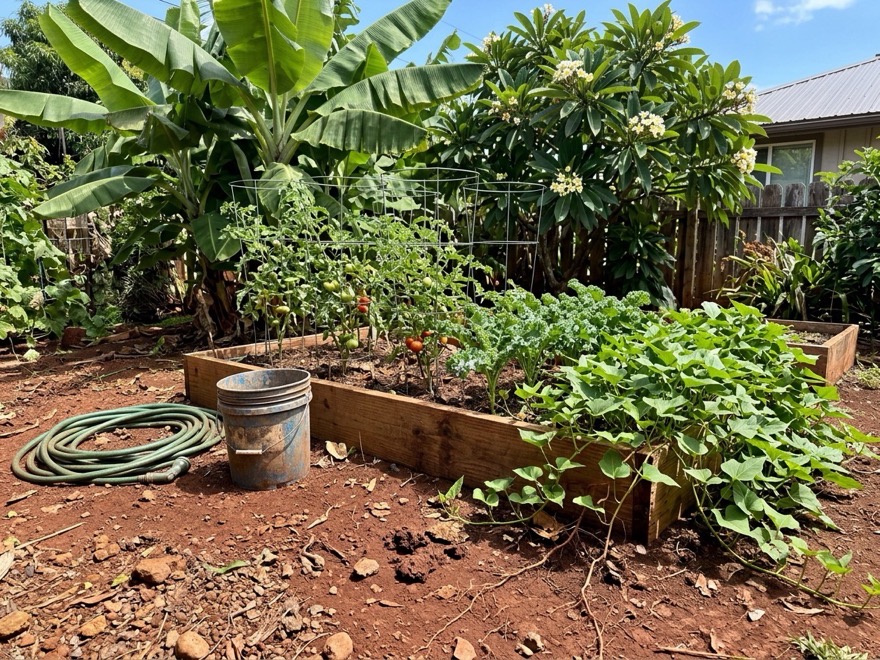
Hawaii has no real winter, so you would expect gardening to be easy. Then your tomatoes wilt overnight and your lettuce bolts. Vegetable gardening in Hawaii works, but it follows its own rules. This guide covers what grows well, how to pick tomato varieties for heat and humidity, and how to plan your first beds.
TL;DR: Vegetable gardening in Hawaii runs nearly all year. Pick varieties bred for the islands, rotate nightshade crops to avoid bacterial wilt, and plan your garden around your local sun, soil, and rainfall.
What vegetables grow in Hawaii?
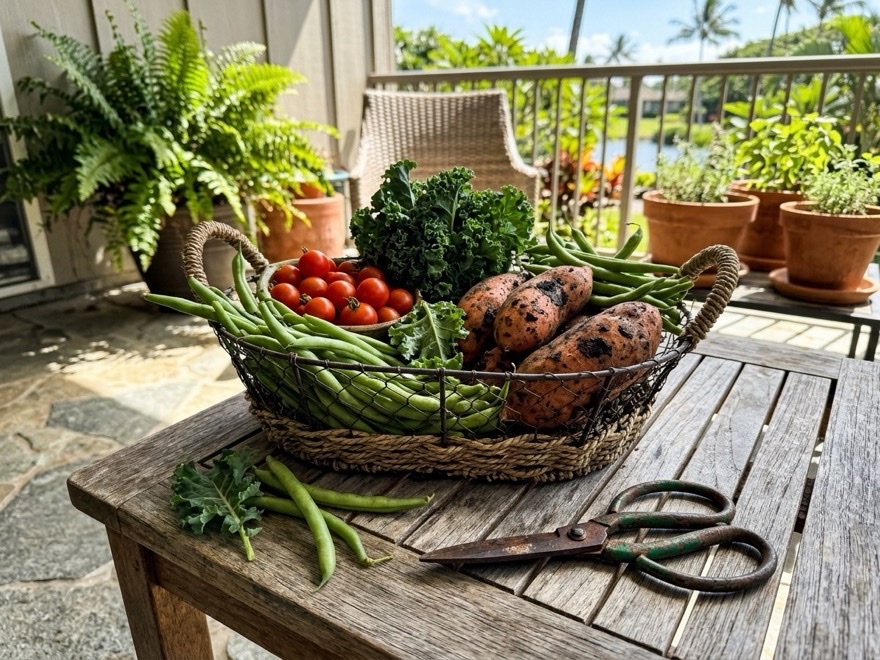
Many do. The University of Hawaii's College of Tropical Agriculture and Human Resources (CTAHR) publishes home-garden guides for a long list of crops. They include tomato, bell pepper, chili pepper, eggplant, cucumber, summer squash, lettuce, broccoli, cauliflower, carrots, beans, sweet corn, bunching onions, sweet potato, and taro.
Edible gardening can go on all year, according to a West Hawaii gardening column. It names southern peas, lima and pole beans, okra, sweet potatoes, tomatoes, and eggplant as reliable. Check your elevation and rainfall, since a windward slope and a dry leeward coast behave very differently.
For a first garden, CTAHR Master Gardeners suggest easy starters such as kale, herbs, and sweet potatoes. They are forgiving and grow fast.
Pick varieties made for Hawaii
The University of Hawaii Seed Laboratory produces seed for varieties adapted to the islands. CTAHR planning advice says to choose seed adapted to your conditions. Adapted varieties are bred for local conditions such as heat, humidity, and disease.
Seed from CTAHR cultivars is available from the CTAHR Agricultural Diagnostic Service Center Seed Lab on the Manoa campus and from some garden stores. Extension offices in Kona and Hilo can help on the Big Island.
Tomatoes in heat and humidity
Tomatoes are the crop most people want, and the one that fails most. Heat, humidity, and soil disease cause most of the trouble.
Kewalo is a University of Hawaii variety that is a good choice for hot and humid climates, according to a CTAHR Master Gardener fact sheet. It is a determinate plant that ripens its fruit evenly in 75 to 80 days. It was bred to resist fusarium wilt, gray leaf spot, one strain of spotted wilt virus, and root knot nematode.
The same fact sheet gives a simple method:
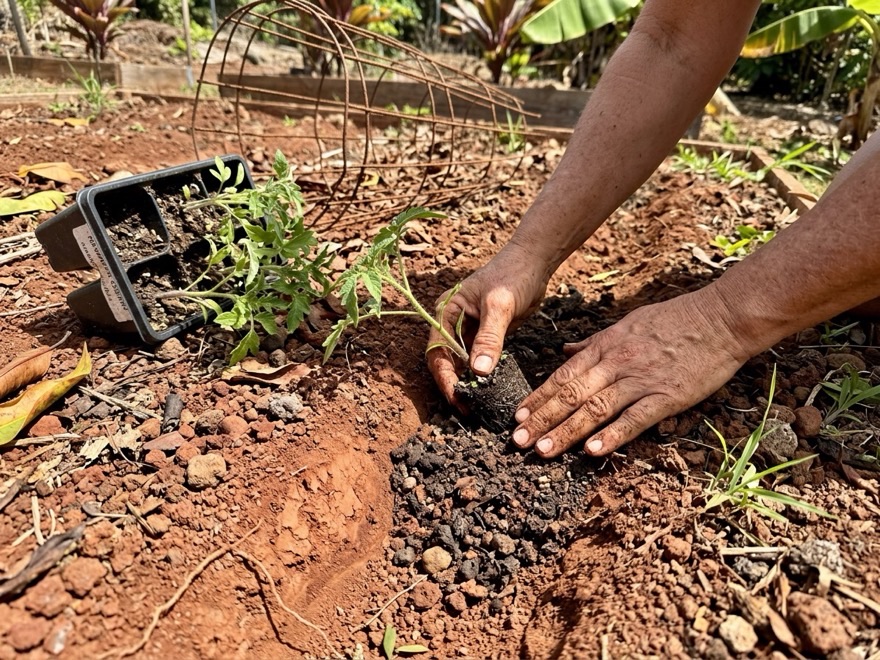
- Start seedlings in cell trays or pots. Transplant 3 to 5 weeks after sowing.
- Space plants 15 inches (38 cm) apart. Leave 24 to 30 inches (60 to 75 cm) between rows.
- Bury part of the stem. Roots form along the buried stem.
- Support the plant. A circular cage works. Tall cages need a couple of stakes.
Bacterial wilt: the soil problem
Bacterial wilt is a soil-borne disease that kills a tomato plant fast. CTAHR describes it as sudden wilt and death of the whole plant with no leaf yellowing. A cut stem shows a brown gooey substance inside.
The pathogen stays in the soil for years and enters through root wounds. Here is what CTAHR advises.
- Rotate your crops. Do not plant tomato, eggplant, pepper, or potato in infected soil.
- Choose resistant varieties. Kewalo and BWN-21 are both from UH-CTAHR.
- Clean your tools. Tools can carry the disease between beds.
Rotation needs a plan, since you must remember where each family grew. Our crop rotation guide for tomatoes explains the idea.
Containers for small spaces
Containers work well in apartments, on patios, and where the soil is poor, according to a CTAHR news item. They also help with soil disease, since you start with fresh potting mix. Our balcony vegetable garden guide covers the basics for small spaces.
CTAHR does not give pot sizes in the guides we found, so follow the seed packet for each crop.
How to plan your first Hawaii vegetable garden
The CTAHR guide on planning a vegetable garden gives a short checklist. We have added the steps in order.
- Choose a sunny site. It needs adequate sun and fertile, well-drained soil. Our sun mapping guide shows how to check.
- List the vegetables you want. Check each one's climate, soil, and season needs.
- Trim the list if space is limited. A small garden does better with fewer crops.
- Choose seed adapted to the islands.
- Keep a record. Write down what grew well so next season goes better.
For small gardens and tight budgets, see growing vegetables with limited resources.
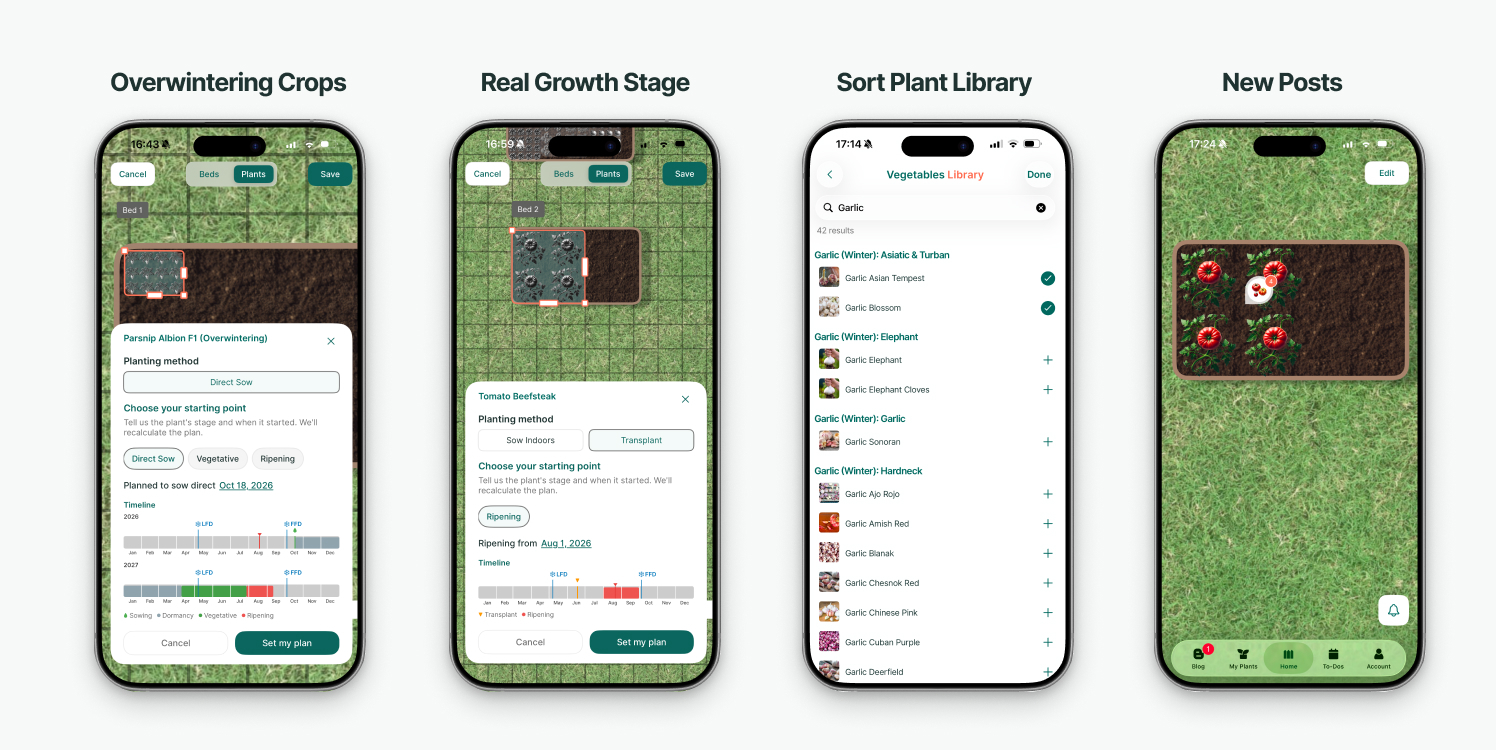
Hawaii gardens differ by island, elevation, and side of the island. easyDacha is a gardening app that calculates your planting dates from your ZIP code. You draw your beds on a garden map and add plants from a library of over 100 vegetables. Each plant gets a care plan, and you get a two-week task list. Download easyDacha and start with your first bed.
What NOT to do
Do not plant tomatoes in soil that had bacterial wilt. The disease stays for years.
Do not copy a mainland calendar. Seasons here depend on elevation and rainfall.
Do not wound roots when transplanting. The disease enters through root wounds.
Do not plant everything at once. A small garden gets overwhelming at harvest. Our succession planting guide shows how to stagger.
When your plants struggle
If plants fail, check three things. First, look at the wilt pattern. Sudden death with no yellowing points to bacterial wilt, not drought. Second, check the variety, since mainland seed often struggles in heat and humidity. Third, check soil and water. CTAHR notes that hard soil and too little watering slow seedlings in hot conditions.
Plan your Hawaii garden
Start with the right crops and the right dates. easyDacha, a vegetable garden app, builds a task list for your own beds. Try easyDacha and add your first plants.
FAQ
What vegetables grow best in Hawaii?
CTAHR has home-garden guides for tomatoes, peppers, eggplant, cucumbers, lettuce, beans, sweet potatoes, and many more. Beginners can start with kale, herbs, and sweet potatoes.
Can you grow vegetables in Hawaii all year?
Often yes. A West Hawaii garden column says edible gardening can continue all year. Your elevation and rainfall change which crops do best.
What tomato variety grows well in Hawaii?
Kewalo, a University of Hawaii variety, is a good choice for hot, humid climates. It resists several diseases and ripens in 75 to 80 days.
What is bacterial wilt?
A soil-borne disease that causes sudden wilt and death of the whole plant with no yellowing. Rotate crops and plant resistant varieties.
Where can I buy seed adapted to Hawaii?
The CTAHR Agricultural Diagnostic Service Center Seed Lab sells seed of CTAHR cultivars, and some garden stores carry it.
Is there an app that helps plan a Hawaii vegetable garden?
Yes. easyDacha is a gardening app and garden planner app. It uses your ZIP code to calculate planting dates and builds a care plan for each plant.