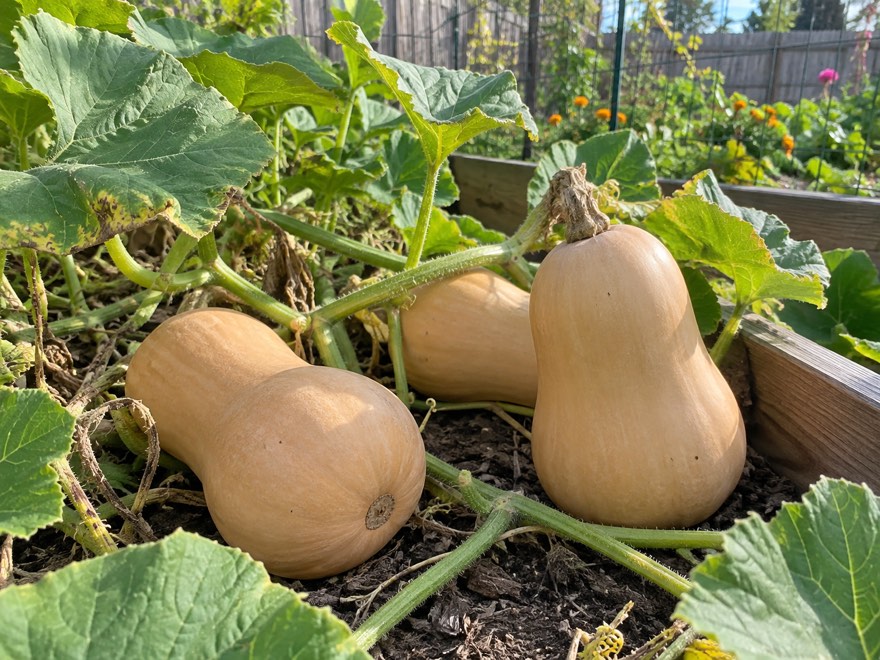
Your butternut vines are sprawling, the fruit has sized up, and you are not sure whether to cut now or wait. Pick too early and the squash never sweetens or stores. Wait too long and a hard frost can ruin it. Knowing when to harvest butternut squash comes down to three signs on the fruit itself: a rind you cannot dent, a deep dull tan color, and a stem that has gone dry and corky.
TL;DR: Harvest butternut squash when the rind is hard enough that your thumbnail will not dent it, the skin has turned deep tan and lost its shine, and the stem is dry and corky. Cut before a hard frost, leaving a 2 to 3 inch stem handle.
When to harvest butternut squash: the three ripeness signs
How to tell if butternut squash is ripe comes down to three tests: the thumbnail test, the color test, and the stem test. Check all three before you cut. Watching butternut squash ripening on the vine, you will see the color deepen and the stem dry as it finishes.
- Hard rind. Press your thumbnail into the skin. On a ripe butternut it will not dent. A rind that still marks easily needs more time on the vine.
- Deep tan, dull skin. Ripe butternut turns from pale beige to a solid deep tan. The surface also loses its gloss and goes matte. Shiny skin means it is not ready.
- Dry, corky stem. The stem where the fruit joins the vine dries out and turns tan and corky as the squash finishes. A green, soft stem means keep waiting.
When all three line up, the squash is mature. Winter squash needs a long season, roughly 85 to 110 days from sowing, and large types can run up to 120 days. Butternut sits near the top of that range, so patience pays off.
Cut watering as the fruit matures
Taper off water once the squash is full-size and starting to color. Cutting back on watering as the fruit ripens hardens the rind and improves how long the squash stores. Wet soil late in the season keeps the skin soft, which is the opposite of what you want for storage squash. This is the reverse of early-season care, when steady water builds the fruit, a balance we cover in our guide to planting vegetables for winter.
How to cut and handle butternut squash
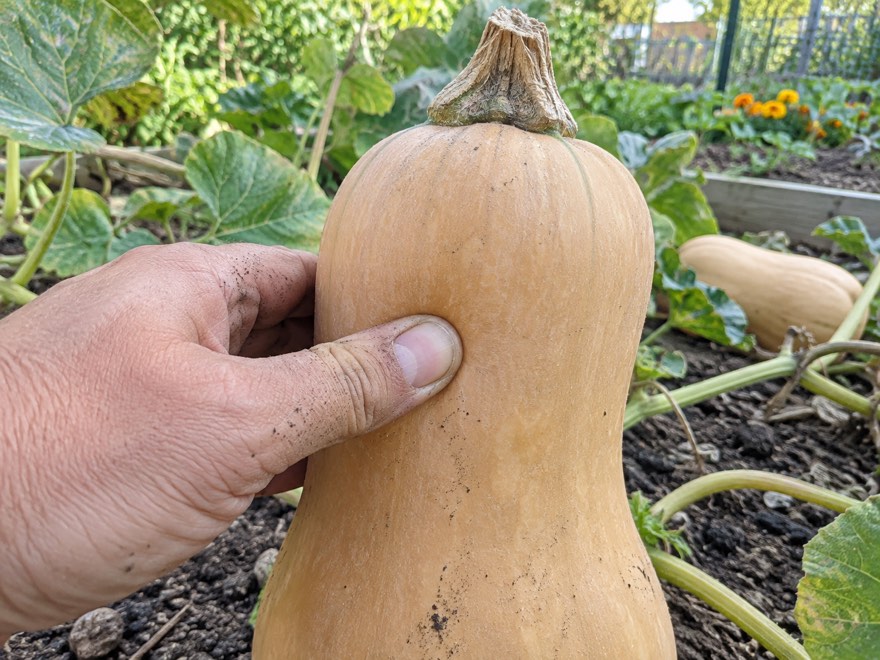
Cut, and never carry the squash by its stem. Use a sharp knife or pruners and leave a 2 to 3 inch (5 to 8 cm) stem handle on each fruit. That stem seals the top and keeps rot out during storage. If the stem breaks off, use that squash first, because it will not keep as long.
Lift each squash from underneath, not by the handle. A snapped stem opens the fruit to disease. Handle butternut gently even though the rind is hard, since bruises still shorten storage life.
Will butternut squash ripen before frost?
Butternut needs to come off the vine before a hard frost, ripe or not. Whether your butternut squash will mature in time before frost depends on how many warm days are left. A light frost can nip the leaves, but a hard freeze damages the fruit and ruins its storage life. Count back from your first frost date to know if your squash has time, the same fall timing behind our what to plant in Florida in fall guide for warm zones. If frost is close and the squash is nearly there, harvest it anyway. Mature-looking fruit with a firming rind will often finish curing off the vine.
Timing the harvest against frost is the same problem you face with tender fruit in fall, which is why our guide on saving green tomatoes before frost uses the same first-frost math. Know your date and you know your deadline.
How to cure and store butternut squash
Curing butternut squash is what turns a fresh squash into one that keeps for months. After you cut the fruit, cure it warm to harden the skin further. Set the squash somewhere warm at 80 to 85 degrees F (27 to 29 degrees C) with 75 to 80 percent humidity for about 10 days. A sunny porch or a warm indoor spot works.
After curing, move the squash to cool storage. Keep it at 50 to 55 degrees F (10 to 13 degrees C) with 50 to 70 percent humidity and good airflow. Do not stack the fruit tightly. A cured, well-stored butternut can keep for months, much longer than a squash pulled green. A good garden planting schedule helps you time squash so it matures with room to cure before the cold. Curing is a storage step for many crops, the same principle behind curing onions and garlic for storage.
What NOT to do
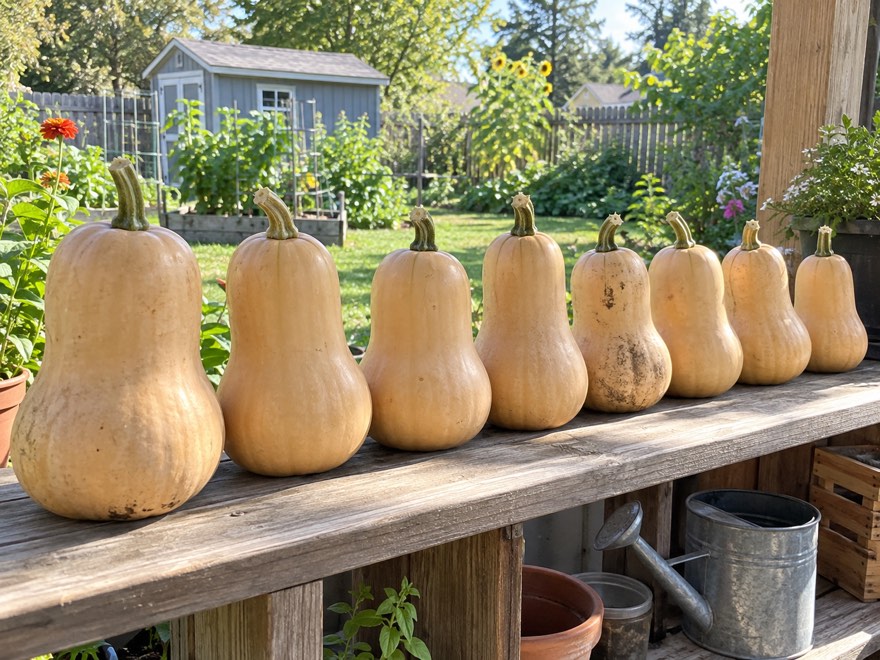
Don't pick by size alone. A big squash is not always ripe. Trust the rind, color, and stem, not the bulk.
Don't carry squash by the stem. The handle can snap and open the fruit to rot. Support it from below.
Don't leave squash out in a hard frost. A hard freeze damages the flesh and destroys its keeping quality. Cut before the freeze.
Don't skip curing. Uncured squash bruises easily and rots faster. The 10-day warm cure is worth the wait.
Best storage crops to harvest the same way
Butternut sits in a family of long-keeping crops you harvest and cure in fall.
- Winter squash like acorn, spaghetti, and kabocha follow the same hard-rind, dull-color rule.
- Pumpkins cure and store much like butternut, with a firm rind and dry stem as the cue.
- Onions and garlic cure warm and dry, then store cool, a parallel worth learning together.
Not every squash stores. Summer squash and zucchini are picked young and eaten fresh, which is why a glut of them needs a different plan, like the one in what to do with too many cucumbers.
Track your harvest and frost dates with easyDacha
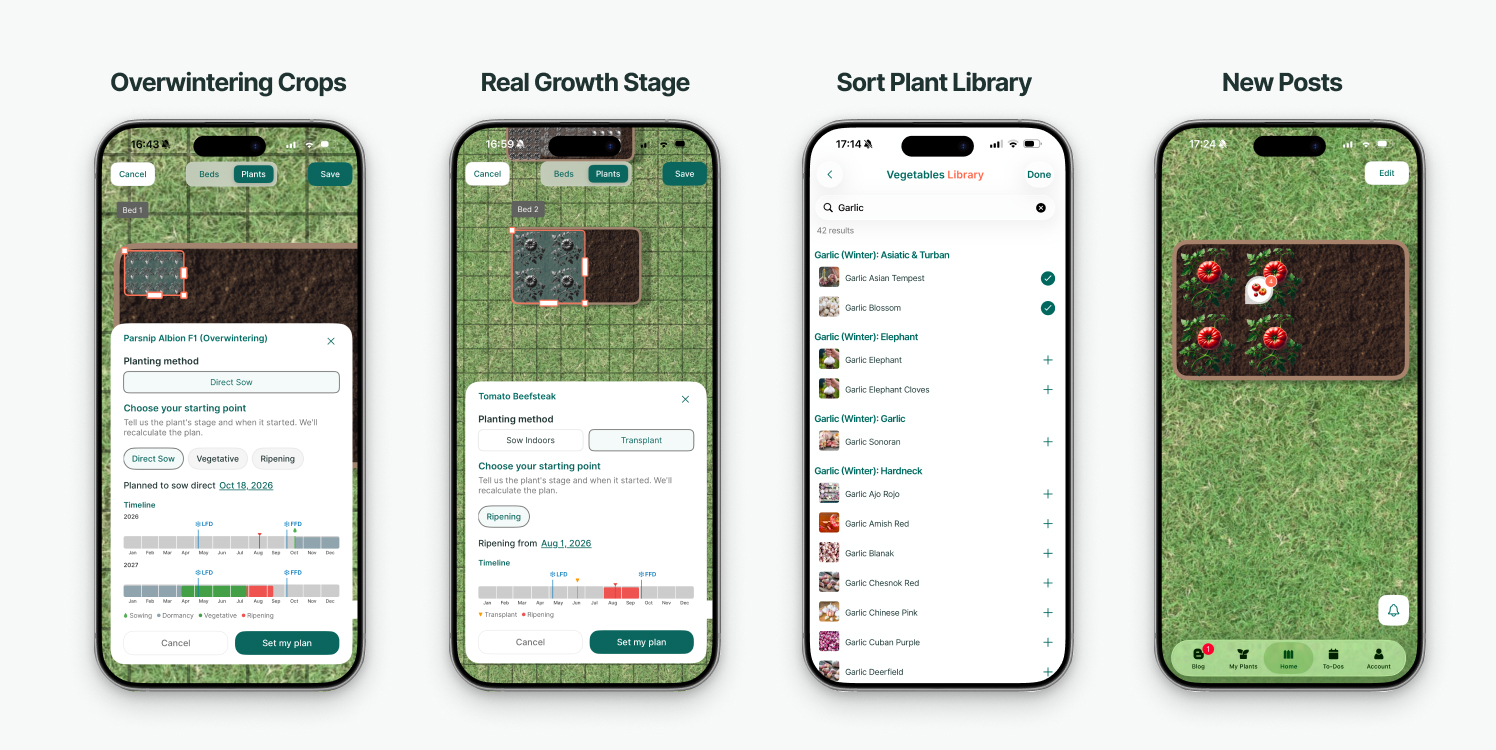
The real question behind when to harvest butternut squash is whether it will mature before your frost hits. easyDacha calculates your first frost date from your ZIP code, not a national average, so you know your exact deadline. As a garden planner app, it builds a task list tied to your squash bed and reminds you when to taper watering, when to harvest, and when frost is near. Draw your beds on the map and the spacing is handled for you.
FAQ
How do I know when butternut squash is ripe?
Butternut squash is ripe when your thumbnail will not dent the rind, the skin has turned deep tan and dull, and the stem is dry and corky. All three signs should line up. Winter squash takes roughly 85 to 110 days to reach this stage.
Can butternut squash ripen off the vine?
Somewhat. A mature squash with a firming rind will finish curing off the vine if you had to pick it before frost. A very immature green squash will not sweeten much after cutting, so it is best used fresh rather than stored.
Will butternut squash survive a frost?
No, not a hard frost. A light frost may only nip the leaves, but a hard freeze damages the fruit and wrecks its storage life. Harvest butternut squash before a hard frost, even if a few fruit are not fully colored.
How long does butternut squash need to cure?
Cure butternut squash for about 10 days at 80 to 85 degrees F with 75 to 80 percent humidity. Curing hardens the skin and heals small nicks. After that, store it at 50 to 55 degrees F for months of keeping.
Is there an app that tells me when to harvest butternut squash?
Yes. easyDacha is a gardening app that calculates your frost dates from your ZIP code and builds a task list tied to your squash bed. It reminds you when to taper watering and harvest before frost, so your butternut has time to mature.