
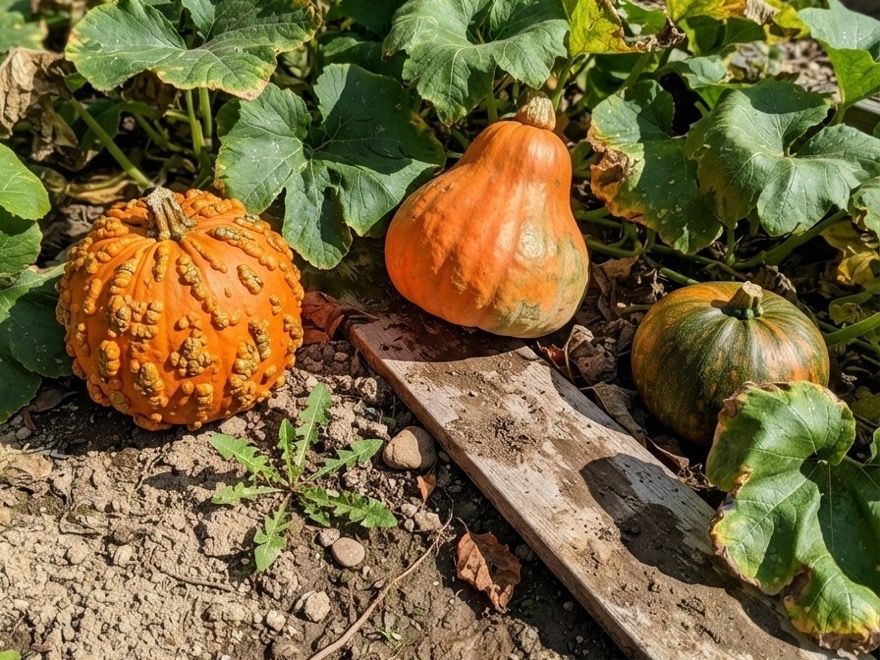
You waited all summer, and the pumpkins came out lumpy, lopsided, or no bigger than a softball. It feels like you did something wrong. Usually you did not. Most ugly pumpkins trace back to weather, pollination, or a virus, and each one leaves its own clues.
TL;DR: Why are my pumpkins so ugly? Usually cool wet weather, poor pollination, an aphid-spread virus, or a warty variety. Most lumpy fruit is still fine to cook.
Why are my pumpkins so ugly? The four usual causes
Ugly pumpkins have four common causes: edema from wet weather, incomplete pollination, mosaic virus, and warty genetics. Look at where the bumps are and what the leaves look like. That tells you most of the story.
1. Edema from cool, wet weather
Penn State Extension says edema comes from wet, cool weather. It usually shows on the side of the pumpkin that lies on the ground. Roots keep pulling in water while the plant cannot release it fast enough, and skin cells burst into small corky bumps (Cornell).
MSU Extension calls this not too serious on pumpkins and squash. The warts stop forming on new growth when the weather warms and dries. The bumps already there stay.
2. Incomplete pollination
Washington State University says incomplete pollination gives misshapen fruit that is curved, bell-shaped, or a nubbin. Fruit that was never pollinated stays small, may rot from the blossom end, and often yellows and drops.
Pumpkins make separate male and female flowers. The first female flowers often open before any male flowers, so they go unpollinated. Cold weather can also block flower development and pollination.
3. Mosaic virus
Clemson Extension says infected cucurbits can be stunted, with mottled, crinkled leaves and fruit that is irregular, mottled, or warty. Aphids and other insects spread these viruses.
The tell is on the leaves. If the leaves are mottled yellow and green and curl up, suspect virus. Bumps from a virus look like they rise from under the skin.
4. A variety that is meant to be warty
Many growers choose warty types on purpose. Seed companies sell lines such as Knucklehead and Warty Goblin for their bumps. If the bumps sit on top of the skin, the plant is healthy, and you planted a warty variety, that is the answer.
How to tell which cause you have
Use this quick check before you blame yourself.
- Bumps mostly on the side touching the soil, healthy leaves, a cool wet summer: edema.
- Lopsided, bell-shaped, or tiny fruit, healthy leaves: pollination.
- Mottled, crinkled, stunted leaves plus bumpy fruit: virus.
- Healthy plant, bumps all over, planted a named warty variety: genetics.
If you are still unsure, take photos of the leaves and the fruit and ask your county extension office.
Small pumpkins: why they stay small
If your problem is small pumpkins, why is a different question from warts. Small fruit points to pollination first. WSU notes that unpollinated fruit stays small and starts to rot at the blossom end.
Heat and stress can also play a part. Extreme heat can make flowers drop. Too much nitrogen gives you big leaves and late fruit. Late fruit may not have time to size up before frost.
A vine that carries too many pumpkins will also make smaller ones. Late in the season, you can pinch off new flowers and tiny fruit so the plant puts everything into the pumpkins it already has.
How to fix poor pollination by hand
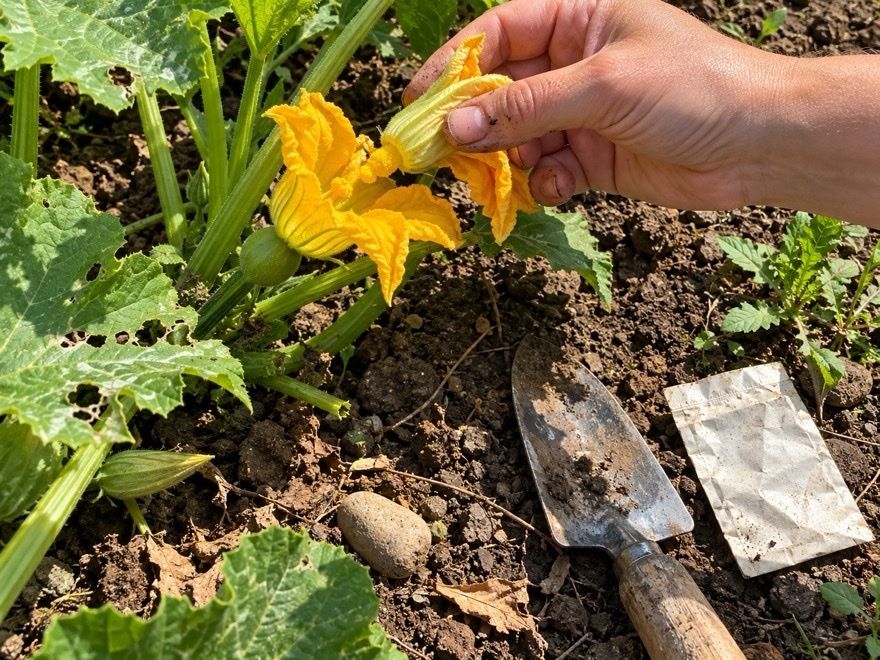
Hand pollination works well in a small patch. Do it in the morning, when flowers are fresh.
- Find a female flower. It has a small swollen pumpkin-shaped base right under the petals.
- Pick a freshly opened male flower with a plain thin stem.
- Peel back the petals so the pollen shows.
- Brush the pollen onto the center of the female flower.
Hand pollination works best between 6:00 and 9:00 a.m. Flowers open after sunrise and last only one day, so you have to move quickly. One male flower can pollinate several female flowers.
To keep bees around, plant nectar flowers near the patch. Our guide to insectary flowers shows which ones to pick. The same steps used in our guide to hand pollinating dragon fruit apply here in spirit: work early, work gently.
Are warty pumpkins safe to eat?
In most cases, yes. Edema is cosmetic. Bred warts are just skin. We found no extension warning against eating warty fruit that is firm and sound.
Check each pumpkin yourself. Skip any fruit that is soft, moldy, or leaking, and cut away bad spots. Fruit from a virus plant can be badly distorted, and the flesh may be stringy or bland. Taste a small cooked piece before you commit to a big batch.
The right time to pick matters too. See when to harvest butternut squash for ripeness signs that carry over to other winter squash.
What to do next season
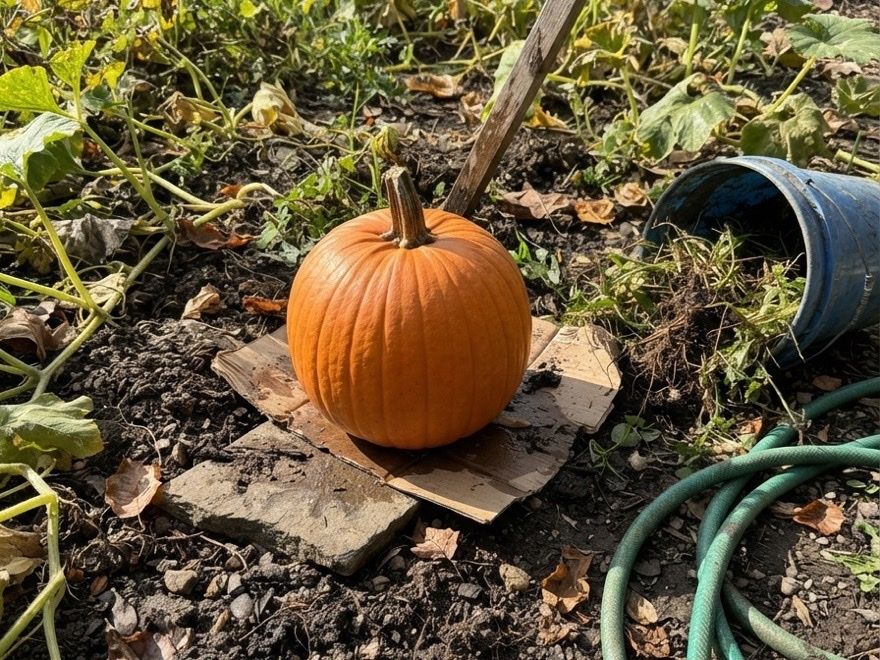
Raise the fruit off wet soil. Slide a board, a flat stone, or a piece of cardboard under each pumpkin. This helps with edema on the ground side.
Control aphids early. Aphids spread mosaic virus, so scout young plants weekly. Our guide to getting rid of aphids organically covers sprays and timing. Remove plants that show mottled, crinkled leaves, and bag them rather than composting them.
Do not rush planting. Cold soil and cold nights block flowers and pollination. Wait until the weather is warm and settled. This matters most in USDA zone 5 and zone 6, where cold nights linger.
Go easy on nitrogen. Feed to grow the vine, then ease off once flowers appear.
Learn your pests and diseases. Our guides to common garden pests and to spotting plant diseases early help you catch problems when they are small.
In USDA zone 9 and zone 10, heat during flowering is the bigger risk. Plant earlier so the vines flower before the hottest weeks.
Keep notes so next year is easier
The hardest part of diagnosing a pumpkin is remembering what happened in June. When did it turn cold and wet? When did the first flowers open? Which variety was it?
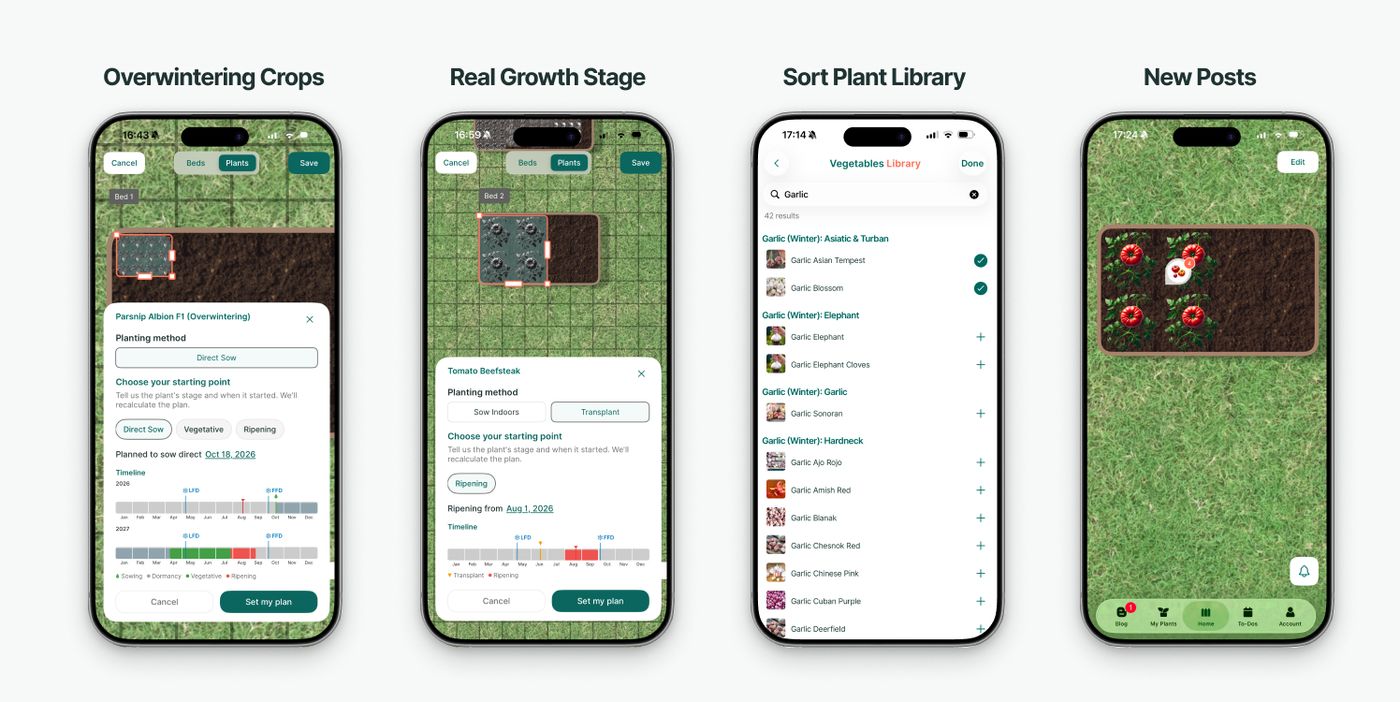
easyDacha is a gardening app that keeps a two-week task list built around your beds and your ZIP code. You draw your beds on a map and add each plant. Then you can see what to do next, and look back at planting dates. Download easyDacha and add your pumpkins before next season.
Plan a better pumpkin patch
Good timing fixes many pumpkin problems. easyDacha calculates planting dates from your local frost dates, so your vines flower when the weather is right. Try easyDacha and plan the whole season from seed to harvest.
FAQ
Why are my pumpkins so ugly this year?
The usual causes are cool wet weather (edema), poor pollination, mosaic virus, or a warty variety. Check the leaves and where the bumps sit to tell which one it is.
Are warty pumpkins safe to eat?
Most are. Edema warts and bred warts are skin deep. Cook only fruit that is firm and sound, and cut away soft spots. Badly distorted fruit from a virus plant may taste bland.
Why are my pumpkins so small?
Small pumpkins are often poorly pollinated, crowded on the vine, or set late. Hand pollinate in the morning and pinch off late flowers so the plant finishes the fruit it has.
Will warty pumpkins come back next year?
Edema depends on the weather, so it can return in a wet cool year. Virus depends on aphids. Bred warts return only if you plant the same warty variety.
Can I save seeds from ugly pumpkins?
Pumpkins cross with other squash grown nearby, so seeds may not match the parent. Seeds from a virus plant are a poor choice. Buy fresh seed if disease was present.
Is there an app that helps me plan a pumpkin patch?
Yes. easyDacha is a gardening app and vegetable garden app. It sets planting dates from your ZIP code and builds a two-week task list.