
You grew one tomato this year that beat all the others. Now frost is coming, and you want that exact tomato again next summer. So you scrape out some seeds, dry them on a paper towel, and in spring they stick, mold, or never come up. Fermenting tomato seeds to save them fixes that. A short soak breaks down the gel coat that holds back germination and carries disease.
TL;DR: Fermenting tomato seeds to save them means soaking seeds and gel in water for 1 to 3 days at room temperature, then rinsing, drying on a plate for 1 to 2 weeks, and storing them cool and dry.
Pick the right tomato first
Seed saving starts with the fruit, not the jar. Two rules decide whether your seeds grow true.
Choose open-pollinated or heirloom varieties. Seeds from F1 hybrids do not produce the same tomato next year. The plants will be a mix of the parents' traits. Our guide to F1 hybrids vs heirlooms explains the difference.
Use fully ripe fruit from a healthy plant. Pick a tomato that ripened well past eating stage, from a plant that stayed disease-free. Mature seeds come from mature fruit.
Tomato flowers mostly pollinate themselves before they open, so crossing between varieties in a home garden is uncommon.
When to save tomato seeds before frost
Save seeds as soon as you have fully ripe fruit on your best plant. Do not wait for the last week of the season.
If frost is days away, pick your best ripe tomatoes now. Mature green fruit can finish ripening indoors for eating, as our guide on green tomatoes ripening before frost shows. For seed, favor fruit that ripened fully, ideally on the vine.
Fermenting tomato seeds to save: the method
You need:
- 1 or more fully ripe tomatoes
- A small glass jar
- Water
- A fine mesh strainer
- A ceramic plate, glass dish, or coffee filter for drying
- Paper envelopes and a marker for labels
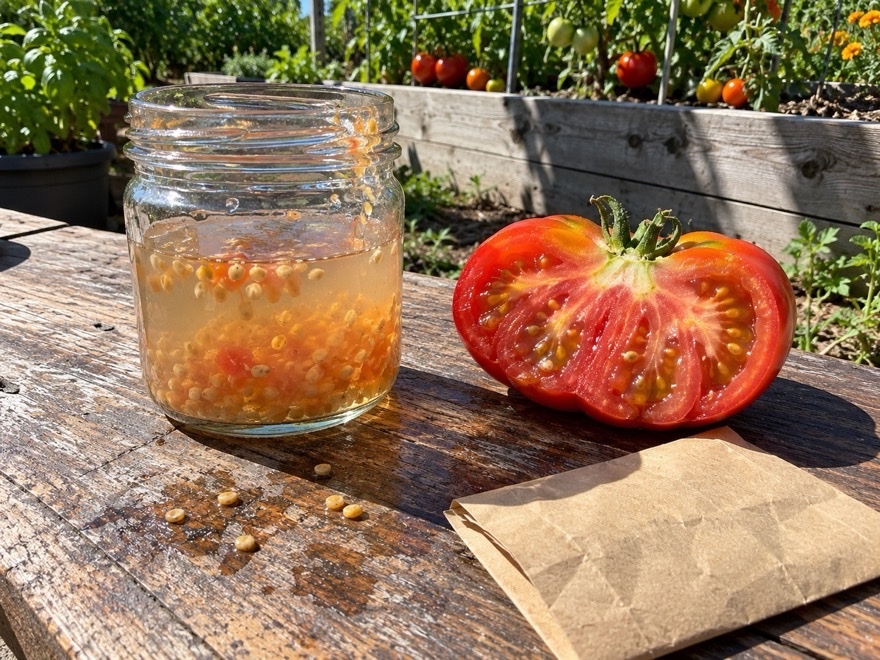
Step 1: Scoop the seeds. Cut the tomato across its middle. Squeeze or spoon the seeds with all their gel into the jar.
Step 2: Add water. Pour in about as much water as there is seed pulp. Stir.
Step 3: Ferment 1 to 3 days. Cover the jar loosely with a cloth or paper towel. Keep it at room temperature, away from direct sun. Stir once a day. A white or gray film of mold forms on top. That is normal.
Step 4: Pour off the floaters. Add a bit more water and stir. Good seeds sink. Pour off the mold, pulp, and floating seeds.
Step 5: Rinse. Tip the rest into the strainer and rinse under running water until the seeds feel clean, not slimy.
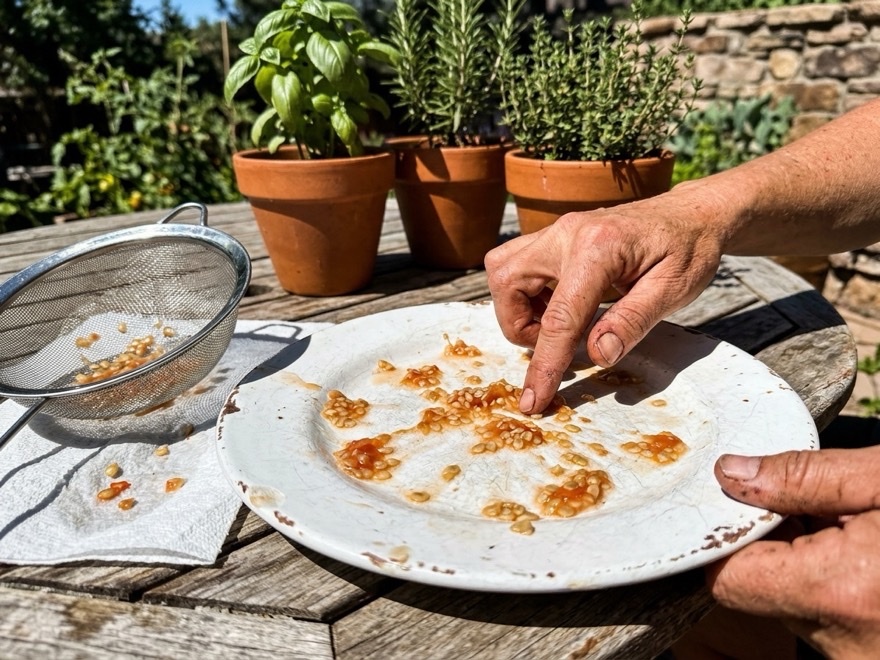
Step 6: Dry. Spread the seeds in a single layer on the plate or coffee filter. Leave them in a warm, airy spot out of direct sun for 1 to 2 weeks. Stir them with your finger every day or two so they do not clump.
Why fermentation works
Each tomato seed sits inside a jelly-like gel coat. The gel contains compounds that hold back germination. In nature, that gel rots away when the fruit falls and decays.
Fermentation copies that process in a jar. Natural microbes break down the gel within a few days. Seed saving guides also note that fermentation helps reduce some seed-borne diseases.
Timing matters. Research on tomato seed fermentation found that 1 to 2 days at about 77°F (25°C) works best. Fermenting longer than 3 days can lower germination. So check the jar daily and stop once the film forms and seeds sink cleanly.
Drying tomato seeds without mistakes
Seeds must be bone dry before storage. Damp seeds mold in the envelope.
A seed is dry enough when it snaps or cracks rather than bending. Avoid paper towels, since seeds glue themselves to the fibers. Do not use an oven or a dehydrator on high heat. Temperatures above about 95°F (35°C) can damage the embryo. Heat-damaged or moldy seed is one of the causes covered in our seed starting troubleshooting guide.
Storing tomato seeds for next year
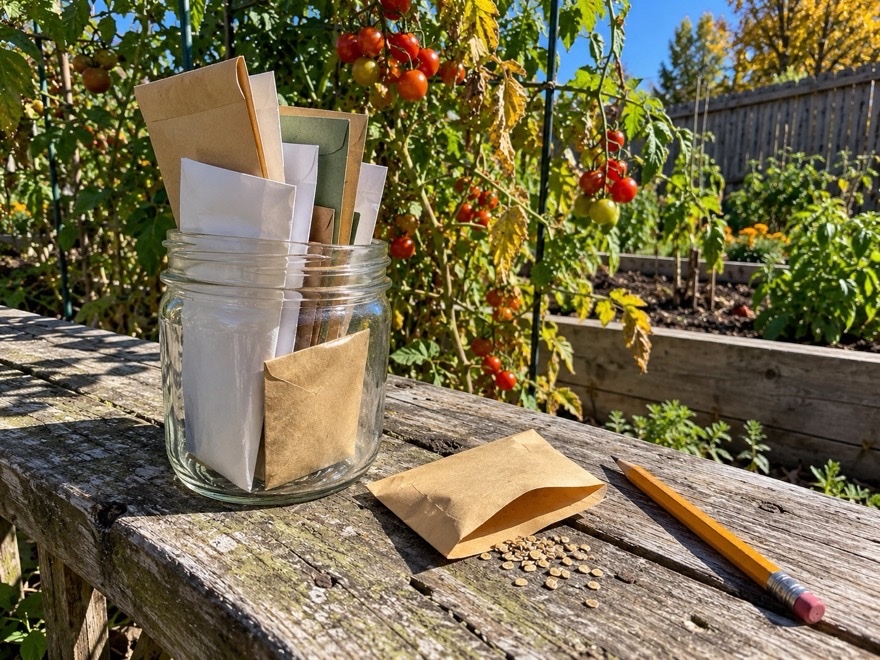
Once dry, put the seeds in a paper envelope. Label it with the variety name, the year, and a note about the plant, like "earliest ripener" or "no cracking."
Place the envelopes in an airtight jar and keep it somewhere cool, dark, and dry. A closet shelf or the back of a cabinet works. Properly dried and stored tomato seeds stay viable for about 4 to 6 years.
In spring, start them like any other seed. Our guide on growing tomatoes from seed walks through timing and setup. Most saved tomato seed does not need a pre-soak, as covered in our seed soaking tips.
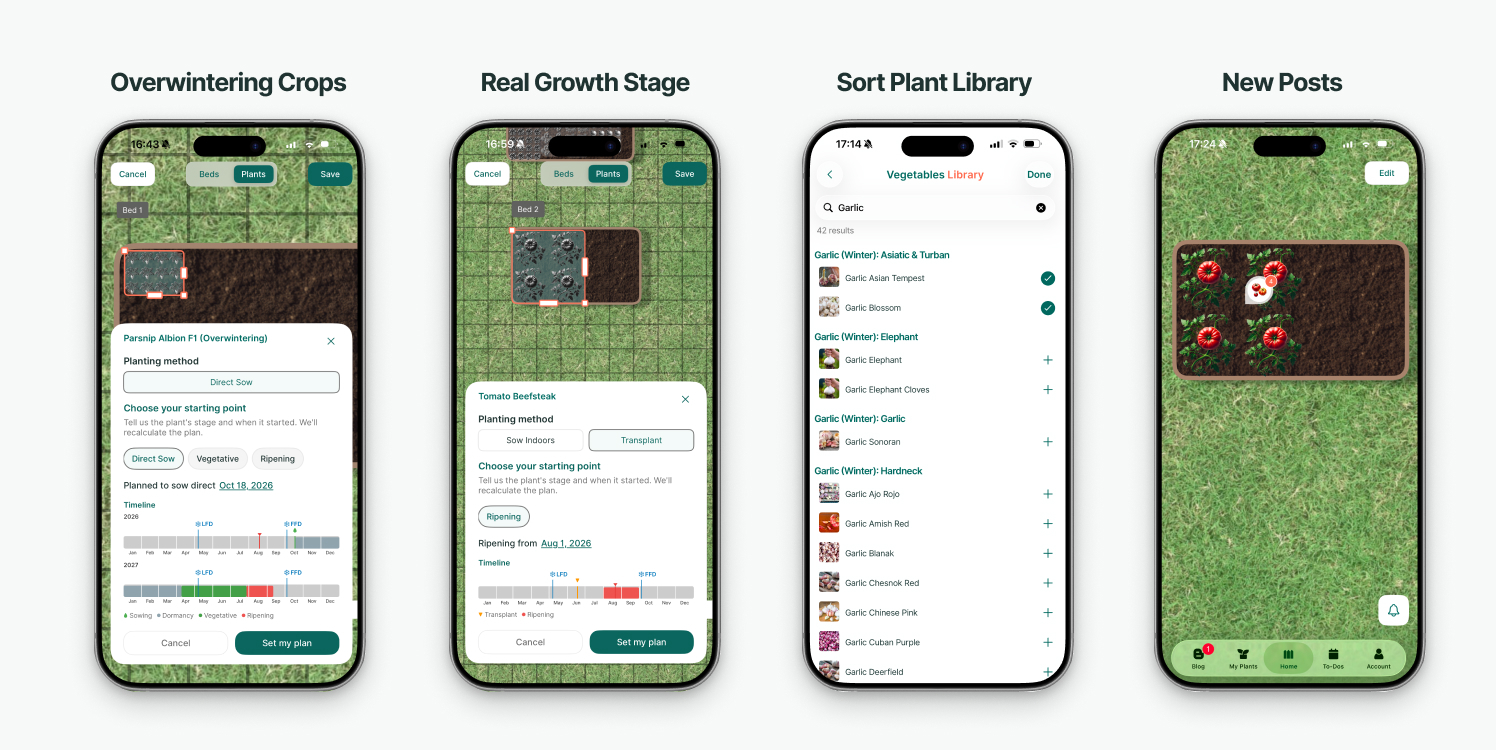
Saved seeds are easy to lose in a drawer. easyDacha has a seed and seedling inventory where you log every envelope you saved, so you know exactly what you have in spring. Your saved heirloom may not be in the plant library, so add it as a custom variety. It gets its own care plan, seed-starting dates from your ZIP code, and tasks on your two-week list. Try easyDacha →
Best for which plants
- Tomatoes, all types (slicers, paste, cherry): the fermentation method was built for them.
- Cucumbers: their seeds also sit in gel, and the same fermentation method works.
- Peppers, beans, and peas: skip fermentation. Their seeds are dry inside the fruit or pod, so you just dry and store them.
- F1 hybrids of any crop: skip saving. The seeds will not grow true.
What NOT to do
Do not ferment longer than 3 days. Extra time can hurt germination.
Do not dry seeds on paper towels. They stick and are hard to separate.
Do not store seeds before they are fully dry. Moisture causes mold.
Do not save seeds from a diseased plant. Some diseases travel with the seed.
Grow Your Best Tomato Again
Fermenting tomato seeds to save them is the easy part. Remembering what you saved and when to start it is harder. easyDacha, the garden planner app with a built-in seed inventory, keeps every envelope and every date in one place. For extra ideas on building a seed stash, see our seed buying guide.
FAQ
How long should I ferment tomato seeds?
1 to 3 days at room temperature. Stop when a film forms and good seeds sink. Fermenting tomato seeds to save them longer than 3 days can lower germination.
How do I save tomato seeds for next year without fermenting?
You can rinse seeds and rub off the gel in a strainer, then dry them. It works, but fermentation removes the gel more completely and helps reduce seed-borne disease.
Is the mold on fermenting tomato seeds normal?
Yes. A white or gray film shows the gel is breaking down. Pour it off with the pulp when you rinse.
Can I save seeds from store-bought tomatoes?
You can, but many store tomatoes are F1 hybrids, so the plants may not match the fruit. Heirloom tomatoes from a farmers market are a better bet.
How long do saved tomato seeds last?
About 4 to 6 years when fully dried and stored cool, dark, and dry in an airtight container.
Is there an app that helps track saved seeds?
easyDacha is a vegetable garden app with a seed and seedling inventory. Log your saved tomato seeds, add custom varieties, and get seed-starting dates for your ZIP code in spring.