
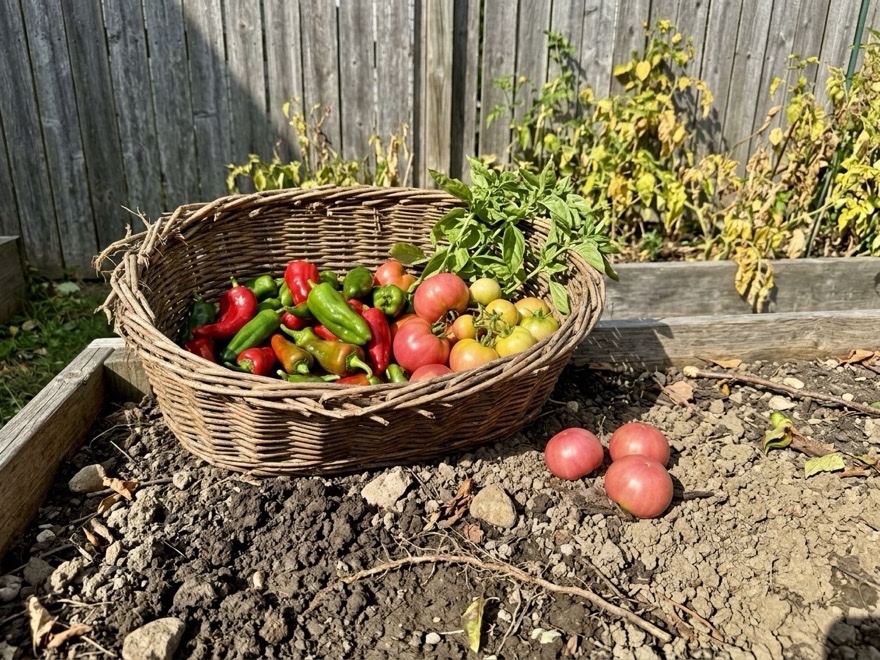
The forecast says 31°F tonight. Your peppers are still loaded, the tomato vines are full of green fruit, and the kale looks fine. You have a few hours and no clear plan. Knowing what to do for the final harvest before frost saves the crops that will die tonight. It also keeps you from pulling the ones that actually get better in the cold.
TL;DR: For your final harvest before frost, pick all tender crops (tomatoes, peppers, basil, squash, beans) before temperatures hit 32°F (0°C), leave frost tolerant vegetables like kale and carrots in place, then clear diseased plants.
Know which frost you are facing
A light frost and a hard freeze are different events, and they call for different moves.
- Light frost, 29 to 32°F (-2 to 0°C): kills tender plants like basil, beans, and squash. Hardy crops shrug it off.
- Hard freeze, 28°F (-2°C) and below: damages most remaining crops, including many hardy ones if it lasts for hours.
Covers can buy you time before a light frost. Frost fabric or old bedsheets over hoops hold ground heat and add a few degrees of protection. University extension testing shows heavier row cover gives more protection than light cloth. Once temperatures fall below about 28°F (-2°C), covers stop being enough.
Pick tonight: tender crops
These plants die at 32°F (0°C). Harvest everything usable before sunset on frost night.
- Tomatoes: pick every fruit showing any color, plus mature green ones that have turned glossy and pale. Our guide on whether green tomatoes ripen before frost shows how to finish them indoors.
- Peppers: pick all of them, green or colored. Green peppers are edible now. Colored ones hold longer.
- Basil: harvest the whole plant. Basil blackens once temperatures drop below 40°F (4°C), even without frost.
- Summer squash, cucumbers, and beans: pick everything, even small fruit. The vines will not survive.
- Eggplant: harvest any fruit with glossy skin.
- Winter squash and pumpkins: cut them with 2 to 3 inches (5 to 8 cm) of stem before a hard freeze, then cure them in a warm spot.
Sweet potatoes also need to come out before cold soil damages the roots. Dig them as soon as frost blackens the vines.
Got more produce than you can eat? These ways to preserve vegetables besides freezing handle a sudden glut. Onions and garlic you pulled earlier keep all winter if you cure them for storage first.
Leave in place: frost tolerant vegetables
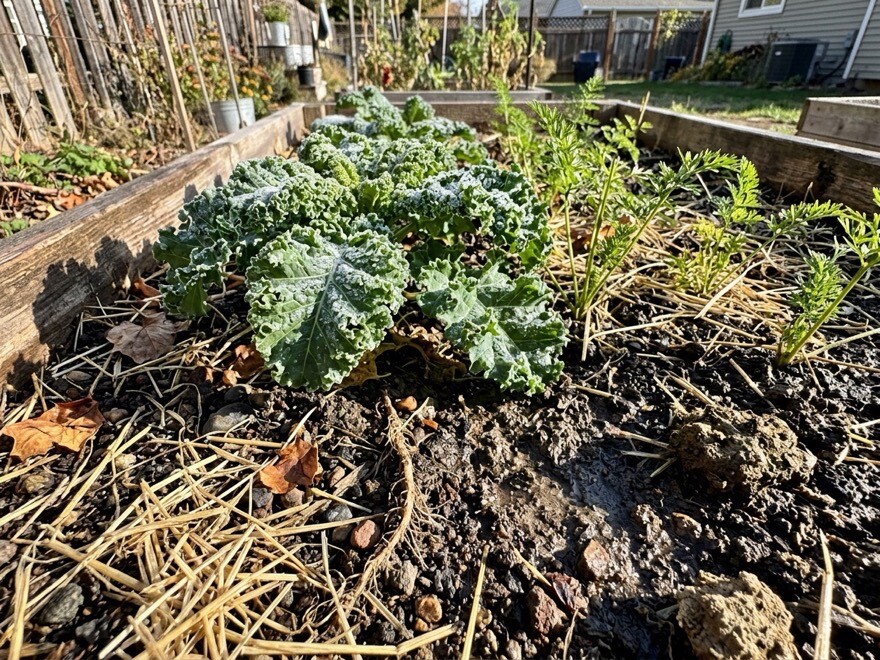
Some crops handle frost well, and several taste better after it. Cold nights push the plants to turn starch into sugar, which acts like antifreeze.
- Kale, collards, and Brussels sprouts: leave them. Flavor sweetens after a few frosts.
- Cabbage: tolerates light frost. Harvest before a hard freeze.
- Carrots, parsnips, and beets: roots stay protected in the soil. A thick layer of straw or leaves lets you dig them well into winter in many zones.
- Spinach and hardy lettuce: survive light frost. Cover them on colder nights.
In USDA zone 7, zone 8, and zone 9, many of these crops keep producing all winter with a light cover. In zone 4 and zone 5, harvest them before the ground freezes solid. If you still have time, our list of vegetables to plant for winter covers what to sow now for a spring harvest.
Bring inside: herbs and potted plants
Potted herbs and container crops can come indoors instead of dying. Rosemary survives outdoors only in zone 7 and warmer. Parsley and chives handle cold better.
Move pots in before the first frost and give them your sunniest window. This walkthrough on how to move garden plants indoors covers pot sizes and the transition.
Final harvest before frost: what to do so it never surprises you again
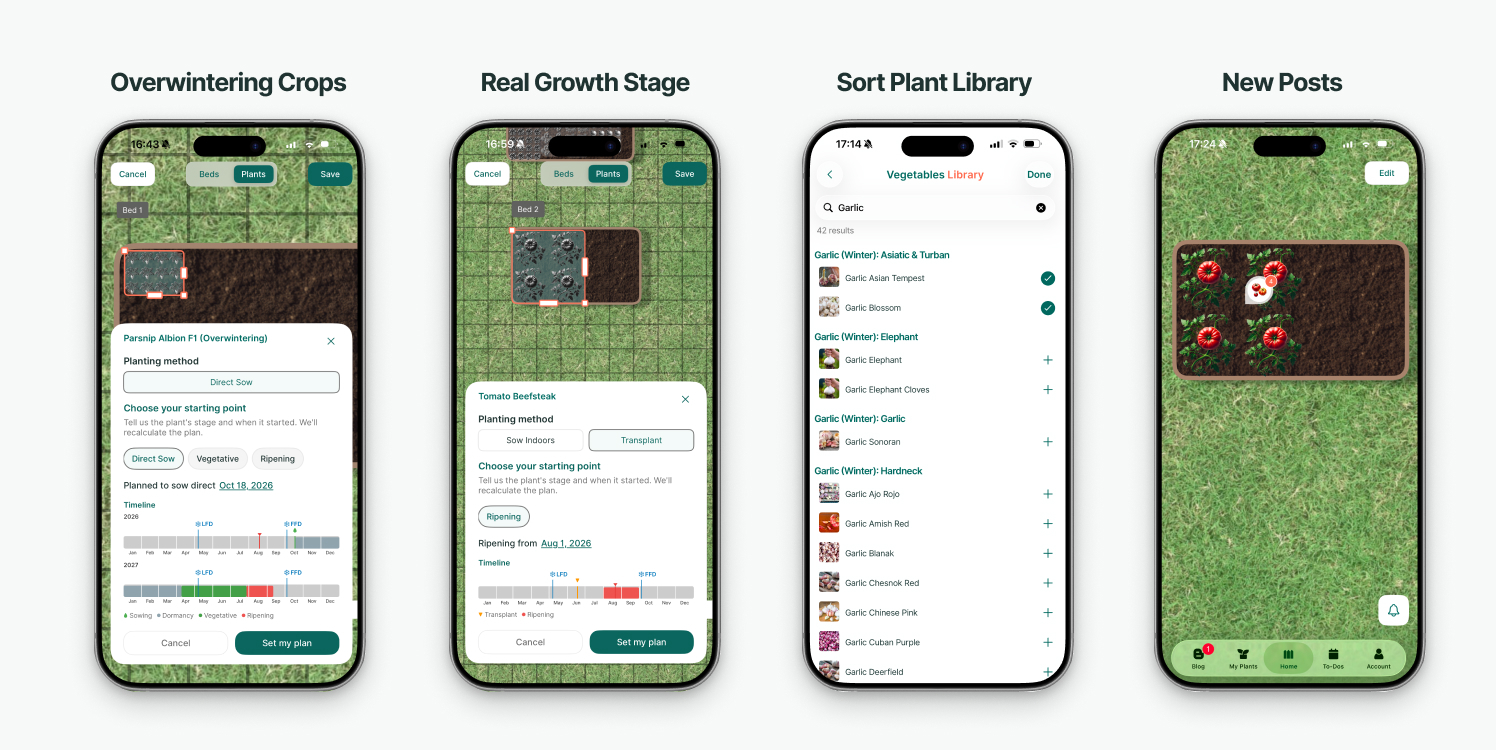
The frost scramble happens because nobody reminded you two weeks ago. easyDacha calculates your first fall frost date from your ZIP code, not a national average. Each plant's care plan includes harvest and cleanup tasks. Those tasks appear on your two-week list before frost arrives, so the final harvest is planned instead of rushed. Try easyDacha →
Fall garden cleanup checklist
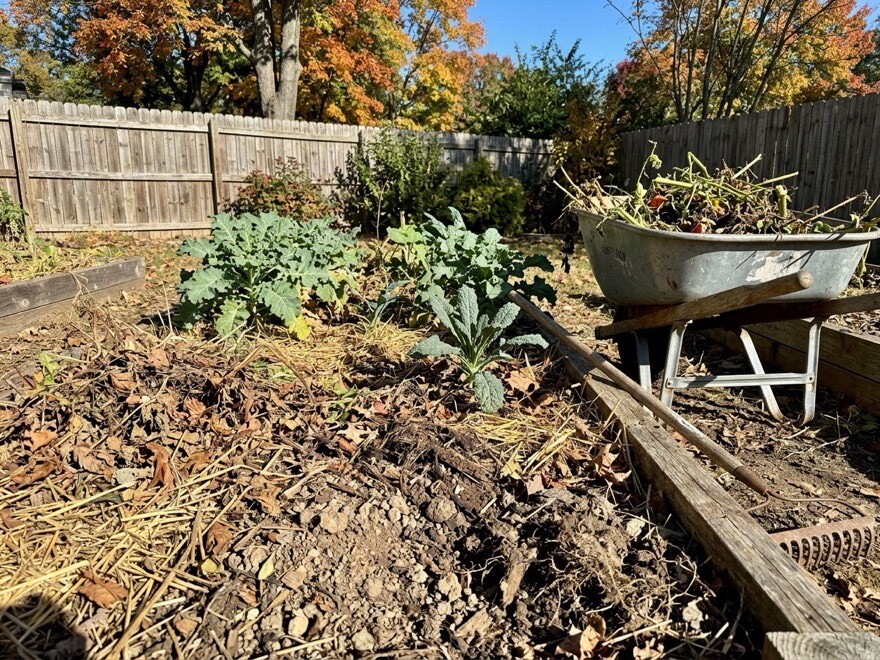
After the last harvest, a short cleanup protects next year's garden.
- Pull diseased plants. Bag or burn vines with blight, mildew, or wilt. Do not compost them, because many pathogens survive the winter.
- Chop healthy plants. Cut disease-free stems at soil level and leave the roots to rot in place. They feed soil life.
- Cover bare soil. Spread shredded leaves, straw, or compost, or sow a cover crop. Bare soil loses nutrients over winter.
- Clean and store tools. Scrape off soil and dry everything.
- Write down what happened. Note which varieties worked and where each crop grew. That record makes next year's crop rotation simple.
What NOT to do
Do not wait until morning. Frost forms overnight, and the damage is done by sunrise.
Do not pull kale and carrots early. They are the crops that improve with cold.
Do not compost diseased vines. You will spread the same disease next season.
Do not leave soil bare all winter. Rain and wind strip away the topsoil you built.
End the Season on Your Schedule
A final harvest before frost should not depend on catching the weather report in time. easyDacha, the garden planner app built for your exact beds and ZIP code, puts harvest and cleanup tasks on your list before the cold hits. Open the app and the next two weeks are ready.
FAQ
What should I do for my final harvest before frost?
Pick all tender crops, including tomatoes, peppers, basil, squash, cucumbers, and beans, before temperatures reach 32°F (0°C). Leave frost tolerant vegetables in place. That is the core of what to do for a final harvest before frost.
Which vegetables can survive frost?
Kale, collards, Brussels sprouts, cabbage, carrots, parsnips, beets, and spinach survive light frost. Several get sweeter after a few cold nights.
Can I pick green tomatoes before frost?
Yes. Mature green tomatoes ripen indoors at room temperature. Very small, hard green fruit usually will not ripen, so use those for cooking.
Will covering plants protect them from frost?
Covers help during a light frost by holding in ground heat. They add a few degrees of protection. Below about 28°F (-2°C), covers are usually not enough.
How do I know it is getting towards the end of garden season?
Watch your first fall frost date and nighttime temperatures. When nights drop into the 40s°F (4 to 9°C), tender crops slow down, and the end of garden season is close.
Is there an app that tells me when my first frost is coming?
easyDacha is a vegetable garden app that sets dates from your ZIP code's local frost dates. Harvest and cleanup tasks for each plant show up on your two-week task list ahead of time.