
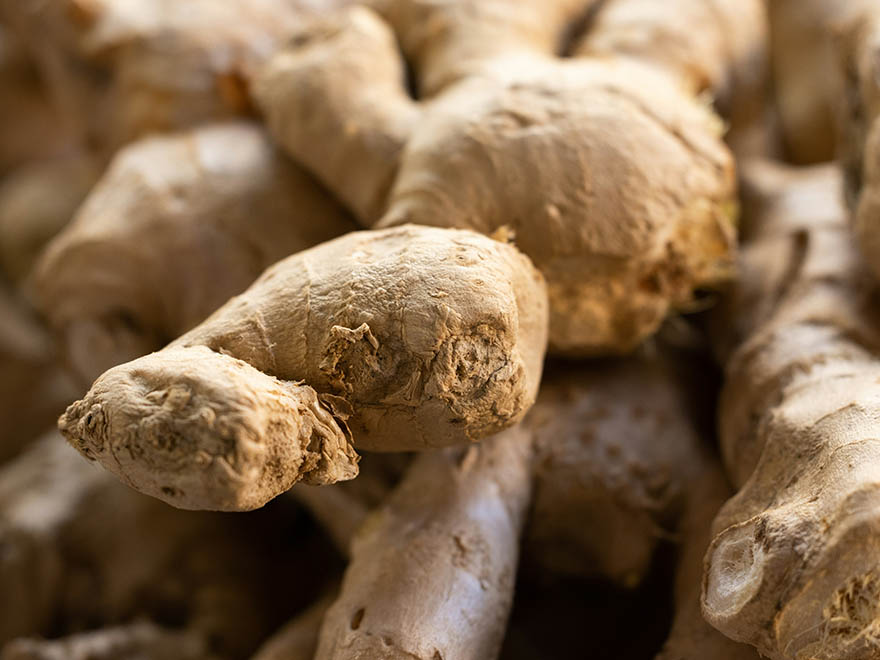
Seeds lose viability over time. A packet of tomato seeds that sprouted at 90% last year might only give you 40% this year. Ginger extract fixes that. This technique, sometimes called the Japanese Method, uses fresh ginger root to double germination rates in old or expired seeds. One ingredient from the grocery store, no special equipment.
TL;DR: Grate about 2 teaspoons (10 g) of fresh ginger root into 1 quart (1 L) of room-temperature water. Steep for 1 to 2 hours. Strain through cheesecloth. Soak seeds in the liquid for 24 to 48 hours at room temperature. Plant immediately. Works best on old tomato, pepper, and eggplant seeds. Use the extract within 24 hours.
The recipe
You need:
- About 2 teaspoons (10 g) of fresh ginger root
- 1 quart (1 L) of room-temperature water
- A fine grater or microplane
- A jar or bowl (at least 1 quart / 1 L)
- Cheesecloth or a fine strainer
- A second container for soaking
Do it:
- Grate about 2 teaspoons (10 g) of fresh ginger root on the fine side of a grater. You want pulp, not slices. The finer the grate, the more active compounds release into the water.
- Drop the grated ginger into 1 quart (1 L) of room-temperature water. Stir.
- Let it steep for 1 to 2 hours at room temperature. Stir once or twice during steeping.
- Strain the liquid through cheesecloth or a fine strainer into a clean container. Squeeze the pulp to get all the extract out. Discard the pulp.
- Place your seeds into the strained ginger extract. Make sure all seeds are fully submerged.
- Soak for 24 to 48 hours at room temperature. Older seeds benefit from the full 48 hours. Seeds less than 2 years old do fine with 24 hours.
- Remove the seeds and plant immediately. Do not rinse. Do not dry. Go straight into soil.
How to use it
Seed soak (only use):
This is a pre-planting treatment, not a spray or drench. Soak seeds in the ginger extract before sowing. The extract penetrates the seed coat and triggers enzymatic activity inside the dormant embryo.
Plant soaked seeds directly into moist starting mix or soil. Press seeds to the correct depth and cover with vermiculite or a thin layer of soil. Water gently. The seeds already carry moisture from the soak, so they need less initial watering than dry-planted seeds.
Timing matters. Prepare the ginger extract the same day you plan to sow. The extract loses potency after 24 hours at room temperature. Do not make it in advance.
For best results: Soak seeds in the evening, plant the next morning or the following evening. This gives you a clean 24 to 48 hour window without rushing.
Which plants benefit most
Ginger extract works on any seed, but old seeds from warm-season crops respond the strongest.
Best results: Tomatoes. This is the original use case. Tomato seeds lose viability faster than most vegetables. Seeds 3 to 5 years old that sprout at 30% to 50% can jump back to 70% to 80% after a 48-hour ginger soak. If you have expensive hybrid seeds that did not get planted last season, this is how you save them.
Strong results: Peppers and eggplant. Both are in the nightshade family and respond the same way as tomatoes. Pepper seeds are especially slow to germinate when old. The ginger extract cuts germination time nearly in half while increasing the total number of seeds that sprout.
Good results: Parsley, cilantro, and celery. These crops have notoriously slow and uneven germination even when seeds are fresh. The ginger soak helps break dormancy and synchronizes sprouting so your seedlings emerge together instead of one at a time over 3 weeks. Combine with the seed soaking guide for crops with hard seed coats.
Useful for: Cucumbers, squash, and melons. These seeds are large and absorb the extract quickly. A 24-hour soak is enough. Useful if seeds are 2 or more years old.
Less useful for: Fresh seeds purchased this season. If your seeds are less than a year old and stored properly, germination rates are already near the printed percentage on the packet. The ginger soak will not hurt, but you are unlikely to notice a difference.
Skip for: Pelleted or pre-treated seeds. Commercial pelleted seeds have a coating designed to dissolve at a controlled rate. Soaking them in ginger extract breaks down the coating prematurely and can cause uneven germination. If the seed packet says "pre-treated" or "coated," plant them dry.
Why it works
Ginger root contains gingerols and shogaols, two groups of bioactive compounds. These compounds do two things when they contact a seed.
First, gingerols have antimicrobial properties. They kill mold spores and bacteria on the seed surface. Old seeds sitting in a drawer or garage accumulate surface pathogens over time. These pathogens are one reason old seeds rot instead of germinating. The ginger extract cleans the seed coat the same way a hydrogen peroxide soak does, but through different chemistry.
Second, the bioactive compounds in ginger stimulate enzymatic activity inside the seed. A dormant seed contains enzymes (amylases and proteases) that break down stored starch and protein into energy the embryo uses to sprout. In old seeds, these enzymes slow down. The ginger extract triggers them to activate faster. This is why ginger-soaked seeds sprout sooner and at higher rates than water-soaked seeds of the same age.
The room-temperature steep is important. Hot water would destroy the gingerols. Cold water would not extract enough of them. Room temperature releases the compounds without breaking them down.
What NOT to do
Do not use hot water. Steep the ginger in room-temperature water only. Hot water destroys gingerols. Boiling the ginger turns it into tea, which has a different chemical profile and can damage seed embryos.
Do not soak longer than 48 hours. Seeds need oxygen to germinate. Extended soaking starves them of air. After 48 hours, seeds can drown or begin to ferment. Pull them out and plant.
Do not use dried ginger powder. Dried ground ginger from the spice aisle has lost most of its gingerols during processing. It does not work for this recipe. Buy fresh ginger root from the produce section.
Do not store the extract. Ginger extract breaks down within 24 hours at room temperature. Make a fresh batch each time you soak seeds. The pulp ferments quickly and grows mold.
Do not rinse after soaking. The ginger compounds continue working as the seed enters the soil. Rinsing washes them off. Go straight from the soak into moist starting mix.
Do not use this on pelleted seeds. Pelleted seeds have a coating that controls moisture uptake. Soaking them disrupts the coating and can lead to uneven or failed germination.
FAQ
Does ginger extract really double germination in old seeds?
The method has been tested with tomato seeds 3 to 5 years old. Seeds that germinated at 30% to 40% without treatment reached 70% to 80% after a 48-hour ginger soak. Results vary by seed age, storage conditions, and variety. Fresh seeds already at high viability show less improvement.
How old can seeds be for this to work?
Seeds up to 5 years old respond well if they were stored in a cool, dry place. Seeds older than 5 years or stored in heat and humidity may be too far gone. Try a small test batch first. If fewer than 10% sprout after a 48-hour soak, the seeds are likely dead.
Can I use ginger extract on all vegetable seeds?
Yes, with the exception of pelleted or pre-treated seeds. The soak works on any untreated seed. Warm-season nightshades (tomatoes, peppers, eggplant) respond most strongly. Cool-season crops and fresh seeds show less noticeable improvement.
Why fresh ginger and not dried powder?
Fresh ginger root contains active gingerols that degrade during the drying and grinding process. Dried ginger powder retains flavor compounds but loses the bioactive molecules that stimulate seed enzymes. Fresh root from the grocery store is the only form that works for this recipe.
How is this different from soaking seeds in plain water?
Plain water softens the seed coat and starts moisture uptake. Ginger extract does the same thing plus two extras: it disinfects the seed surface and it triggers enzymatic activity inside the embryo. The result is faster sprouting and a higher percentage of seeds that make it above ground.
Can I combine ginger soak with other seed treatments?
Do not combine it with hydrogen peroxide or chemical seed treatments at the same time. The oxidizers in peroxide would neutralize the gingerols. Pick one treatment per batch. For seeds with hard coats (beets, parsley), try ginger extract on one batch. Then try the aloe vera germination method on another batch and compare results.
Is there a gardening app that tracks seed age and germination?
Yes. The easyDacha garden planner app tracks your seed inventory and schedules sowing dates by growth stage for your ZIP code. It helps you decide when to direct-sow and when to start indoors. Free 14-day trial at easydacha.com/download.
A $1 trick for seeds you were about to throw out

That packet of tomato seeds from 2 years ago is not dead. A piece of fresh ginger and 48 hours of patience can bring most of those seeds back. The recipe takes 5 minutes of active work. The grocery store ginger costs about $1. The alternative is buying a new packet for $4 to $6.
The easyDacha gardening app schedules sowing dates by growth stage and reminds you when it is time to start seeds indoors.
Try easyDacha free for 14 days →. The garden planner app that plans your season in 60 seconds. Cancel anytime.
Related reading on easydacha.com
- Seed Starting Tips: When to Soak Seeds and When to Skip It — the full framework for deciding when soaking helps. Ginger extract adds germination-boosting compounds on top of the standard moisture soak.
- How to Use Aloe Vera for Seed Germination, Root Growth, and Garden Spray — another natural germination aid. Aloe delivers salicylic acid and growth hormones. Use it as an alternative or comparison test alongside ginger.
- Seed Starting Troubleshooting: Why Seeds Fail and How to Fix It — if seeds still do not sprout after treatment, the problem may be soil temperature, depth, or moisture. This guide covers every failure mode.
- How to Grow Tomatoes from Seed (No Greenhouse Required) — the full tomato seed-starting guide. Ginger treatment slots in at step one before sowing.
- F1 Hybrids vs. Heirlooms: Choosing the Best Seeds for Your First Garden — understanding seed types matters because hybrid seeds lose viability faster than heirlooms. Ginger soak is especially valuable for expensive F1 packets.