

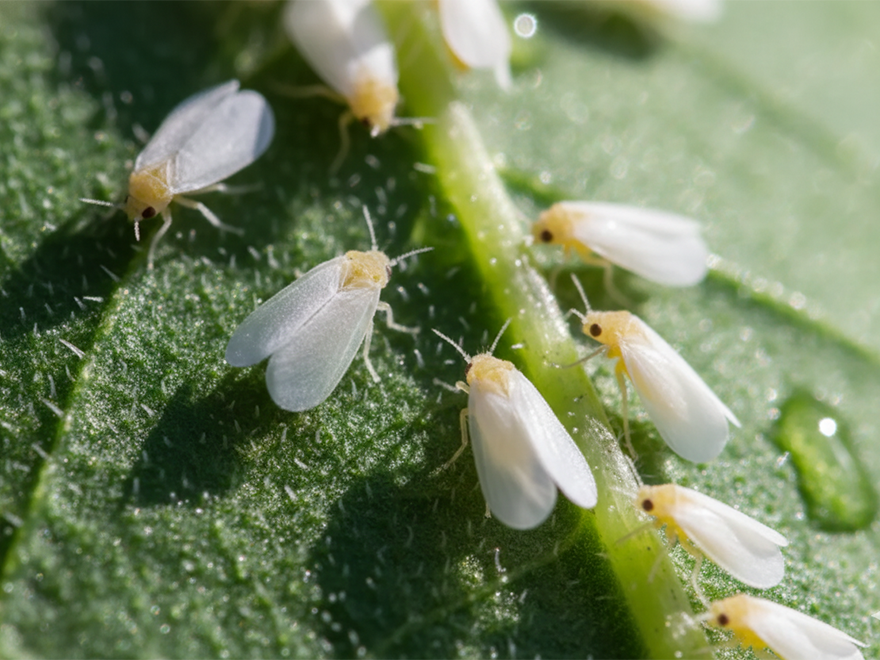
Tiny white flies scatter every time you touch a leaf. That's whitefly — they're sucking your plant dry and spreading disease. Most garden sprays only repel them. Henna kills them. The same henna powder sold in beauty supply stores for hair dye contains lawsone, a compound that is harmless to humans but lethal to whiteflies on contact. Boil it in water, strain, spray the leaf undersides, and the whiteflies are dead within hours. No synthetic chemicals. Safe for bees.
TL;DR: Boil 1 teaspoon (5 g) of henna powder in 1 quart (1 liter) of water for 15 minutes. Let it cool to room temperature. Strain through cheesecloth. Spray directly onto leaf undersides where whiteflies congregate. Kills on contact within hours. Reapply every 7 days or after rain. Safe for food crops.
The recipe
You need
- Henna powder: 1 teaspoon (about 5 g) per quart of spray. Buy 100% pure henna (Lawsonia inermis) from beauty supply stores, Indian/South Asian grocery stores, or online. Common brands: Zenia, The Henna Guys, Light Mountain Natural. A 100g box costs $5 to $10 and makes 20 quarts of spray. Avoid "black henna" or henna with PPD or metallic salts.
- Water: 1 quart (1 liter)
- A small pot for boiling
- A fine strainer or cheesecloth
- A spray bottle (at least 1 quart / 1 liter)
Do it
- Bring 1 quart (1 liter) of water to a boil in a small pot.
- Add 1 teaspoon (5 g) of henna powder. Stir.
- Reduce heat and simmer for 15 minutes. The water will turn deep reddish-brown. This is the lawsone extracting into the water.
- Remove from heat and let it cool to room temperature. Do not rush this. Hot liquid damages spray bottles and can burn leaves.
- Strain through cheesecloth or a fine strainer into your spray bottle. Henna has fine particles that clog spray nozzles if you skip this step. Strain twice if needed.
- The strained liquid is your spray. It should be a clear reddish-brown, with no gritty particles.
Use the same day for best results. You can store the strained extract in a sealed jar in the fridge for up to 3 days, but fresh is stronger.
What is henna
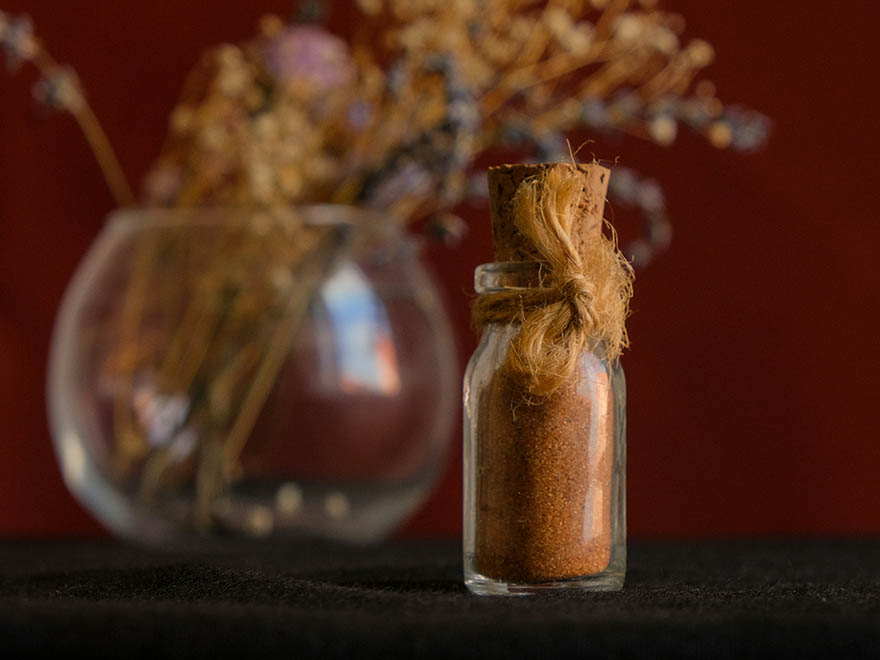
Henna powder comes from the dried, ground leaves of Lawsonia inermis. The active compound is lawsone (2-hydroxy-1,4-naphthoquinone) — the same thing that stains skin and hair. On whiteflies, lawsone binds to proteins in their exoskeleton and respiratory membranes, blocking gas exchange. Read the ingredients: you want a box that lists only "Lawsonia inermis" or "henna." Pure henna powder is green-brown and smells earthy, like dried hay.
How to use it
Direct contact spray (only method):
Spray directly onto leaf undersides where whiteflies sit. This is a contact insecticide, not a repellent. The spray must touch the whitefly to kill it. Whiteflies cluster on the undersides of young leaves near the top of the plant. Flip the leaves with one hand and spray with the other. Or spray upward from below.
Spray in the early morning when whiteflies are sluggish and less likely to fly away as you approach. In warm weather they are more active and scatter when disturbed.
How often:
Apply every 7 days during active infestations. After rain or overhead watering, reapply because the spray washes off. In dry weather, the residue stays on leaves for 5 to 7 days and continues to kill whiteflies that land on treated surfaces.
Coverage matters more than volume. Do not drench the plant. Use a fine mist and cover every leaf underside where you see whiteflies or their tiny white eggs. One thorough application is better than a heavy spray on just a few leaves.
For heavy infestations ("white cloud" level): If shaking the plant sends up a visible cloud of whiteflies, one spray will not eliminate them all. Spray every 3 to 4 days for 2 weeks to break the reproductive cycle. Whitefly eggs hatch every 5 to 10 days, so you need multiple applications to catch each generation as it emerges.
Which plants benefit most
Whiteflies attack a wide range of crops, but they have favorites.
Best for: Tomatoes. Greenhouse and indoor tomatoes are whitefly magnets. The warm, still air is perfect for whitefly reproduction. Henna spray is safe to use on tomato foliage all the way through harvest. If you are growing tomatoes from seed, watch for whiteflies as soon as plants go into their final pots or transplant outdoors.
Best for: Peppers and eggplant. Same nightshade family, same whitefly problem. Whiteflies target the soft young leaves at the top of the plant. Spray the upper canopy thoroughly.
Strong results: Cucumbers and squash. Whiteflies often move from tomatoes to cucumbers in shared greenhouse space. Henna spray works on cucurbit leaves without causing damage at this dilution.
Good for: Herbs grown indoors: basil, mint, parsley. Indoor herbs in warm kitchens attract whiteflies, especially in winter when there are no natural predators. Henna spray is food-safe, so you can treat herb plants and harvest a few days later after rinsing.
Good for: Ornamental houseplants. Whiteflies infest hibiscus, lantana, poinsettia, and fuchsia. Henna spray works on all of them.
Not needed for: Outdoor crops in open-air gardens with good air circulation. Whiteflies prefer still, warm, enclosed environments. If you grow outdoors in an area with consistent breeze and no greenhouse, whiteflies are rarely a major problem. In that case, natural predators (parasitic wasps, lacewings) usually keep them in check.
Why it works
Henna powder comes from the dried, ground leaves of Lawsonia inermis, a plant native to hot climates across North Africa, the Middle East, and South Asia. The leaves contain 1 to 3% lawsone (2-hydroxy-1,4-naphthoquinone), the same compound that stains skin and hair orange-red.
Lawsone binds to proteins. That is how it dyes hair. On whiteflies, it binds to the proteins in their exoskeleton and respiratory membranes. Whiteflies breathe through tiny openings called spiracles. Lawsone disrupts gas exchange across these membranes. The effect is fatal. The whitefly suffocates within hours of contact.
This mechanism is specific to soft-bodied insects with thin, permeable exoskeletons. Whiteflies, aphids, and thrips are most vulnerable. Hard-bodied insects like beetles and bees have thicker exoskeletons that lawsone does not penetrate at this concentration. This is why henna spray targets the pests you want to kill without harming the beneficial insects you want to keep.
Boiling the henna powder in water extracts the lawsone into solution. Hot water extraction is necessary because lawsone is not highly soluble in cold water. The 15-minute simmer gives enough time for the compound to dissolve fully. Longer boiling does not increase concentration meaningfully and can degrade other useful compounds in the extract.
The reddish-brown color of the spray is normal. It is lawsone in solution. It may leave a faint temporary stain on leaves, but this washes off with the next rain or watering and does not affect plant health or fruit quality.
What NOT to do
Do not use "black henna" or henna with additives. Black henna contains PPD (p-phenylenediamine), a chemical that causes allergic reactions in humans and has unknown effects on plants. Body art quality "black henna" is not real henna. Only buy powder labeled 100% Lawsonia inermis with no other ingredients.
Do not skip straining. Henna powder is very fine and will clog your spray nozzle instantly. Strain through cheesecloth at least once, twice if the liquid still looks gritty. A clogged nozzle means uneven coverage and wasted effort.
Do not spray in direct midday sun. The reddish extract can concentrate on leaves as water evaporates, potentially causing mild burn on tender foliage in intense sunlight. Spray early morning or evening.
Do not expect repellent effect. Henna is a contact killer, not a repellent. It does not stop new whiteflies from arriving. You need to reapply to kill each new wave. For repellent action, combine henna spray with peppermint oil spray on alternating days: peppermint repels, henna kills whatever lands anyway.
Do not use on plants in active flower with bees present. While henna is less harmful to hard-bodied bees than to soft-bodied whiteflies, the wet spray can still coat a bee's wings. Spray in the evening after bees are done foraging, and target leaf undersides rather than flowers.
Do not boil longer than 20 minutes. Extended boiling starts to break down the lawsone. Fifteen minutes is the sweet spot: long enough to extract fully, short enough to preserve potency.
FAQ
Is henna spray safe to use on vegetables I am going to eat?
Yes. Lawsone is non-toxic to humans. Henna has been applied directly to human skin for thousands of years. At the concentration used in this spray (5 g per liter), the lawsone residue on fruit is far below any concern. Rinse your harvest as you normally would.
Where do I buy henna powder in the US?
Beauty supply stores (Sally Beauty, local beauty shops), Indian and South Asian grocery stores, health food stores, and Amazon. Look for "100% pure henna" or "Lawsonia inermis leaf powder." A 100g box costs $5 to $10.
Will henna stain my plants or fruit permanently?
No. The faint reddish tint on leaves washes off with the next rain or watering. On fruit (tomatoes, peppers), any contact residue rinses off easily. Henna stains skin because skin protein binds lawsone strongly. Plant cuticle does not bind it the same way.
Can I use henna on aphids and thrips too?
Yes. The lawsone mechanism works on any soft-bodied insect with thin, permeable exoskeletons. Spray directly onto aphid colonies or thrips on leaf surfaces. The effect is the same: contact kills within hours. For aphids specifically, you might also try garlic spray as a repellent layer.
How does this compare to neem oil for whiteflies?
Neem oil is a growth regulator that disrupts whitefly reproduction over time. Henna is a contact killer that works within hours. They serve different timelines. Neem is a slow preventive. Henna is a fast knockdown. For heavy infestations, use henna to reduce the population immediately, then switch to neem for long-term suppression.
My whiteflies come back a week after spraying. What am I doing wrong?
Nothing. Whitefly eggs are not killed by henna spray because the eggs are protected by a waxy shell. The spray kills adults and nymphs on contact, but new adults emerge from surviving eggs every 5 to 10 days. You need to spray every 7 days for at least 2 to 3 cycles to catch each generation as it hatches. Consistency matters more than spray strength.
Is there a gardening app that schedules pest treatment sprays?
Yes. The easyDacha garden planner app schedules protection tasks by growth stage and sends reminders when it is time to spray. Download at easydacha.com/download.
The beauty aisle fix for whiteflies

A $5 box of henna powder from the hair dye shelf kills whiteflies faster than most garden-center products. Boil it, strain it, spray it. The same compound that stains skin orange suffocates soft-bodied insects on contact. No synthetic chemicals, no waiting period before harvest. One box makes enough spray for an entire season.
The easyDacha gardening app schedules pest treatment tasks so you spray on time and break the whitefly reproductive cycle before they take over.
Try easyDacha app →. The garden planner app that plans your season in 60 seconds. Cancel anytime.
Related reading on easydacha.com
- How to Use Peppermint Oil Spray Against Phytophthora and Garden Pests — peppermint repels whiteflies; henna kills them. Alternate the two for a repel-and-kill strategy.
- How to Make Garlic Spray for Garden Pests (Two Recipes) — garlic spray repels a broad range of soft-bodied pests including whiteflies and aphids. Stack with henna for heavier infestations.
- Top 10 Most Common Garden Pests: Identification and Treatment Guide — identify whiteflies and distinguish them from other small flying insects before choosing a treatment.
- Homemade Organic Pesticide for the Vegetable Garden: Simple Recipes That Work — the master list of DIY pest sprays. Henna adds a fast contact killer to your organic toolkit.
- How to Grow Tomatoes from Seed (No Greenhouse Required) — tomatoes are the #1 whitefly target. Full growing guide with notes on when pest pressure peaks.
- How to Use Liquid Smoke to Repel Slugs and Ants (Fire Flight Response) — liquid smoke handles ground-level pests. Henna handles foliage pests. Different zones, same organic approach.