
Brown spots spreading across your tomato leaves. They were not there yesterday. Late blight moves fast. You can lose an entire plant in under a week. Peppermint oil disrupts Phytophthora zoospores before they penetrate the leaf, and the same menthol drives spider mites and aphids off the plant. One spray, two problems handled, for about $5 in peppermint oil from any grocery store or pharmacy.
TL;DR: Mix 2 teaspoons (about 10 ml) of peppermint essential oil and 1 teaspoon of liquid dish soap into 1 gallon (3.8 liters) of water. Shake well before every use. Spray leaf undersides and stems. Apply every 7 to 10 days as prevention, every 5 days during active outbreaks. Works on tomatoes, peppers, cucumbers, squash, and potatoes.
The recipe
You need
- Peppermint essential oil: 2 teaspoons (about 10 ml), 100% pure (Mentha piperita), any brand. A 1 oz (30 ml) bottle costs $5 to $8 and makes about 3 gallons of spray. Common US brands: Nature's Truth, NOW Essential Oils, Handcraft Blends, Plant Therapy.
- Liquid dish soap: 1 teaspoon, plain, unscented if possible, no antibacterial
- Water: 1 gallon (about 4 liters)
- A spray bottle (at least 1 quart / 1 liter)
- A measuring spoon (teaspoon)
Do it
- Pour 1 gallon (3.8 liters) of water into a clean container.
- Add 1 teaspoon of liquid dish soap. Stir gently.
- Add 2 teaspoons (about 10 ml) of peppermint essential oil.
- Stir or shake vigorously. The solution should look slightly cloudy, not oily.
- Pour into your spray bottle. If making a full gallon, store the rest in a sealed jar in a cool, dark place. Use within 1 week.
Shake the spray bottle before every use. The oil will separate between sprays.
Why soap matters
Peppermint oil does not mix with water on its own. The oil floats on top and sprays unevenly. Dish soap acts as an emulsifier — it breaks the oil into tiny droplets that stay suspended in the water. Without soap, you get oil globs on some leaves and nothing on others. Do not use antibacterial soap (triclosan damages leaf tissue) or soap with heavy fragrances that mask the peppermint scent.
What to know about peppermint oil
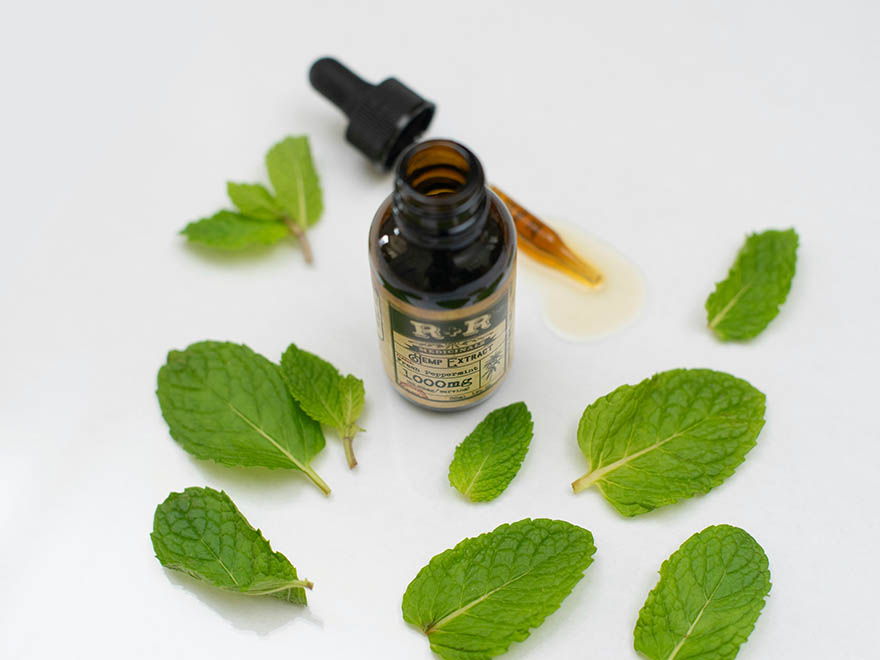
Buy 100% pure peppermint essential oil, not peppermint extract (diluted in alcohol for baking) and not peppermint fragrance oil (synthetic). The active compounds are menthol (35 to 50%) and menthone (15 to 30%). Price differences between brands are mostly branding.
How to use it
Foliar spray (main method):
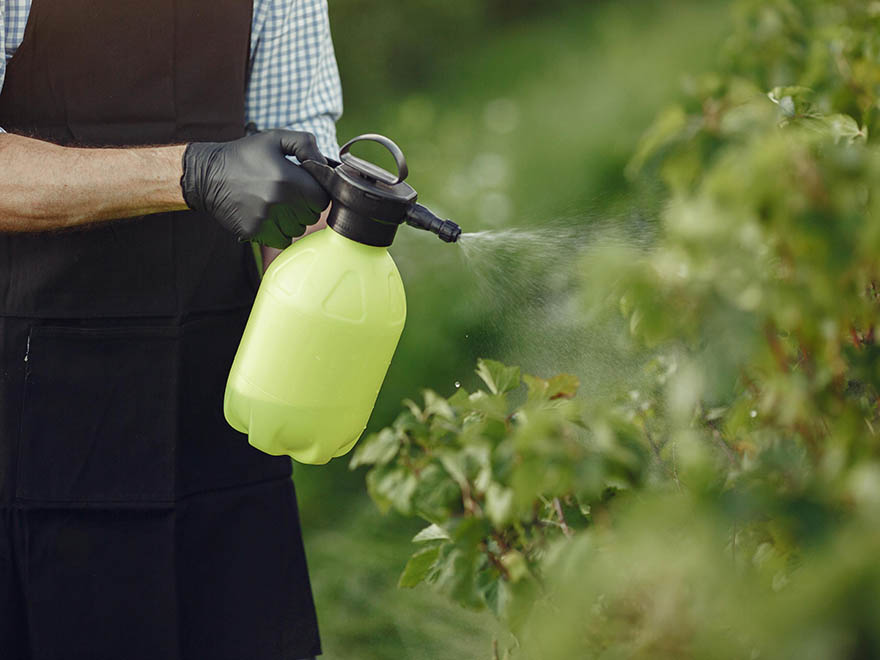
Spray the undersides of leaves first. That is where spider mites live, aphids cluster, and Phytophthora zoospores land. Then spray the tops of leaves and stems. Cover the plant thoroughly but do not drench it until the solution drips off. A fine mist is better than heavy spray.
For Phytophthora prevention: Start spraying before you see symptoms. Phytophthora strikes when nights are cool and humid (below 60 °F / 15 °C at night with morning dew or fog). Begin when these conditions appear in your area, usually mid to late summer. Spray every 7 to 10 days. Once you see brown lesions on lower leaves, switch to every 5 days. The spray does not cure already-infected tissue, but it protects healthy leaves from new infection.
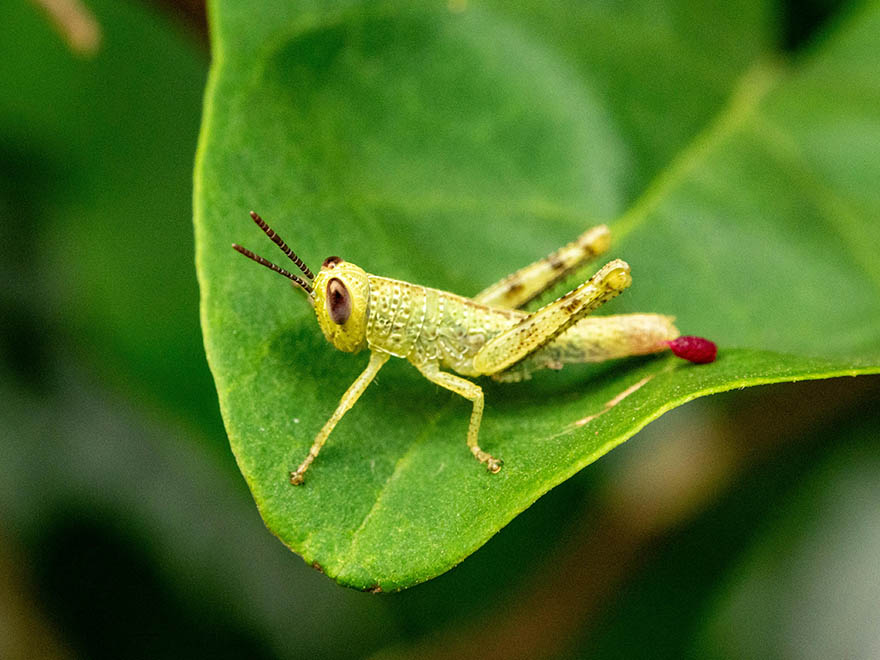
For spider mites: Spray every 5 to 7 days when mites are active. You can confirm mites by looking at leaf undersides with a magnifying glass or by running the "finger test": rub the underside of a speckled leaf with your finger. A green or reddish smear means mites. Peppermint oil irritates them on contact and the lingering scent repels new arrivals.
For aphids and leaf hoppers: Spray directly onto colonies. Aphids are slow and cluster on new growth and leaf undersides. One direct hit knocks them off. The residual peppermint scent discourages them from returning for a few days.
Timing: Spray early morning or evening. Avoid spraying in direct midday sun. The oil can concentrate as water evaporates and cause leaf burn on tender plants in full sun. Morning application gives the spray time to dry before the hottest part of the day.
Which plants benefit most
Best for (Phytophthora prevention): Tomatoes. Late blight (Phytophthora infestans) is the #1 disease threat for home tomato growers. It can destroy a tomato patch in 10 days. Peppermint oil spray on leaf undersides disrupts zoospore navigation and slows the spread. If you are growing tomatoes from seed, start peppermint sprays when plants go outdoors and nighttime temperatures start dipping.
Best for (Phytophthora): Potatoes. Same pathogen, same family. Phytophthora infestans caused the Irish Potato Famine. Spray potato foliage every 7 days from mid-summer through harvest.
Best for (spider mites): Cucumbers and squash. Spider mites love cucurbit leaves, especially in hot, dry weather. The undersides turn speckled and eventually bronze. Peppermint oil is safe on cucurbits at this dilution and pushes mites off before they build up. Check the cucumber growing guide for full care.
Strong results (aphids): Peppers and eggplant. Aphids target new growth on nightshades. Peppermint spray on growing tips and flower clusters keeps aphids moving. This also disrupts the ant-aphid farming loop if ants are the real problem.
Good results: Beans, peas, and leafy greens. Aphids and leaf hoppers attack these crops regularly. Peppermint spray is safe on all of them and provides 5 to 7 days of repellent effect.
Also useful: Roses and ornamental shrubs prone to powdery mildew and spider mites. Menthol has mild antifungal properties beyond Phytophthora. It will not cure powdery mildew, but it slows spore germination when combined with proper mildew prevention.
Use with caution on: Very young seedlings with only 1 to 2 true leaves. The essential oil can be too strong for extremely tender tissue. Wait until seedlings have 3 to 4 true leaves before spraying. For younger plants, use a half-strength dilution (1 teaspoon oil per gallon).
Not needed for: Corn, mature squash with leathery leaves, root crops underground, and anything harvested before Phytophthora season. These crops either resist the target pests or do not face Phytophthora risk.
Why it works
Menthol, the main compound in peppermint oil, does two different things to two different types of organisms.
Against Phytophthora: Phytophthora reproduces by releasing zoospores, tiny swimming cells that travel through water films on leaf surfaces. The zoospores use chemical signals to navigate toward stomates (the tiny pores on leaf surfaces where they enter the plant). Menthol disrupts this navigation. On contact, zoospores lose spatial orientation and swim in erratic, chaotic patterns instead of heading toward infection sites. They exhaust their energy supply without ever finding a way into the leaf. This does not kill the pathogen. It prevents successful infection of new tissue.
This mechanism is similar to how iodine-milk spray works against blight, but through different chemistry. Both disrupt zoospore behavior rather than trying to kill the organism directly.
Against pests: Menthol is a known irritant to arthropods. Spider mites, aphids, and leaf hoppers have exposed respiratory and sensory systems. Menthol vapor causes discomfort strong enough to make them leave the plant. It does not kill them on contact at this dilution. It makes the plant an unpleasant place to feed and reproduce.
The dish soap in the recipe does double duty. It emulsifies the oil for even spraying and it strips the waxy coating on soft-bodied insects like aphids, causing dehydration. This is why soap sprays alone have some pest control effect. Adding peppermint oil extends the repellent duration because the scent lingers on leaves after the soap has dried.
The effect does not last forever. UV light and rain break down menthol on leaf surfaces within 5 to 10 days. This is why reapplication on a schedule matters more than applying a heavier dose.
What NOT to do
Do not use more than 2 teaspoons of oil per gallon. Higher concentrations can burn leaves, especially in hot weather. The pests respond to the scent, not the dose. More oil does not mean more protection. It means crispy leaf edges and stressed plants.
Do not use peppermint extract from the baking aisle. Baking extract is menthol diluted in alcohol. The alcohol content can burn leaves, and the menthol concentration is too low to be effective. Use 100% pure essential oil.
Do not skip the soap. Without an emulsifier, the oil sits on top of the water and sprays in uneven blobs. Some leaves get an overdose of pure oil (burn risk), others get plain water (no protection). Soap is not optional.
Do not spray in full sun on hot days. Apply early morning or evening. Oil + water + intense sun = magnifying glass effect on leaf surfaces. Wait for shade or cooler hours.
Do not expect it to cure already-infected tissue. Peppermint oil prevents new Phytophthora infections by confusing zoospores. It does not kill mycelium already growing inside a leaf. Remove brown, infected leaves and dispose of them in the trash (not compost). Then spray the remaining healthy foliage.
Do not spray on open flowers where bees are actively feeding. The menthol scent can deter pollinators temporarily. Spray in the evening after bees have finished foraging, or avoid flowers and target only stems and leaf undersides.
Do not store the mixed solution for more than 1 week. The oil separates and degrades. Mix fresh batches. A gallon batch takes 2 minutes to make.
FAQ
Does peppermint oil actually stop late blight?
It slows the spread by preventing new infections. Menthol disorients Phytophthora zoospores so they cannot locate entry points on leaves. It does not cure tissue that is already infected. For active outbreaks, remove infected material, spray peppermint oil on remaining healthy foliage, and consider adding Bordeaux mixture as a stronger copper-based treatment.
Can I use spearmint oil instead of peppermint?
Spearmint has lower menthol content (less than 1% vs 35 to 50% in peppermint). It will not be as effective. Stick with peppermint (Mentha piperita). If you can only find spearmint, double the amount, but results will be weaker.
Will this hurt beneficial insects?
At the recommended dilution, peppermint oil does not harm ladybugs, ground beetles, or parasitic wasps. These insects are less sensitive to menthol than soft-bodied pests. Bees may avoid treated areas temporarily because of the strong scent, so spray in the evening after pollinators are done for the day. Earthworms in the soil are unaffected.
How often should I spray for spider mites?
Every 5 to 7 days during active infestations. Spider mites reproduce fast in hot, dry conditions. Missing even one spray cycle lets the population rebound. Check leaf undersides between sprays. If you still see mites after 3 applications, combine peppermint spray with a strong water blast from the hose to physically knock mites off, then spray immediately after.
Can I mix peppermint oil with other garden sprays?
Do not mix with hydrogen peroxide or copper-based sprays like Bordeaux mixture in the same bottle. The chemistry conflicts. Apply them on different days: peppermint spray one day, copper or peroxide 3 to 4 days later. You can alternate them on a weekly rotation for broader coverage.
Does fresh mint from the garden work the same way?
Fresh mint leaves contain the same compounds but at much lower concentration. Crushing fresh mint and scattering it around plants provides mild repellent effect as mulch, lasting about a month. But for serious pest control or Phytophthora prevention, the concentrated essential oil in a spray is far more effective.
Is there a gardening app that schedules pest prevention sprays?
Yes. The easyDacha garden planner app tracks growth stages and sends task reminders for protection sprays at the right time. Download at easydacha.com/download.
One bottle, two problems

Peppermint oil from the pharmacy shelf fights both disease and pests in your garden. The zoospores that cause late blight cannot navigate through it. The mites and aphids that suck your plants dry cannot stand the smell. Two teaspoons in a gallon of water with a drop of soap. Spray once a week and both problems shrink.
The easyDacha gardening app schedules protection sprays by growth stage and weather conditions so you spray when it counts, not when you remember.
Try easyDacha app →. The garden planner app that plans your season in 60 seconds. Cancel anytime.
Related reading on easydacha.com
- How to Make Iodine-Milk Spray Against Late Blight (Tomato and Potato Recipe) — another Phytophthora prevention spray with different chemistry. Rotate with peppermint oil for broader protection.
- How to Make Bordeaux Mixture at Home (Copper Fungicide Recipe) — the classic copper fungicide for heavy blight pressure. Stronger than peppermint but leaves a visible residue.
- How to Use Milk Spray Against Powdery Mildew (It Actually Works) — milk spray handles powdery mildew; peppermint handles Phytophthora. Different fungi, different sprays.
- Aphid Spray for Flowering Plants: Bee-Safe DIY Recipe — if aphids are the main problem, this recipe targets them directly. Peppermint oil adds a repellent layer.
- How to Use Liquid Smoke to Repel Slugs and Ants (Fire Flight Response) — liquid smoke handles ground-level pests (slugs, ants). Peppermint oil handles foliage pests (mites, aphids). Stack them for full coverage.