
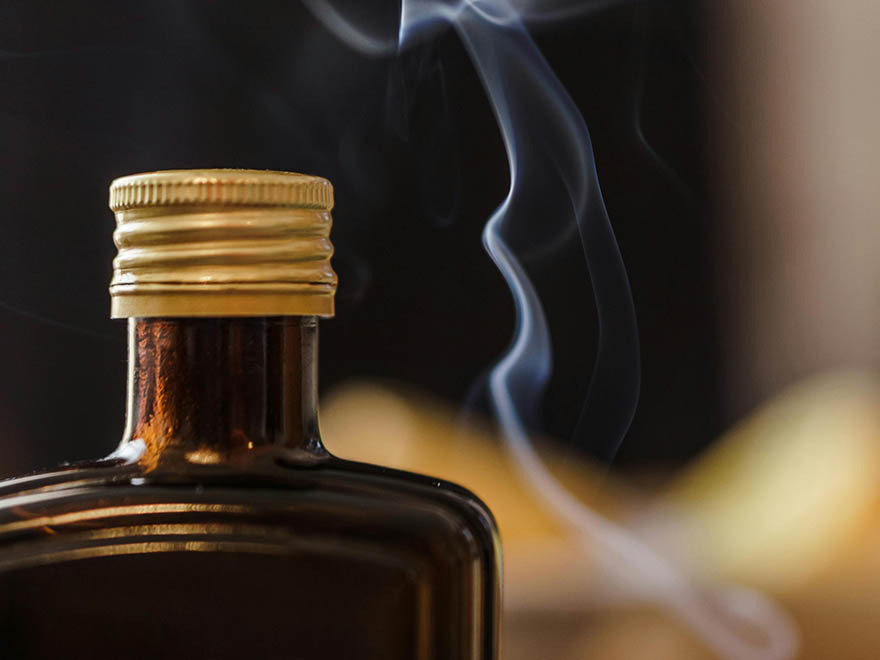
You walk out in the morning and your seedlings are chewed to stumps. Slime trails across the soil. Slugs hit overnight, and they will come back tonight. The fix is in the BBQ aisle: a $2 bottle of liquid smoke. Dilute it in water and spray the soil around your beds. The smoke compounds trigger a hardwired "fire is coming" response. Slugs and ants leave, not because the liquid hurts them, but because every instinct tells them to evacuate.
TL;DR: Mix 2 teaspoons (10 ml) of liquid smoke into 1 quart (1 liter) of water. Spray or pour along bed edges, around plant bases, and on bare soil where slugs travel. Reapply after rain. Works as a repellent, not a killer. Drives slugs and ants out of the treated zone within hours.
The recipe
You need
- Liquid smoke (BBQ sauce aisle, any brand, hickory or mesquite, about $2 per bottle)
- Water: 1 quart (1 liter) per batch
- A spray bottle or watering can
- A measuring spoon (teaspoon)
Do it
- Pour 1 quart (1 liter) of water into a spray bottle or watering can.
- Add 2 teaspoons (10 ml) of liquid smoke. Cap and shake.
- That is the entire recipe.
No heating, no steeping, no waiting. The smoke compounds are already dissolved in the liquid smoke. You are just diluting them to a concentration that repels pests without affecting your plants.
What is liquid smoke
Liquid smoke is real smoke captured in water. Manufacturers burn hardwood chips, collect the smoke, condense it, and filter out the tar and ash. What stays in the bottle is water infused with volatile organic compounds: guaiacol, syringol, creosol, and dozens of phenolic compounds. These are the same molecules that drift through the air during a forest fire. Insects and gastropods have been running from that smell for millions of years.
Wright's and Colgin are the two most common brands. A 3.5 oz bottle costs about $2 and makes roughly 15 to 17 batches. One bottle covers a full growing season.
How to use it
Soil barrier (main method):
Spray or pour the solution in a line along bed edges, around the base of vulnerable plants, and across any bare soil paths where you see slug trails. Focus on the perimeter. You are building a scent wall that slugs and ants do not want to cross.
For slug control, apply in the evening when slugs start moving. They are nocturnal feeders and will hit the scent barrier on their way to your plants. For ant control, pour a small amount directly along ant trails and around any mound entrances near your garden beds. The ants will reroute away from the smoke scent.
How often:
Reapply after every rain. The smoke compounds are water-soluble and wash into the soil with heavy watering or rainfall. In dry weather, one application lasts 5 to 7 days. During rainy stretches, you may need to reapply every 2 to 3 days.
Do not spray directly on plant leaves unless you want your lettuce to taste like BBQ. The solution is not harmful to leaves, but the smoke flavor can transfer to leafy greens and herbs. Keep the spray on the soil and on mulch or bed edges.
Which plants benefit most
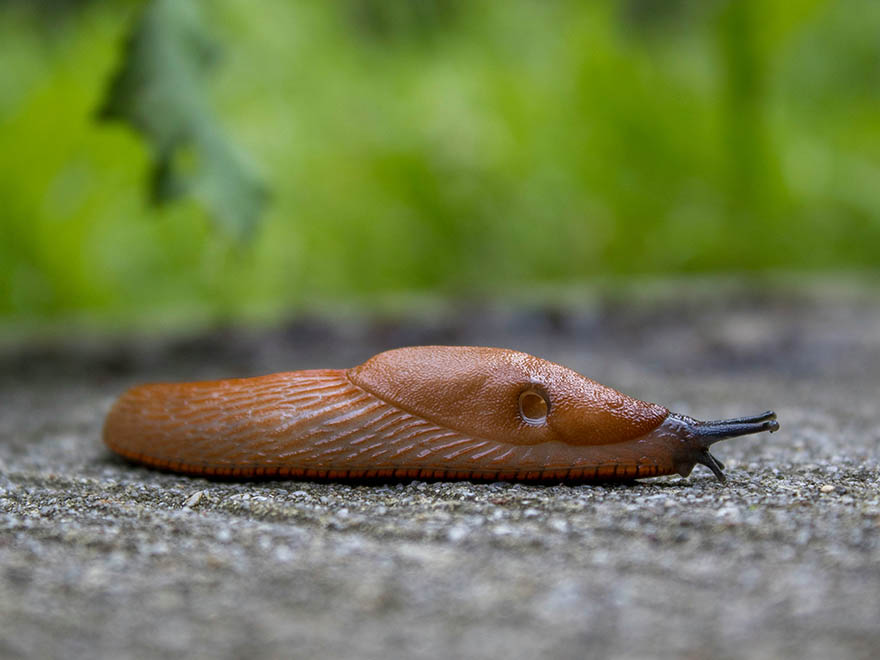
This is not a plant-specific treatment. It protects whatever slugs and ants are attacking. But some crops attract slugs more than others, and some ant situations are worse in certain setups.
Best for slug protection: Lettuce, spinach, and other leafy greens. Slugs prefer soft, tender leaves close to the ground. A newly planted lettuce bed is a slug buffet. Spray the perimeter and the soil between rows. Strawberries are another top target. Slugs go for ripe berries touching the ground. Spray around the strawberry patch perimeter and between plants.
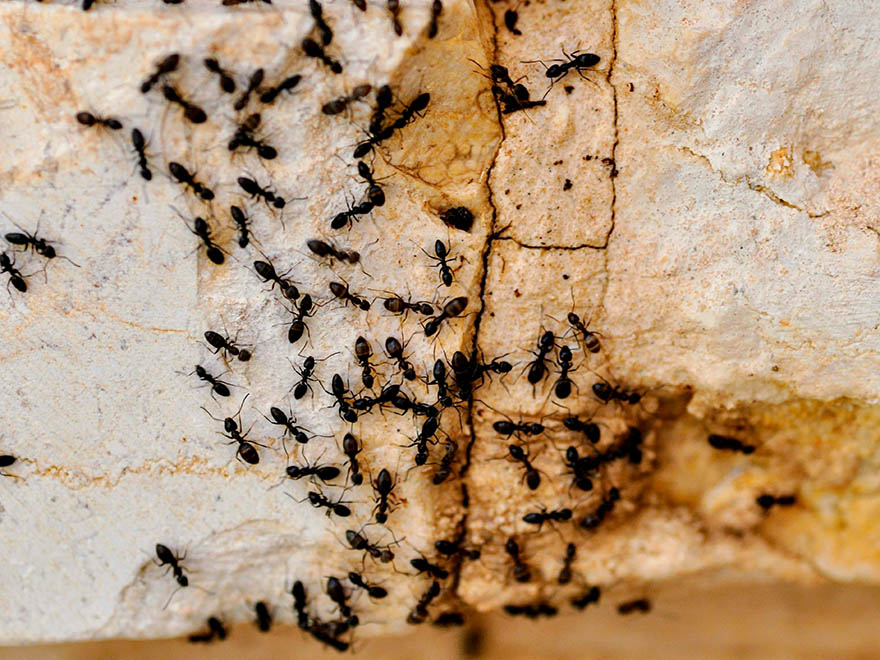
Best for ant disruption: Peppers and anything with aphid problems. Ants are not eating your plants directly. They protect and "farm" aphids for honeydew. Breaking the ant trail to your plants means the aphids lose their bodyguards, making them vulnerable to ladybugs and other natural predators. If ants are climbing your pepper plants, pour the liquid smoke solution around the base of each plant.
Good for: Any transplanted seedling in the first 2 weeks. Young transplants are most vulnerable to slug damage because the stems are tender and the plants cannot recover from heavy feeding. Use liquid smoke as part of your post-transplant care routine.
Also useful: Hostas, marigolds, zinnias, and other ornamentals that slugs target. The recipe works the same way on flower beds as on vegetable beds.
Not needed for: Established tomato plants, mature squash, corn, and anything with tough, woody stems. Slugs generally leave these alone. Ants may still climb them for aphids, but the plants are not at risk from the ants themselves.
Why it works
Slugs and ants both evolved in environments where fire was a regular threat. Smoke in the air meant fire on the ground, and fire meant death. Over millions of years, this built a strong avoidance behavior into their nervous systems. The scent of smoke compounds triggers an immediate evacuation response.
This response is not learned. It is hardwired. Even slugs that have never encountered fire will turn away from the scent of guaiacol and syringol, the same phenolic compounds that make liquid smoke smell like a campfire. Researchers call this a "fire flight" response, and it works across a wide range of invertebrates.
Liquid smoke does not kill slugs or ants. It does not poison them, dissolve their slime, or damage their bodies. It simply makes the area smell dangerous. The pests move somewhere else. This is a repellent, not a pesticide. The distinction matters because it means beneficial insects like ground beetles and earthworms, which are less sensitive to smoke volatiles, are largely unaffected at this dilution.
The phenolic compounds in the solution bind loosely to organic matter in the soil and mulch. This gives the barrier some persistence between rains. But they do break down under UV light and wash away with water, which is why reapplication is needed.
What NOT to do
Do not increase the concentration. 2 teaspoons per quart is the working dilution. Doubling it does not double the effect. Stronger concentrations can leave an oily residue on soil that repels water and creates dry spots in your bed. The pests respond to the scent, not the dose. If they can smell smoke, they leave.
Do not spray on edible leaves. The smoke flavor transfers to lettuce, basil, cilantro, and other greens you eat raw. Keep the solution on the soil surface. If some spray drifts onto leaves, rinse them at harvest.
Do not use liquid smoke that contains extra ingredients. Some brands add soy sauce, vinegar, molasses, or other flavorings. These can attract insects instead of repelling them. Read the label. You want liquid smoke that lists only "water" and "natural smoke flavor" or "natural hickory smoke concentrate." Wright's and Colgin plain varieties are clean.
Do not expect it to kill slugs. This is a repellent. Slugs that are already on your plants will leave when they sense the smoke, but you will not find dead slugs in the morning. If you need to reduce the slug population, combine liquid smoke barriers with beer traps that actually attract and drown them.
Do not apply in full midday sun on hot days. The smoke compounds evaporate faster in heat. Apply in the evening or early morning for the longest-lasting barrier.
Do not rely on this alone for heavy infestations. Liquid smoke is one tool. For serious slug problems, combine it with other strategies: remove slug hiding spots (boards, mulch piles), use beer traps, and encourage natural predators like ground beetles and toads.
FAQ
Does liquid smoke harm plants?
No. At the recommended dilution (2 teaspoons per quart), liquid smoke does not damage plant roots, stems, or leaves. The phenolic compounds are present at concentrations far below phytotoxic levels. Some gardeners report that smoke compounds in soil may even stimulate seed germination in certain wildflower species, though this effect is not the goal here.
Which brand of liquid smoke works best?
Any plain liquid smoke works. Wright's Hickory Liquid Smoke and Colgin Natural Hickory are the two most widely available in US grocery stores. Both cost $1.50 to $3 for a 3.5 oz bottle. Avoid "flavored" varieties that contain soy, molasses, or vinegar. The ingredients should list only water and natural smoke flavor.
How long does the smell last on the soil?
In dry weather, 5 to 7 days. Rain washes it away faster. Heavy watering (sprinklers, flood irrigation) dilutes the barrier. Drip irrigation is fine because it delivers water to the root zone without washing the soil surface. After rain, reapply.
Will it repel beneficial insects too?
At this dilution, most beneficial insects are not strongly affected. Ground beetles, ladybugs, and parasitic wasps do not show the same fire flight response at low smoke concentrations. Earthworms in the soil are not affected. Honeybees forage on flowers, not soil, so the barrier does not interfere with pollination. That said, do not spray liquid smoke directly onto flowers where bees are actively feeding.
Can I use it in raised beds and containers?
Yes. Spray the outside edges of raised beds and along the top rim where slugs climb up. For containers, spray around the base on the ground and along the rim. Slugs climb container walls at night to reach plants, so a scent barrier at the rim is effective.
Can I combine liquid smoke with other pest sprays?
Do not mix it with other solutions in the same bottle. The smoke compounds can react with acidic sprays (garlic spray, hot pepper spray) and change the pH. Apply liquid smoke to the soil as a barrier and use foliar pest sprays separately on the leaves. Different targets, different application zones.
Is there a gardening app that reminds me when to reapply pest barriers?
Yes. The easyDacha garden planner app tracks growth stages for each plant and sends task reminders, including pest protection schedules. Download at easydacha.com/download.
The BBQ aisle fix for your slug problem

A $2 bottle of liquid smoke, the same stuff you put on ribs, keeps slugs and ants out of your garden beds. No chemicals, no pellets, no traps to empty. Pour it, spray it, walk away. The pests smell fire and leave. Reapply after rain and you are covered.
The easyDacha gardening app schedules pest protection tasks by growth stage so you do not forget to reapply when it matters most.
Try easyDacha app →. The garden planner app that plans your season in 60 seconds. Cancel anytime.
Related reading on easydacha.com
- How to Make a Beer Trap for Slugs and Snails (Simple Setup) — beer traps attract and drown slugs. Liquid smoke repels them. Use both: smoke barrier at the perimeter, beer traps inside the bed.
- How to Make Hot Pepper Spray for Garden Pests and Deer — hot pepper targets chewing and sucking insects on leaves. Liquid smoke targets ground-level crawlers on soil. Different zones, complementary tools.
- How to Make Garlic Spray for Garden Pests (Two Recipes) — garlic spray repels aphids, beetles, and whiteflies on foliage. Liquid smoke handles the soil and perimeter layer.
- Top 10 Most Common Garden Pests: Identification and Treatment Guide — identify what is eating your plants before choosing a treatment. Slugs leave slime trails; ants leave soil mounds near plants.
- Caring for Transplanted Seedlings: First 2 Weeks Critical Care Guide — transplants are most vulnerable to slug damage. Add liquid smoke to your first-week protection routine.
- Homemade Organic Pesticide for the Vegetable Garden: Simple Recipes That Work — the master list of DIY pest control recipes. Liquid smoke adds a ground-level barrier to your toolkit.
- How to Use Wood Ash as Fertilizer and Pest Repellent — wood ash creates a physical and chemical barrier that slugs avoid. Combine with liquid smoke for double protection: ash on the surface, smoke scent in the soil.