
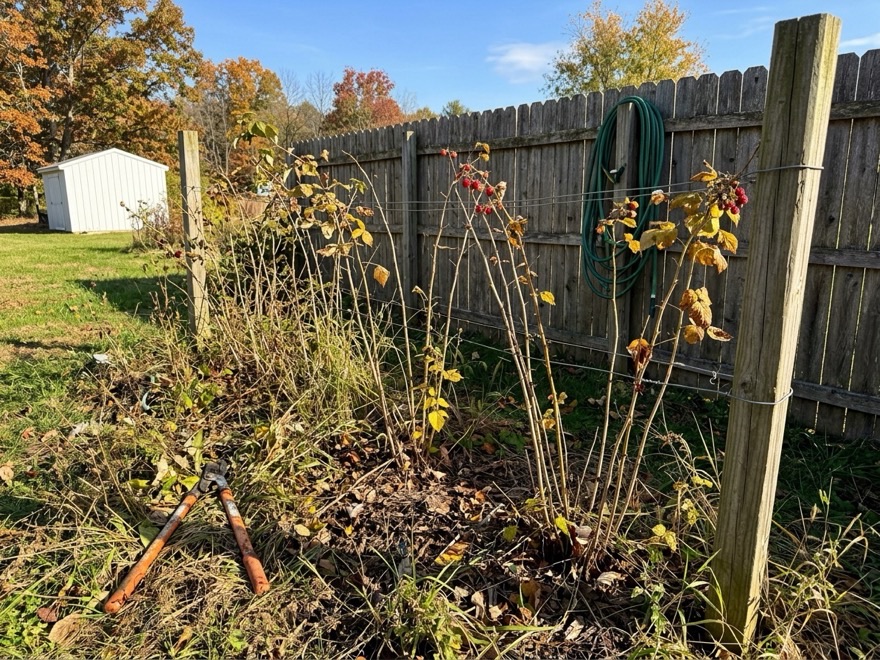
The last berries are ripening and the canes look ragged. Do you cut now? No. Fall-bearing raspberries need only one cut a year, and the timing is flexible. Fruit grows on the tips of this year's new canes. These are called primocanes. Once the canes go dormant, you cut everything to the ground and the bed starts fresh. Here is how to prune fall-bearing raspberries, plus the fall care that sets up next year's crop. If strawberries are next on your list, read our strawberry planting rules.
TL;DR: To prune fall-bearing raspberries for one big fall crop, cut every cane to the ground. Do it once the canes are dormant, in late fall or before the buds swell in late winter.
How to prune fall-bearing raspberries
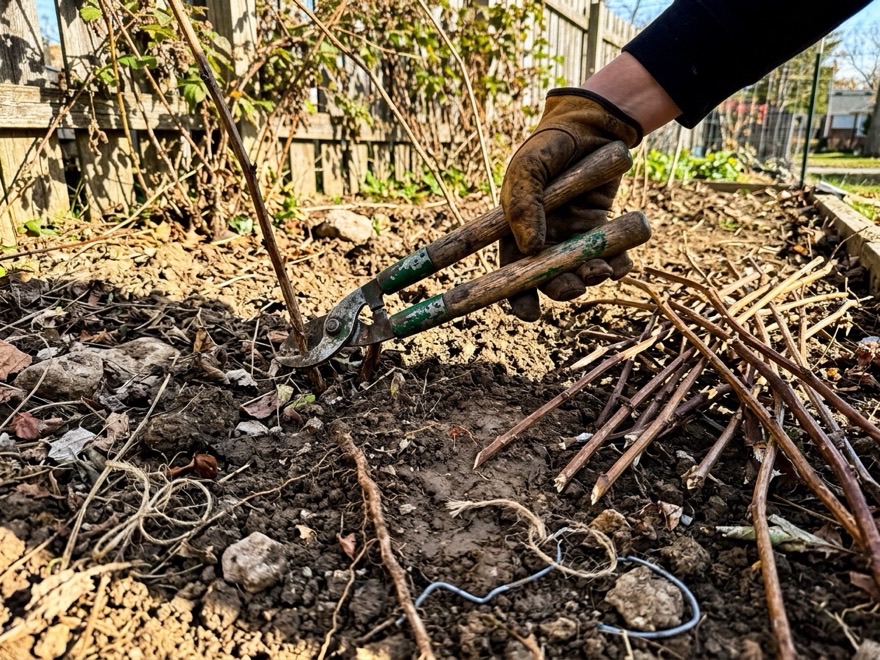
Cut all canes to the ground once they are dormant. The University of Minnesota says to cut the canes to the ground each year in late fall or early spring while they are dormant. Iowa State says to prune all canes to ground level in March or early April. The University of Maine says to remove the old canes before the buds break.
What you need: a mower, sharp loppers, or a hedge trimmer, plus gloves.
Steps:
- Wait until a hard freeze has killed the leaves and the canes are dormant. Washington State Extension warns that topping canes in early fall makes them more prone to cold injury.
- Remove any low trellis wire, twine, and drip line before you cut or mow.
- Cut each cane as low as you can. New buds should grow from below the soil, not from stubs.
- Haul the cuttings out of the planting. Old canes carry disease and pests.
- In spring, thin the new canes to about 6 inches (15 cm) apart. Keep the row 12 to 18 inches (30 to 45 cm) wide.
A cut in late winter works just as well. Do it before buds swell, and the new canes will not be harmed.
One crop or two crops
One crop is the simpler choice, and it usually yields more. Iowa State says the one-crop system generally produces more in total than the two-crop system, and the fall crop ripens sooner. The University of Minnesota notes that keeping canes for a summer crop is uncommon because it adds work.
The two-crop method follows summer-bearing rules. After fruiting, the top of each cane dies, while the lower part fruits early next summer. In late winter you cut off only the dead fruited top. You then thin the remaining canes to 4 or 5 per foot (30 cm) of row. This gives a summer crop and a smaller fall crop on the new canes.
In short-season areas, a hard frost can arrive before the last berries ripen. If that happens every year, the one-crop cut gives the fall crop the earliest possible start. It is also the better fit for everbearing raspberries fall care in a small yard, because there is only one job.
Fall care for everbearing raspberries
Skip nitrogen in fall. Oregon State Extension says to time nitrogen with new primocane growth in spring. It warns that nitrogen late in the season can delay cold acclimation and raise the risk of freeze injury. Spring is the time to feed. Slow organic feeds like compost go on about a month before mineral ones. If you brew your own, see our compost tea recipe.
Add potassium or phosphorus only if a soil test says they are low. Raspberries like a soil pH of 5.6 to 6.2. A test also shows whether you need amendments. If potassium tests low, potassium sulfate is the safe form. A common home rate is 1 to 1.3 oz per 10 square feet (30 to 40 g per m²), scattered on dry soil. For low phosphorus, superphosphate runs 1.3 to 1.6 oz per 10 square feet (40 to 50 g per m²). Wood ash adds potassium too, but it raises pH, so test first. Read more in our guide to wood ash as fertilizer and soil pH.
Winter prep for primocane raspberries
Water the bed until the ground freezes, then mulch. For primocane raspberries winter prep, the sequence is water, wait for frozen soil, then mulch. Colorado State Extension says to keep watering until the ground is frozen. Once the plants go dormant, give them one deep soak so the roots do not dry out. Dry winter wind can hurt raspberries more than cold does, so a dry fall matters.
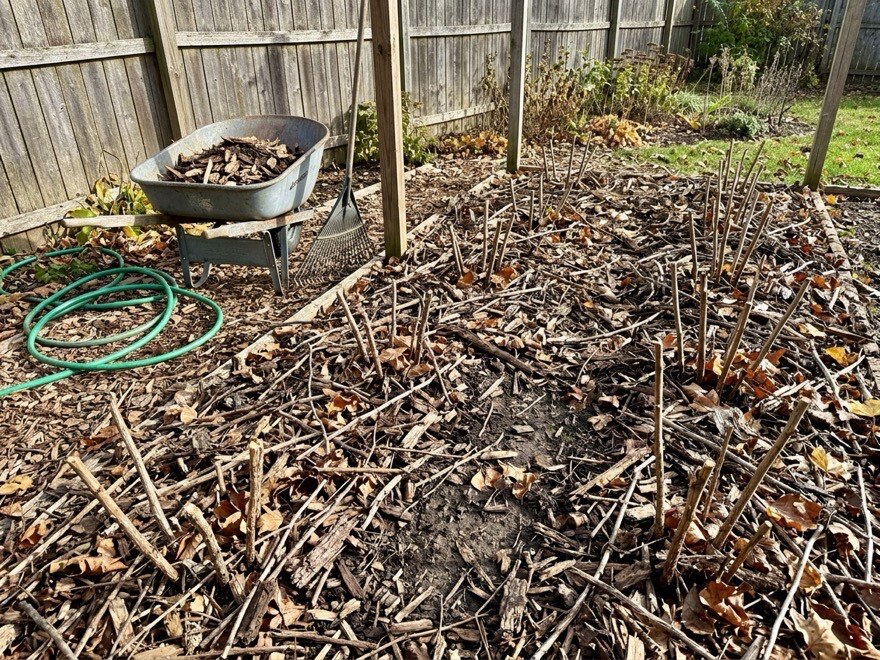
For raspberry winter mulch, spread 3 to 4 inches (8 to 10 cm) of wood chips, bark, pine needles, or rotted leaves over the row. The University of Maine recommends exactly this depth of organic mulch. Colorado State suggests dry leaves. Wait until the top layer of soil starts to freeze. Repeated freezing and thawing breaks the fine feeder roots, and mulch evens out those swings.
Leave the mulch in place in spring. On heavy, wet soil keep the layer thin, because wet soil slows new canes.
In USDA zone 9 and zone 10 there is no frozen ground to protect from. Skip the winter mulch there and prune in the cool season.
What NOT to do
Do not top the canes in early fall. It makes them more susceptible to cold injury.
Do not feed nitrogen in fall. It keeps growth soft and delays hardening.
Do not leave stubs or dead canes in the row. They carry disease and pests.
Do not hoe deep near the row. Raspberry roots are shallow, so hand pull weeds or hoe lightly.
Best for which plants
- Fall-bearing red and yellow raspberries (primocane fruiting): the main target. One cut to the ground.
- Summer-bearing raspberries: a different job. Cut the canes that fruited to the ground. Keep the strongest new ones at 4 to 5 per foot (30 cm).
- Black and purple raspberries: shorten the side branches to 1.5 to 2.5 feet (45 to 75 cm) while dormant.
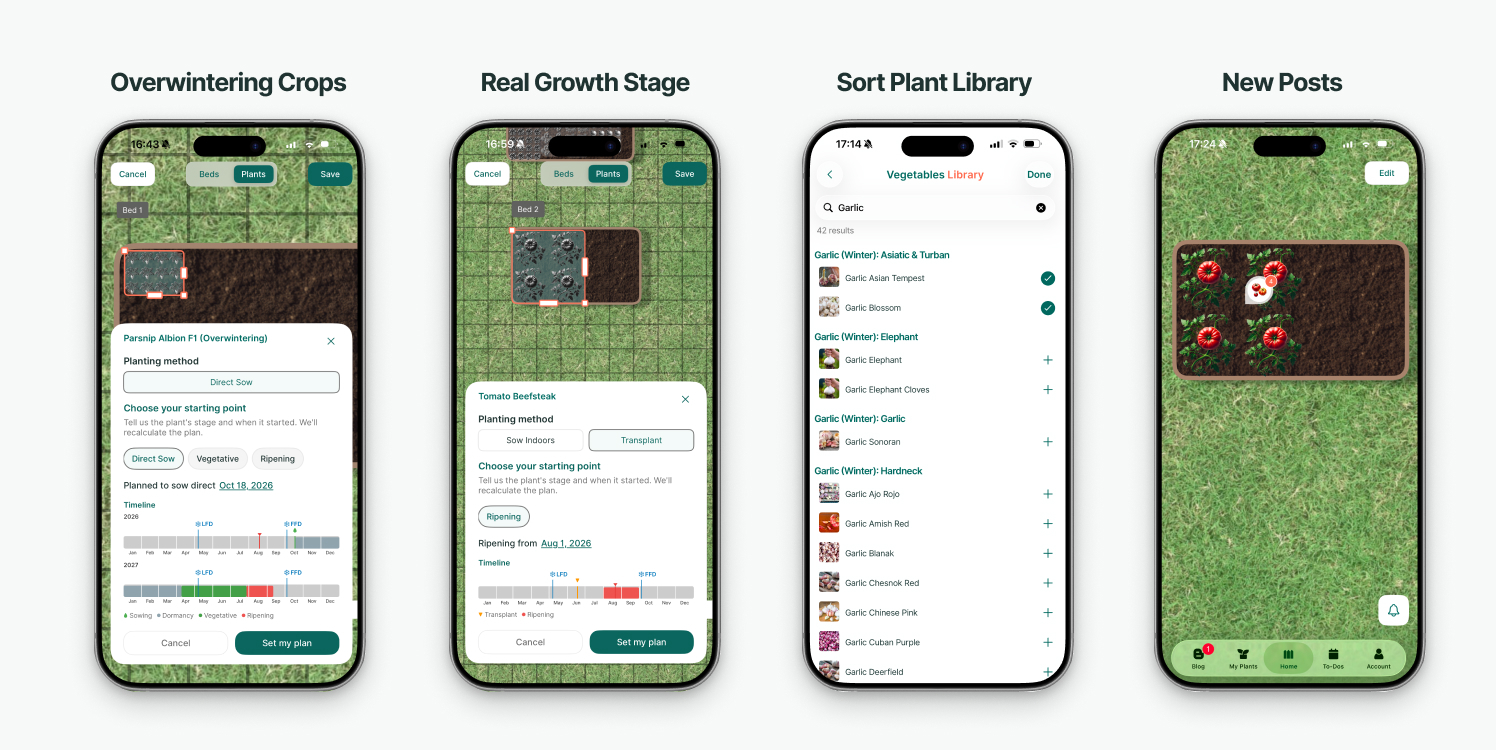
Raspberry jobs are spread over a year. In easyDacha you can add your fall-bearing variety as a custom plant. Each custom plant gets its own care plan and task list. Your next two weeks of tasks are set by your ZIP code, so the jobs show up on time. Use Notes to record which canes you cut and when the first berries ripened. This gardening app keeps all that in one place. See how the planner works in our personalized garden planting schedule guide. Try easyDacha →
When the harvest stays small
If the fall crop is thin, check three things. First, was the planting crowded? Thin new canes to 6 inches (15 cm) apart. Second, did the bed get 1 to 2 inches (2.5 to 5 cm) of water a week in summer? Third, is the soil wet and heavy? Wet soil slows new canes and invites root rot. For the other fall jobs on your list, see our guide to planting vegetables for winter.
Put Your Berry Calendar in One Place
Cutting raspberries takes ten minutes. Remembering the right week is the hard part. easyDacha is a garden planner app built around your ZIP code. Add your canes and keep the whole year of jobs in one list.
FAQ
When do I prune fall-bearing raspberries?
Prune them while dormant: late fall after the leaves die, or late winter before the buds swell. The University of Minnesota allows either window. Iowa State recommends March to early April.
How do you prune fall-bearing raspberries for the best harvest?
Cut every cane to the ground each year. Then thin the new canes to about 6 inches (15 cm) apart. This gives one large fall crop on the new canes.
Can I get a summer crop and a fall crop?
Yes, but the one-crop method usually yields more in total, per Iowa State. For two crops, cut off only the dead tips that fruited and keep the lower canes. Those canes fruit early next summer.
Should I fertilize everbearing raspberries in fall?
Do not add nitrogen. Add potassium or phosphorus only if a soil test shows they are low. Feed nitrogen in spring as the new canes start to grow.
Do fall-bearing raspberries need winter mulch?
In cold winters, yes. Apply 3 to 4 inches (8 to 10 cm) of organic mulch after the top layer of soil starts to freeze. Keep watering until the ground freezes.
Is there an app that reminds me of berry care?
Yes. easyDacha is a gardening app with a care plan and a two-week task list for each plant. You can add raspberries as a custom plant and keep notes on pruning dates.