

You fed the plants all season. They grew tall and green. Then you pulled the carrots and they went soft in two weeks. The tomatoes tasted watery. The cabbage heads were loose and did not crunch. The problem might not be what you added — it is what the plant could not finish processing. When iron and magnesium are low, nitrogen stays stuck as raw nitrate in plant tissue instead of being converted into proteins. High-nitrate vegetables rot faster in storage, taste worse, and are less nutritious. Two micronutrients fix this: iron (the enzyme that converts nitrates) and magnesium (the core of chlorophyll that powers the whole process).
TL;DR: Dissolve 1 teaspoon of iron chelate (or iron sulfate + citric acid) and 1 tablespoon of Epsom salt (magnesium sulfate) in 2.5 gallons (10 liters) of water. Soil drench or foliar spray every 14 days during active growth. Converts nitrogen into plant proteins, prevents interveinal yellowing, and improves storage life. Especially important when using calcium nitrate or other nitrogen fertilizers.
The recipe
You need
- Iron chelate: 1 teaspoon per 2.5 gallons (10 liters). Sold at garden centers as "chelated iron" or "iron EDDHA/DTPA." If you want to save money, make your own: 1 teaspoon iron sulfate + 1 teaspoon citric acid (the DIY chelated iron recipe).
- Epsom salt (magnesium sulfate): 1 tablespoon per 2.5 gallons (10 liters). Sold at pharmacies and grocery stores. A 2 lb bag costs $3 to $4 and lasts the season.
- Water: 2.5 gallons (10 liters)
- A watering can or spray bottle
Do it
- Pour 2.5 gallons (10 liters) of water into a watering can or bucket.
- Add 1 tablespoon of Epsom salt. Stir until fully dissolved.
- Add 1 teaspoon of iron chelate (or 1 tsp iron sulfate + 1 tsp citric acid). Stir until dissolved. If using iron sulfate + citric acid, the solution turns pale yellow-green.
- Use immediately. Iron oxidizes within hours.
How to use it
Soil drench:
Pour 2 cups (0.5 liters) at the base of each plant, onto the root zone. For larger plants in full production, use up to 1 quart (1 liter). This is the main method — it delivers iron and magnesium to the root zone where they are absorbed most efficiently.
Foliar spray:
Pour the solution into a spray bottle. Spray tops and undersides of leaves. Foliar application works faster for correcting visible deficiency symptoms — yellowing between veins greens up in 3 to 5 days with foliar iron. The magnesium absorbs through the leaf surface and reaches chloroplasts directly.
Schedule:
Every 14 days during active growth. Start when plants enter the vegetative growth stage (4 to 6 true leaves) and continue through fruit development. The most critical window is mid-season through harvest — that is when nitrate conversion matters most for storage quality.
Timing: Morning or evening. Avoid foliar spraying in direct midday sun — iron spots can form on leaves if the spray dries too fast.
Pairing with calcium nitrate: This is the companion treatment. When you apply calcium nitrate every 10 to 14 days during fruiting, the nitrogen in that drench can accumulate as nitrates in plant tissue. The Micronutrient Shield ensures that nitrogen gets converted into protein instead. Apply the Micronutrient Shield midway between calcium nitrate applications — so if you drench calcium nitrate on day 1, apply the Shield on day 7.
Which plants benefit most
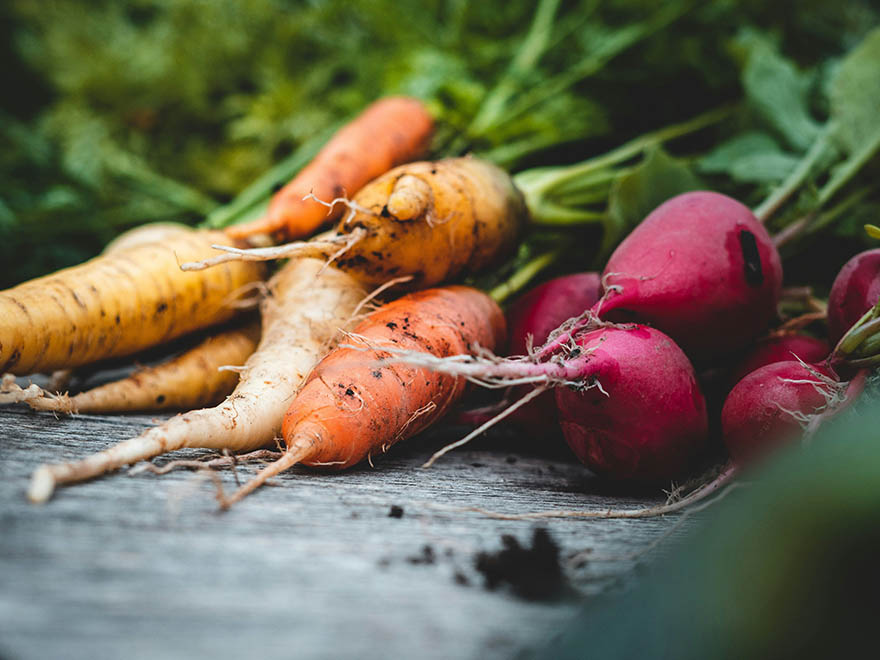
Best for: Root crops for storage (carrots, beets, potatoes, turnips) and cabbage. High nitrates in these crops cause rapid rot in storage — the Shield ensures accumulated nitrogen is converted to protein before harvest. A late-season drench in August through September makes the biggest difference: carrots that last all winter vs. carrots that go soft in two weeks. For cabbage, the Shield also makes heads firmer and safer for fermentation (sauerkraut from high-nitrate cabbage spoils faster).
Best for: Tomatoes, peppers, and eggplant during fruiting. The iron component converts nitrates into amino acids, which improves fruit flavor and shelf life. The magnesium keeps chlorophyll production strong during heavy fruiting — without it, lower leaves yellow and the plant loses photosynthetic capacity right when it needs it most. Also fixes interveinal yellowing: yellow tissue between green veins on lower leaves is magnesium deficiency, on upper/new leaves it is iron deficiency.
Good results: Garlic and onions. Apply when garlic has 6 to 7 leaves (early May in most zones). The iron + magnesium combination supports bulb development and prevents the tip yellowing that signals nutrient imbalance.
Not suited for: Seedlings (too strong for young plants — wait until 4 to 6 true leaves). Plants in already-acidic soil below pH 5.5 (iron chelate can drop pH further and cause aluminum toxicity — use Epsom salt alone). Waterlogged soil (in oxygen-starved conditions, iron converts to its toxic ferrous Fe²⁺ form — fix drainage first).
Best for: Tomatoes, peppers, and eggplant during fruiting. The iron component converts nitrates into amino acids, which improves fruit flavor and shelf life. The magnesium keeps chlorophyll production strong during heavy fruiting — without it, lower leaves yellow and the plant loses photosynthetic capacity right when it needs it most. Also fixes interveinal yellowing: yellow tissue between green veins on lower leaves is magnesium deficiency, on upper/new leaves it is iron deficiency.
Good results: Garlic and onions. Apply when garlic has 6 to 7 leaves (early May in most zones). The iron + magnesium combination supports bulb development and prevents the tip yellowing that signals nutrient imbalance.
Not suited for: Seedlings (too strong for young plants — wait until 4 to 6 true leaves). Plants in already-acidic soil below pH 5.5 (iron chelate can drop pH further and cause aluminum toxicity — use Epsom salt alone). Waterlogged soil (in oxygen-starved conditions, iron converts to its toxic ferrous Fe²⁺ form — fix drainage first).
Why it works
This recipe targets a specific biochemical bottleneck: the conversion of nitrates to proteins inside the plant.
Here is the chain. Nitrogen enters the plant as nitrate (NO₃⁻). Before the plant can use it to build proteins, it must convert nitrate to ammonium (NH₄⁺) through an enzyme called nitrate reductase. That enzyme requires iron as a cofactor. Without enough iron, the conversion stalls. Nitrates pile up in leaves, stems, and fruit instead of becoming amino acids and proteins.
Magnesium plays a different but equally critical role. Magnesium sits at the center of every chlorophyll molecule. Chlorophyll is what powers photosynthesis — the energy source for the entire nitrate conversion process. When magnesium is low, photosynthesis slows, and even if iron is present, there is not enough energy to drive the conversion.
So: iron provides the enzyme machinery. Magnesium provides the energy. Together, they keep nitrogen flowing through the system instead of accumulating as raw nitrate.
The storage connection is direct. High-nitrate vegetables rot faster because soil bacteria convert nitrates to nitrites during storage, which accelerates decomposition. Root crops with high nitrates (carrots, beets, potatoes) can lose weeks of shelf life compared to low-nitrate harvests from the same soil.
This is why they call the iron chelate the "Anti-Nitrate & Storage Formula." It is not about adding more nitrogen — it is about finishing the job the plant started.
What NOT to do
Do not combine with phosphorus fertilizers in the same tank. Iron precipitates out of solution in the presence of phosphorus, forming insoluble iron phosphate. Both nutrients become unavailable. Apply them on separate days.
Do not apply to seedlings. The combined concentration is too strong for young roots. Wait until plants have 4 to 6 true leaves.
Do not exceed the Epsom salt dose. Excess magnesium blocks calcium uptake — which can actually cause blossom end rot on tomatoes. One tablespoon per 2.5 gallons is the dose. More is not better.
Do not apply to waterlogged soil. In anaerobic conditions, iron becomes toxic. If your soil is soggy after rain, wait for it to drain before applying.
Do not store the mixed solution. Iron oxidizes in water within hours. The pale green solution turns rusty orange, which means the iron has converted to a form plants cannot absorb. Always mix fresh.
Do not use this as a standalone nitrogen source. This recipe does not add nitrogen — it converts the nitrogen already in the plant from nitrate to protein. You still need a nitrogen source (calcium nitrate, ammonium, compost, whey-ammonia drench, etc.).
FAQ
How is this different from the DIY chelated iron recipe?
The chelated iron recipe provides only iron (iron sulfate + citric acid). The Micronutrient Shield adds magnesium sulfate (Epsom salt) to the mix. The iron alone fixes iron chlorosis and converts nitrates. Adding magnesium fixes magnesium deficiency, powers chlorophyll production, and gives the plant the energy to actually run the nitrate conversion. Use chelated iron alone if iron chlorosis is your only problem. Use the full Shield if you want the complete anti-nitrate + anti-deficiency package.
Can I just use Epsom salt without iron?
You can, and it fixes magnesium deficiency. But without iron, the nitrate-to-protein conversion does not get the enzyme boost. If your main concern is nitrate accumulation and storage quality, you need the iron component. If your main concern is yellowing lower leaves (magnesium deficiency), Epsom salt alone works.
When is the most important time to apply this?
Late season — the 4 to 6 weeks before harvest. That is when nitrate conversion matters most for storage quality and food safety. A mid-August through September application schedule on root crops and cabbage makes the biggest difference. During the rest of the season, every 14 days as part of the regular feeding rotation.
Will this fix yellow leaves?
It depends on which leaves and what pattern. Yellow tissue between green veins on lower/older leaves = magnesium deficiency (the Epsom salt fixes it). Yellow tissue between green veins on upper/new leaves = iron deficiency (the iron chelate fixes it). Entire leaf yellow = nitrogen deficiency (this recipe does not fix that — you need a nitrogen source). Brown, sunken leaf tips = potassium or calcium issue (different treatment). Start with the disease identification guide to narrow it down.
Is there a gardening app that tracks when to apply the Micronutrient Shield?
Yes. The easyDacha garden planner app tracks growth stages and sends task reminders for feeding at the right time. Download at easydacha.com/download.
Two micronutrients, one bottleneck solved

Iron chelate and Epsom salt from the garden center and pharmacy. One teaspoon and one tablespoon in a bucket of water. That clears the bottleneck between raw nitrate and finished protein in your vegetables. Better storage, better flavor, and safer food.
The easyDacha gardening app tracks nutrient schedules by growth stage so you feed at the right time, not when it is too late.
Try easyDacha →. The garden planner app that builds your full care schedule. Cancel anytime.
Related reading on easydacha.com
- How to Make DIY Chelated Iron from Iron Sulfate and Citric Acid (Iron Chlorosis Fix) — how to make your own iron chelate for this recipe. Same chemistry, 10x cheaper than commercial iron chelate.
- How to Use Calcium Nitrate to Stop Flower Drop and Protect Fruit (Ovary Protection) — the nitrogen-calcium drench that pairs with this Shield. Apply them on alternate weeks.
- How to Use Citric Acid to Unlock Calcium and Magnesium in Soil (Mineral Mobilizer) — unlocks soil-bound magnesium so the Epsom salt drench works even better in alkaline soil.
- How to Make Ammonium Lactate from Whey and Ammonia (Bio-Available Nitrogen) — a nitrogen source. The Micronutrient Shield converts that nitrogen to protein.
- Simple Fertilizer Plan for Flowering Vegetables — the full feeding schedule. The Micronutrient Shield is the anti-nitrate layer.
- How to Identify Plant Diseases: Early Signs and What to Do — interveinal yellowing mimics other problems. Confirm the diagnosis first.