
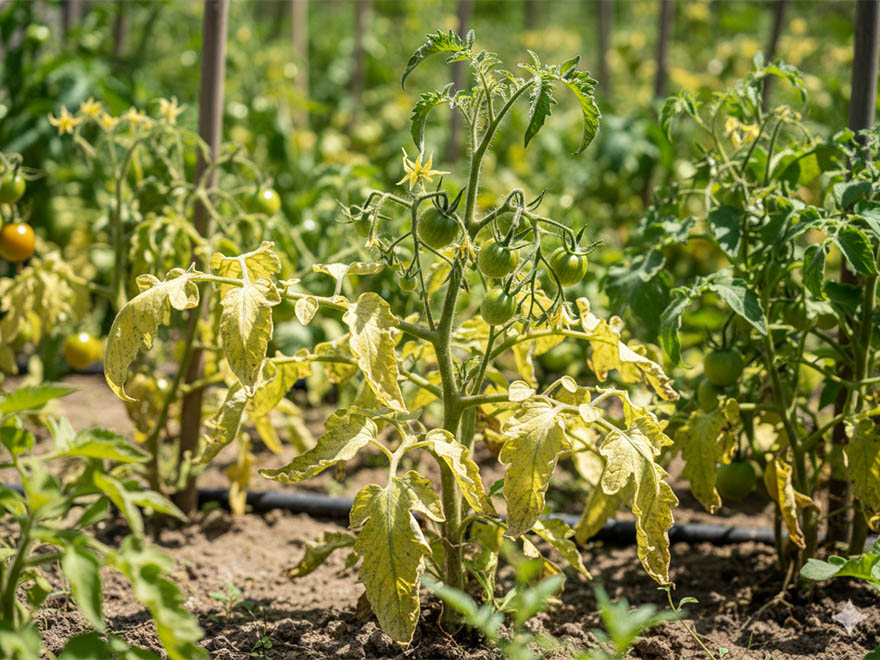
Lower leaves turning yellow while the top looks fine? That's nitrogen deficiency — the plant is eating itself to feed new growth. You can fix that with a trip to the garden center, or you can fix it with whey from your fridge and a bottle of ammonia from under the sink. When lactic acid (in whey) meets ammonia, they react to form ammonium lactate. This is a nitrogen compound that dissolves instantly in water and enters roots faster than most commercial nitrogen fertilizers. One drench turns pale leaves dark green within a week.
TL;DR: Mix 2.5 cups (600 ml) of sour whey (from yogurt straining or kefir) with 2 teaspoons (10 ml) of household ammonia (10% solution) in 3.2 liters of water. Stir. Pour at the base of nitrogen-hungry plants. One application per plant. Wait 7 to 10 days before deciding if you need a second drench.
The recipe
You need
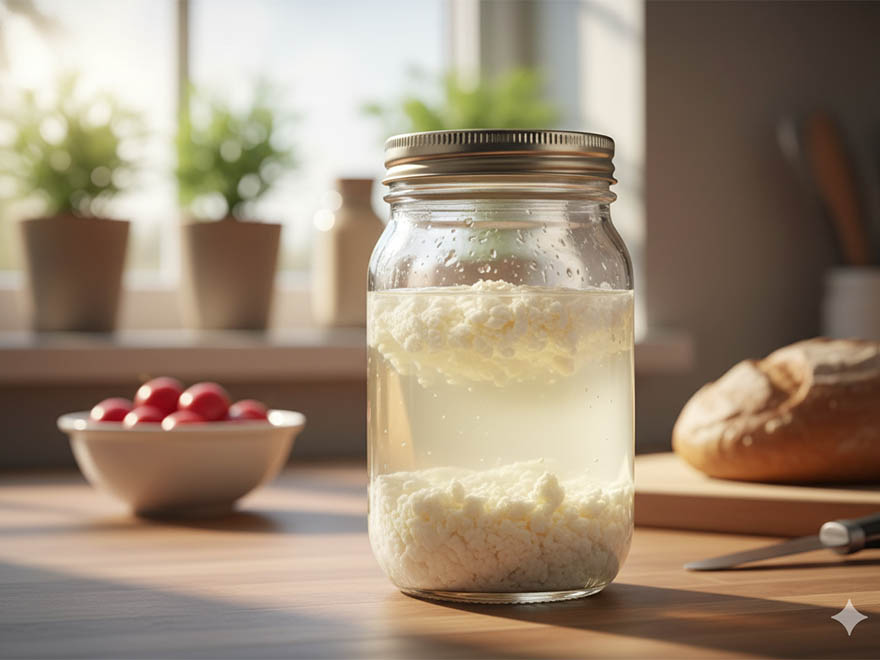
- Whey: 2.5 cups (600 ml) of sour whey from straining plain yogurt, plain kefir, or soft cheese. The yellowish liquid you pour off the top. Must be unsweetened — flavored yogurt whey attracts pests.
- Household ammonia: 2 teaspoons (10 ml) of clear, unscented ammonia (10% solution) from the cleaning aisle. Not "sudsy" or scented.
- Water: 3.2 liters (about 13.5 cups)
- A watering can, pitcher, or bucket
- A measuring spoon and measuring cup
Do it
- Pour 3.2 liters (about 13.5 cups) of water into a watering can or pitcher.
- Add 2.5 cups (600 ml) of sour whey. Stir.
- Add 2 teaspoons (10 ml) of clear household ammonia. Stir.
- The lactic acid in the whey reacts with the ammonia to form ammonium lactate. No fizzing, no heat. The reaction is quiet and instant. The solution may smell faintly of ammonia for a minute, then the smell fades as the ammonia binds to the lactic acid.
- Use immediately. Do not store.
That is it. The chemistry happens in the bucket. You pour the result on your plants.
How to use it
Root drench (only method):
Pour about 1 cup (250 ml) of the solution at the base of each plant, onto the root zone. Water the soil lightly first if it is dry. Ammonium lactate is water-soluble and reaches roots immediately, but it moves through moist soil faster than dry.
When to use it:
Use this drench when plants show nitrogen deficiency: pale yellow-green leaves (especially older, lower leaves), slow or stalled growth, thin stems, and poor leaf size. This is most common in mid-season when heavy-feeding crops like tomatoes and peppers have used up the nitrogen in the soil and fruit production is pulling even more.
How many times:
Start with one drench. Wait 7 to 10 days. If leaves green up and new growth resumes, you are done. If the plant is still pale after 10 days, apply one more drench. Do not exceed 2 drenches per month. Ammonium lactate is a fast nitrogen source. Overdoing it causes the same problems as any excess nitrogen: too much leaf growth, delayed fruiting, and increased vulnerability to pests.
Do not use as a regular feeding schedule. This is a targeted correction for nitrogen deficiency, not a substitute for a balanced fertilizer plan. Once the deficiency is corrected, switch to your normal feeding routine.
Which plants benefit most
Any nitrogen-hungry plant that is showing deficiency symptoms responds to this drench.
Best response: Tomatoes in mid-season. Tomatoes are heavy nitrogen feeders. By July, many home garden tomatoes have depleted the soil nitrogen and start yellowing from the bottom up. One whey-ammonia drench greens them back up. This is especially helpful if your tomatoes are setting fruit and you do not want to push too much leaf growth with a heavy synthetic nitrogen hit.
Strong response: Peppers and eggplant. Same family, same mid-season nitrogen drain. The ammonium lactate delivers nitrogen without the growth explosion that calcium nitrate or urea can trigger.
Strong response: Corn. Corn is the heaviest nitrogen feeder in the home garden. If leaves start yellowing, a whey-ammonia drench is a fast correction.
Good response: Cucumbers, squash, and melons. These crops grow fast and consume nitrogen rapidly. A drench during the fruiting stage prevents the "yellow leaf, small fruit" syndrome.
Good response: Leafy greens (lettuce, spinach, kale). Nitrogen drives leaf growth directly. If greens are pale and slow, one drench is often enough to restart production.
Use with caution on: Plants that are already growing vigorously with dark green leaves. They do not need more nitrogen. Adding nitrogen to already well-fed plants pushes excessive vegetative growth, delays flowering, and makes them more attractive to aphids.
Not useful for: Legumes (beans, peas). Legumes fix their own nitrogen through root nodule bacteria. They rarely need supplemental nitrogen and may actually grow worse with it.
Why it works
The chemistry is simple. Lactic acid (CH₃CHOHCOOH) plus ammonia (NH₃) yields ammonium lactate (CH₃CHOHCOONH₄). This is a salt that dissolves in water and dissociates into ammonium ions (NH₄⁺) and lactate ions at the root surface.
Why ammonium lactate beats raw ammonia: Ammonia by itself is a gas dissolved in water. It is volatile. Pour diluted ammonia on soil and much of the nitrogen escapes into the air before roots can grab it. When ammonia binds to lactic acid, it becomes a stable, non-volatile salt. The nitrogen stays in solution, stays in the soil, and stays available to roots. Less waste, faster uptake.
Why it beats urea: Urea must be converted by soil bacteria into ammonium before plants can use it. That conversion takes 3 to 7 days depending on soil temperature and moisture. Ammonium lactate is already in the ammonium form. Roots absorb it the same day you pour it.
The whey bonus: Beyond the nitrogen chemistry, whey delivers lactic acid and residual lactic acid bacteria to the soil surface. Lactic acid temporarily lowers the pH of the leaf and soil surface, creating conditions that are hostile to Phytophthora and Peronospora zoospores. This is a mild, secondary benefit, not a replacement for proper disease prevention, but it stacks with other protective treatments.
Why sour whey works better: Sour whey has a higher lactic acid content than fresh sweet whey because the bacteria have had more time to ferment the lactose into lactic acid. More lactic acid means more ammonium lactate forms in the reaction, and more acid is left over for the surface pH effect.
What NOT to do
Do not use more than 1 teaspoon of ammonia per batch. Ammonia is a strong base. Too much shifts the solution pH too high and can burn fine root hairs. One teaspoon per 5 cups of water is the tested ratio. Do not scale up the ammonia without scaling up the whey and water proportionally.
Do not use flavored or sweetened yogurt whey. The added sugars attract ants and fungus gnats and feed mold on the soil surface. Use whey from plain, unsweetened yogurt, kefir, or cheese production only.
Do not use sudsy or scented ammonia. The detergent in sudsy ammonia damages root cell membranes. The fragrance chemicals in scented ammonia can be phytotoxic. Only clear, unscented household ammonia.
Do not apply to legumes. Beans, peas, lentils, and other legumes fix atmospheric nitrogen through symbiotic bacteria in their root nodules. Supplemental nitrogen suppresses this fixation and makes the plants dependent on external nitrogen. Let legumes do their own work. The rhizobium guide explains this system.
Do not apply during active flowering on sensitive crops. A nitrogen spike during flowering can cause flower drop in peppers and tomatoes. Apply during vegetative growth or early fruit development, not peak bloom.
Do not store the mixed solution. The ammonium lactate is most effective fresh. Over time, soil bacteria in the whey begin consuming the lactate, reducing the nitrogen content. Mix and use the same day.
FAQ
What kind of whey should I use?
Sour whey from straining plain yogurt, plain kefir, or soft cheese production. The yellowish liquid you pour off the top is ready to use. Avoid whey from flavored yogurt (added sugars) or from hard cheese processes that use rennet (sweet whey has less lactic acid and works less effectively).
Can I use the leftover liquid from store-bought yogurt?
Yes. That thin yellowish liquid sitting on top of your yogurt container when you open it is whey. One container does not give you much, so save it in a jar in the fridge until you have a cup. It stays good in the fridge for 2 weeks. Another option: buy a quart of plain kefir. The liquid that separates when kefir sits in the fridge is ready-to-use whey. One quart of kefir gives you about 1 cup.
Is household ammonia safe to use on food plants?
At this dilution, yes. One teaspoon of 10% ammonia in 1.25 liters of water produces a solution with roughly 40 ppm nitrogen. That is well within the range of commercial liquid fertilizers. The ammonia reacts with the lactic acid and becomes ammonium lactate, a stable salt. There is no free ammonia residue on the plant or fruit.
How fast will I see results?
Expect visible greening of leaves within 5 to 7 days. Ammonium lactate is absorbed quickly and goes to work immediately in chlorophyll production. If the plant was genuinely nitrogen-deficient, the color change is obvious.
Can I combine this with other fertilizers?
Do not mix with calcium-containing fertilizers (calcium acetate, calcium nitrate) in the same bucket. Calcium can react with lactate to form insoluble calcium lactate, locking up both nutrients. Apply them on different days, 3 to 4 days apart.
Where do I buy household ammonia, and which brand?
Look in the cleaning aisle at any grocery store or Walmart. Buy clear household ammonia (5-10% concentration). Common brands: Austin's Clear Ammonia, Great Value (Walmart), or any store brand labeled "clear ammonia." A 64 oz bottle costs $2 to $4 and lasts for years of garden use. Avoid sudsy ammonia (contains detergent that damages roots), scented ammonia (fragrance chemicals can be phytotoxic), and industrial-strength ammonia (25%+, too concentrated and will burn roots).
Why not just use straight ammonia diluted in water?
You can, but you lose nitrogen to the air. Ammonia dissolved in water is volatile. Much of it evaporates before roots absorb it. The lactic acid in whey captures the ammonia as a stable salt (ammonium lactate) that stays in solution and stays in the soil. Whey makes the ammonia more efficient.
Is there a gardening app that tracks when plants need feeding?
Yes. The easyDacha garden planner app schedules feeding tasks by growth stage and sends reminders when your crops are entering heavy-feeding phases. Download at easydacha.com/download.
The fridge-and-cleaning-aisle nitrogen fix

Yogurt whey and a teaspoon of ammonia from under the sink. That is all it takes to make a nitrogen source that plants absorb faster than the synthetic stuff. One drench turns pale yellow leaves green within a week. No garden center trip, no measuring complicated fertilizer ratios. Pour whey, add ammonia, stir, water your plants.
The easyDacha gardening app tracks each plant's feeding needs by growth stage so you catch nitrogen deficiency before it slows your harvest.
Try easyDacha app →. The garden planner app that plans your season in 60 seconds. Cancel anytime.
Related reading on easydacha.com
- Simple Fertilizer Plan for Flowering Vegetables — the full feeding schedule. Whey-ammonia is a targeted nitrogen correction, not a replacement for balanced nutrition.
- How to Make Calcium Acetate from Wood Ash and Vinegar (Blossom End Rot Fix) — calcium acetate delivers calcium. Do not mix with whey-ammonia in the same bucket. Apply on different days.
- How to Make Fermented Weed Fertilizer (Free Liquid Feed) — fermented weeds deliver slow-release nitrogen over weeks. Whey-ammonia delivers fast nitrogen in one shot. Different speeds for different needs.
- How to Use Rhizobium Inoculant for Beans, Peas, and Other Legumes — legumes fix their own nitrogen. Do not apply whey-ammonia to them. This guide explains why.
- How to Make Yeast Fertilizer for Vegetables (Simple DIY Recipe) — yeast delivers B vitamins and stimulates soil biology. Whey-ammonia delivers nitrogen directly. Different tools for different problems.
- How to Grow Tomatoes from Seed (No Greenhouse Required) — tomatoes are the top candidate for mid-season nitrogen correction. Full care guide from seed to harvest.