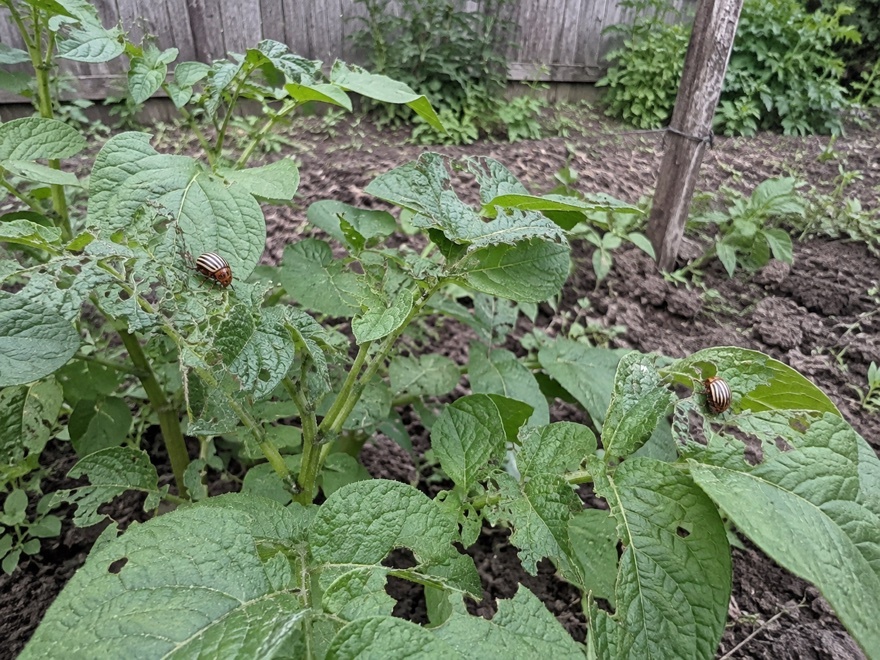
You check your potato plants and half the leaves are skeletonized overnight, with orange-striped beetles and their humped red larvae working through the rest. Colorado potato beetle can strip a potato patch fast, and most people reach straight for a chemical pesticide. A dry mustard powder spray gives you an organic control for colorado potato beetle that works as a contact irritant and feeding deterrent instead.
TL;DR: For colorado potato beetle organic control, steep dry mustard powder in warm water, add a little liquid soap as a sticker, and spray potato or eggplant foliage thoroughly on both sides of the leaf in the evening at the first sign of beetles or larvae.
The recipe
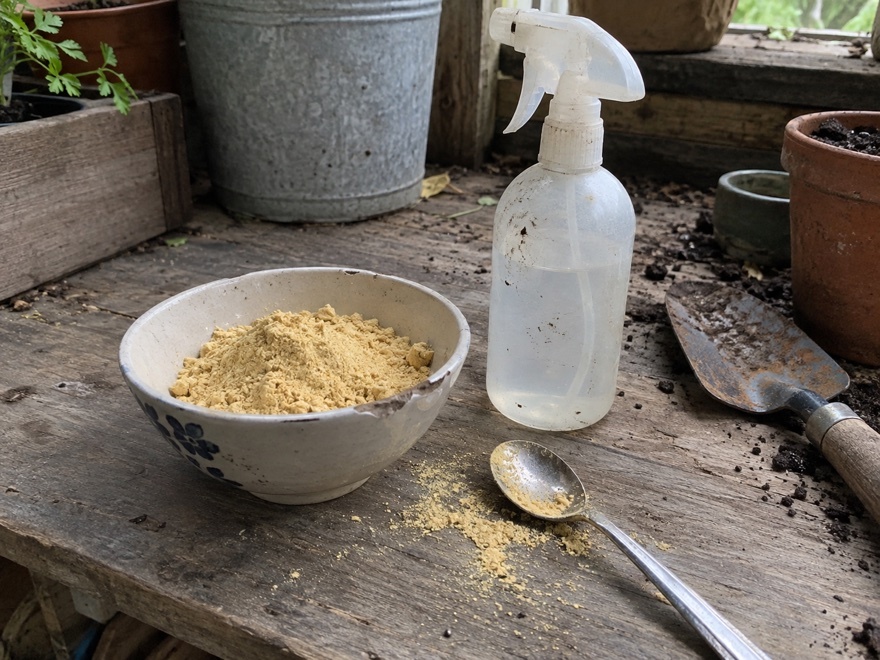
For 2.6 gallons (10 L) of warm water:
- About 200 g dry mustard powder, roughly 1.5 to 2 loosely packed cups
- A few tablespoons of liquid soap, used as a sticker so the spray clings to the leaf surface instead of running off
Mix it: Stir the mustard powder into warm water and let it steep for a few hours so it fully hydrates and releases its pungent compounds. Strain out any large clumps if you are using a pump sprayer, then stir in the soap right before you spray.
Shelf life: Use within a day or two. The mixture loses potency as it sits, and the soap can separate out if left too long.
How to apply
Spray the whole plant, top and bottom of every leaf, since Colorado potato beetle larvae feed mostly on the underside where a light spray misses them. Cover stems too, since adult beetles rest there during the day.
Spray in the evening rather than the middle of the day. Beetles are most active at dusk and through the night, and evening application also avoids the strongest sun, which can intensify any irritation to the leaf itself.
The mustard compounds act as a contact irritant and a feeding deterrent rather than a poison, meaning beetles that land on treated leaves are more likely to move on than settle in and eat. This works well alongside hand-picking beetles and egg clusters off the plant, which remains the single fastest way to knock back a bad infestation.
Reapply after any rain, since the spray washes off, and repeat every 5 to 7 days while beetle pressure is active. Keeping that rhythm going through a full outbreak, especially when you are also hand-picking and rotating other treatments, is easy to lose track of. easyDacha's task list builds a recurring spray reminder into your potato bed's care plan so you know exactly when the next application is due. Download and try easyDacha, a garden planner app that keeps pest treatment schedules on track.
Expect fewer new beetles landing and feeding within a few days, though this spray works best as one part of a broader response rather than a single fix for a heavy infestation.
Why this spray works
Dry mustard powder contains pungent sulfur compounds that irritate insect mouthparts and antennae on contact, which discourages beetles from settling down to feed on treated foliage.
Soap helps the mustard solution stick to the leaf surface long enough to have an effect, instead of beading up and rolling off.
Evening timing matters because it lines up with when adult beetles and larvae are most active and moving across the plant, increasing the chance they encounter the treated surface.
Is this safe for potato and eggplant plants?
Yes, a mustard powder and soap spray at a light starting concentration is safe for potato and eggplant foliage. Mustard powder is a food ingredient, not a synthetic pesticide, and does not leave a toxic residue in the soil.
- Watch for any leaf yellowing or spotting after your first application, and rinse foliage with plain water if you see stress
- Avoid spraying in full midday sun, since any leaf sensitivity shows up faster in heat
- This is a contact irritant and deterrent, not a systemic poison, so it will not harm beneficial insects that simply pass through without prolonged contact
- Wash harvested potatoes and eggplant as you normally would before eating
What NOT to do
Don't mix an overly thick slurry. A too-concentrated mustard mixture clogs pump sprayers and coats leaves unevenly.
Don't skip hand-picking as a backup. This spray deters and irritates, it does not kill on contact, so removing visible beetles and egg clusters by hand still matters on a heavy infestation.
Don't spray during the hottest part of the day. Combining mustard's irritant compounds with high heat and soap increases the risk of leaf stress.
Don't substitute prepared mustard condiment for dry mustard powder. Prepared mustard contains vinegar, salt, and sugar that change how the spray behaves on the leaf and can encourage disease; use plain dry mustard powder only.
Best for which plants
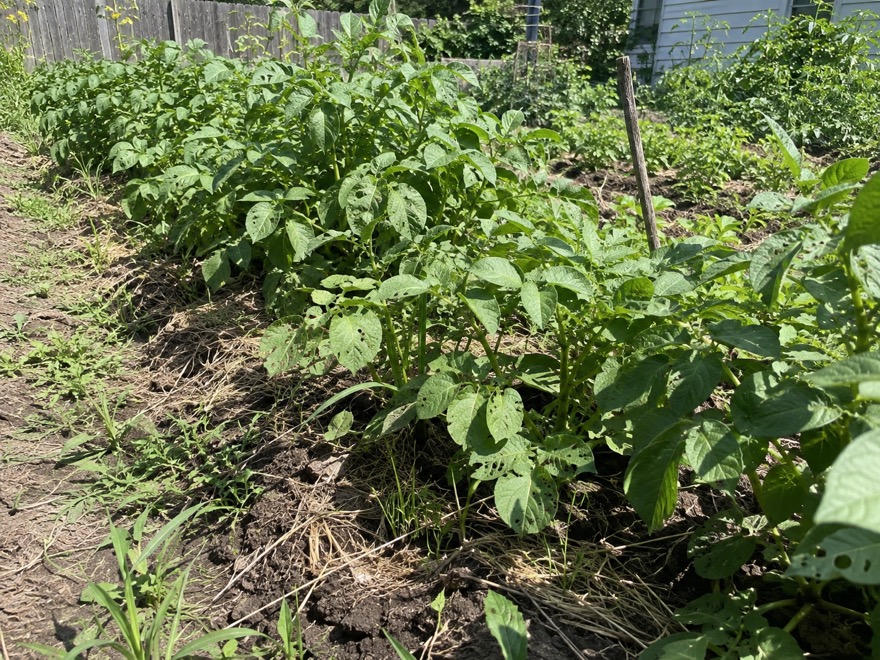
- Potato - the primary target, especially during the window when adult beetles emerge and lay eggs in early summer
- Eggplant - shares the same pest and benefits from the same spray and hand-picking routine
- Tomato (occasional feeding) - Colorado potato beetle will sometimes feed on tomato foliage too, and the same spray applies
This spray is built for outdoor nightshade-family vegetables, not for houseplants or ornamentals.
When colorado potato beetle keeps coming back
If beetles keep returning despite spraying, check three things. Look at whether you rotated your potato bed to a different spot this year, since beetles overwinter in the soil right where last year's potatoes grew and emerge in the same bed each spring. Check whether you are catching the egg clusters, small clusters of bright orange-yellow eggs on the leaf underside, before they hatch into larvae, since larvae are far more destructive than adults. Finally, confirm you are covering the leaf underside consistently, since a spray that only hits the top of the leaf leaves larvae untouched.
Try easyDacha for pest control timing
Between hand-picking, spraying, and checking egg clusters, a bad beetle season involves a lot of small recurring tasks. easyDacha, a vegetable garden app, keeps your potato bed's full pest schedule on one task list with reminders. Download and try easyDacha.
For more organic pest options, see how to make garlic spray for garden pests, how hot pepper spray works against garden pests and deer, and the broader top 10 most common garden pests identification guide. If Beauveria bassiana is new to you as a biological control, read how to grow Beauveria bassiana at home, which pairs well with this spray against beetle larvae. For fermented alternatives, see how to ferment mustard as fertilizer and pest repellent, and for the full organic pesticide picture, homemade organic pesticide recipes for the vegetable garden.
FAQ
What does Colorado potato beetle damage look like?
Leaves stripped down to the veins or skeletonized entirely, with orange-and-black striped adult beetles and humped, dark-red larvae visible on the plant, usually starting on the lower leaves.
How often should I spray mustard powder for potato beetles?
Every 5 to 7 days while beetles are active, and again after any rain washes the spray off.
Is mustard powder spray as effective as a chemical pesticide?
It works as a repellent and feeding deterrent rather than a kill-on-contact poison, so it is best combined with hand-picking beetles and eggs for a heavy infestation, not used as the only defense.
Can I use this spray on eggplant too?
Yes, eggplant shares the same pest and the same spray and timing apply.
How much mustard powder do I need per batch?
About 200 g, roughly 1.5 to 2 loosely packed cups, steeped in 2.6 gallons (10 L) of warm water, with a few tablespoons of liquid soap stirred in right before spraying.
Will this spray hurt beneficial insects like ladybugs?
It is a contact irritant, not a broad-spectrum poison, so beneficial insects that briefly land on treated leaves are unlikely to be seriously harmed, though direct heavy coating of any insect is still best avoided.
Is there an app that reminds me when to reapply pest sprays?
Yes. easyDacha is a gardening app that builds recurring pest control tasks into your garden plan and reminds you before each spray day.