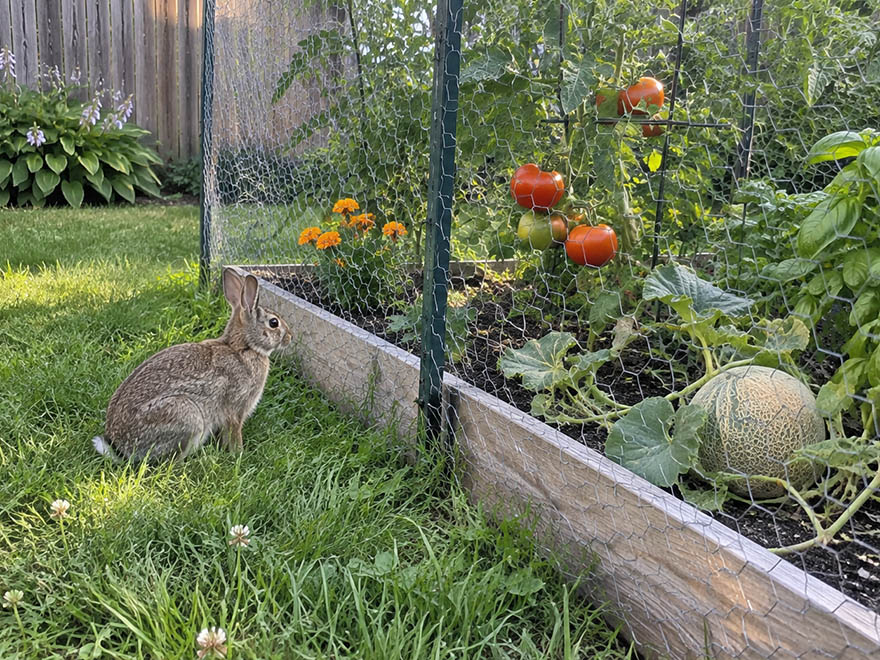
You spent all season on those tomatoes and melons, and something ate them the night before you were going to pick. Rabbits mow down seedlings, deer strip whole plants, squirrels take one bite from every fruit, and sometimes the thief walks on two legs. Knowing how to protect your vegetable garden from animals comes down to one rule: match the barrier to the animal. A rabbit fence will not stop a deer, and a deer fence will not stop a digging groundhog.
TL;DR: To protect your vegetable garden from animals, install a fence sized to your main pest, an 8-foot barrier for deer or a 2-foot buried mesh for rabbits, then add scent deterrents and netting for squirrels and birds.
Identify the animal first
Before you build anything, figure out who is eating your garden. The damage tells you.
- Clean-cut stems near the ground, missing seedlings: rabbits.
- Torn, ragged leaves and whole plants gone above knee height: deer.
- One bite out of many fruits, dug-up containers: squirrels or chipmunks.
- Pecked fruit, scratched soil: birds.
- Large holes and flattened plants near a burrow: groundhogs.
- Rows picked clean of ripe fruit with footprints, not tracks: people.
Match the fix to the culprit. Building the wrong barrier wastes time and money while the raids continue.
Step-by-step: build the right barrier
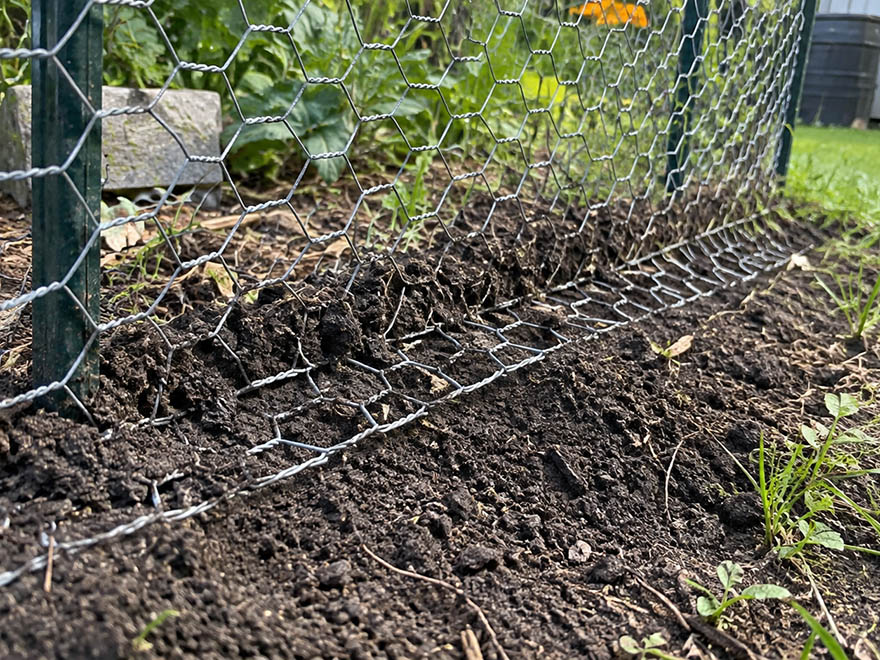
1. Fence out rabbits with buried mesh
Rabbits are the most common raider, and the fix is cheap. Use 1-inch (2.5 cm) mesh chicken wire, 2 feet (60 cm) tall for cottontails. Bury the bottom 6 inches (15 cm) below the soil, or bend an L-shaped flap outward at the base, so they cannot dig under. Pull it tight against the ground.
For jackrabbits in the arid West, go to 3 feet (90 cm) tall and bury 6 inches (15 cm) deep. That single barrier stops most seedling losses in USDA zone 5 through zone 9.
2. Fence out deer with height
Deer need height, not strength. A deer fence should be at least 8 feet (2.4 m) tall, since deer clear shorter barriers with ease. Use woven wire, high-tension wire, or heavy UV-stabilized mesh.
If 8 feet is too much for a small yard, try a shorter option. A 4-foot to 6-foot (1.2 to 1.8 m) fence around a small, enclosed bed can still work. Deer avoid jumping into a tight space where they cannot see a landing.
3. Block squirrels, chipmunks, and birds
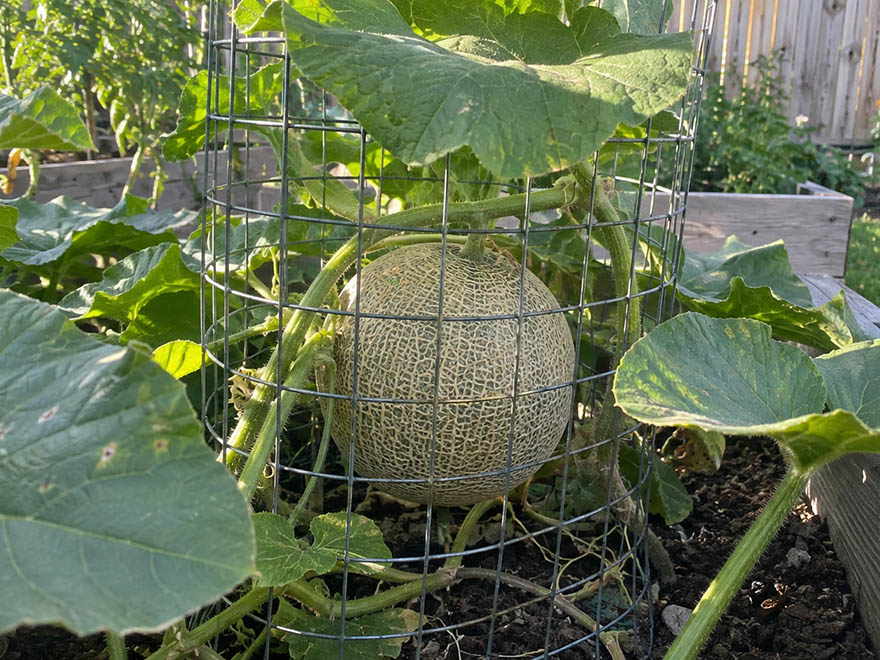
Squirrels and birds go over or through any ground fence, so cover the crop itself. Drape bird netting or floating row cover over vulnerable plants and secure the edges. A row cover also shades tender plants in a heat spell, as our protect plants in a heat wave guide explains. For melons and squash, slip a mesh bag or a cut milk jug over each ripening fruit.
To keep squirrels from eating melons, cage the fruit individually with hardware cloth or set a low tunnel of chicken wire over the whole patch. Squirrels dig containers too, so top pots with a layer of coarse mulch or a mesh disk.
4. Add deterrents as backup, not the main defense
Scent and taste repellents help, but they wash off and fade. Rotate them so animals do not adjust. Options that work short term include hot pepper spray on foliage, strong-smelling soap shavings, and motion-activated sprinklers. Our hot pepper spray for garden pests and deer recipe covers the mix and reapplication schedule.
A deterrent alone rarely holds. Pair it with a physical barrier for anything more than light pressure.
Why the right barrier protects your vegetable garden from animals
The single biggest mistake is building one fence and hoping it stops everything. Each animal beats a different weakness. Rabbits dig under, so you bury the mesh. Deer jump over, so you build tall. Squirrels climb and birds fly, so you cover the crop directly.
A fence sized to your real pest solves 90 percent of the problem on its own. Add deterrents only for the animals your fence cannot reach, like climbers and fliers. The right combination depends on what you actually have, which is why identifying the culprit comes first.
What to do if someone is stealing your vegetables
If a person is taking your ripe produce, treat it differently from an animal raid. Pick fruit slightly early and ripen it indoors, so nothing tempting sits in view. Move the most valuable crops out of sight from the street or path.
A simple sign that the plot is tended, and cared for, cuts casual theft. Community plots often add a low fence with a gate and a lock, plus a shared harvest schedule so members know whose row is whose. If theft continues, talk to your plot manager or neighbors before adding cameras. Most garden theft is opportunistic and stops once the easy access closes.
What NOT to do
Do not build a tall deer fence for a rabbit problem. Rabbits go under, not over. Height is wasted if the base is open.
Do not rely on repellent sprays alone. They fade in rain and sun, and animals adapt within days.
Do not leave ripe fruit on the vine for days. A ready melon or tomato is an open invitation to squirrels, deer, and thieves alike.
Do not skip burying the fence base. Rabbits and groundhogs dig, and an unburied fence is a doorway.
Best for which situations
Match your defense to your setting and main pest:
- Suburban yards with deer and rabbits: an 8-foot perimeter fence plus buried 1-inch mesh along the base handles both.
- Small raised beds and containers: low chicken-wire cages or floating row cover are enough for rabbits and birds. Balcony and patio growers rarely need a full fence.
- Melon, squash, and berry patches: individual fruit cages or a netted low tunnel stop squirrels and birds where a fence cannot.
- Community and shared plots: a locked gate, in-view crop placement, and early picking cut human theft.
When animals keep getting in
If raids continue after fencing, check three things. First, walk the fence base for dug gaps and re-bury the mesh. Second, look for overhanging branches or structures that let squirrels and deer bypass the barrier. Third, confirm you named the right animal, since damage from a groundhog and a rabbit can look alike. A quick review of our top 10 most common garden pests guide helps you match the damage to the culprit. If chewing points to insects instead, our tomato hornworm organic control guide covers one common culprit. Our how to keep ladybugs in your garden piece covers the beneficial side.
Track your harvest windows so you pick at the right moment, before raiders beat you to it. easyDacha builds a task list tied to your beds and your ZIP code. The gardening app reminds you when each crop is ready to pull, and when to net or cage it. Download and try easyDacha. New growers can start with our vegetable gardening for beginners guide.
FAQ
How do I protect my vegetable garden from animals on a budget?
Start with 1-inch mesh chicken wire, 2 feet tall, buried 6 inches deep for rabbits, which are the most common raider. Add floating row cover over seedlings and cage individual fruits for squirrels. This handles most damage for the cost of a roll of wire.
How do I keep squirrels from eating melons?
Cage each melon with hardware cloth once it starts to size up, or set a low chicken-wire tunnel over the whole patch. Squirrels climb and dig, so a ground fence will not stop them. Cover the fruit itself and top any containers with coarse mulch.
How tall does a deer fence need to be?
A deer fence should be at least 8 feet tall, because deer easily clear shorter barriers. If that is too much for a small yard, a 4-foot to 6-foot fence around a tight, enclosed bed can work. Deer avoid jumping into a space with no clear landing.
Someone is stealing vegetables from my garden, what should I do?
Pick ripe produce early and finish ripening it indoors so nothing tempting sits in view. Move valuable crops out of sight from paths, and add a simple locked gate on shared plots. Most garden theft is opportunistic and stops once easy access closes.
Is there an app that helps me protect my garden harvest?
Yes. easyDacha is a garden planner app that tracks each crop's harvest window and sends reminders through a task list. The gardening app tells you when fruit is ready, so you can pick or cage it before animals and thieves reach it first.
Do repellent sprays keep animals out of the garden?
Scent and taste repellents help for a few days, then fade in rain and sun as animals adapt. Rotate different products and always pair them with a physical barrier. Repellents are a backup, not a standalone defense against steady animal pressure.