
You walk out to your cherry tree and the leaves are covered in small red-brown spots, and some are already turning yellow and dropping early. That is coccomycosis, also called cherry leaf spot, and it moves fast once the weather turns warm and wet. A baking soda or wood ash spray with a little soap is a fast, low-cost first response you can mix from what is already in your kitchen.
TL;DR: For coccomycosis (cherry leaf spot): Soda can harm plants and leave sodium in the soil. If you try it: 1 teaspoon baking soda and 1 teaspoon potassium (green) soap — not ordinary bar soap — in 1 quart of water, on a few leaves first, never stronger, once a week (every 5 days on active mildew). Spray both sides of the leaves at the first sign of red-brown spots.
The recipe
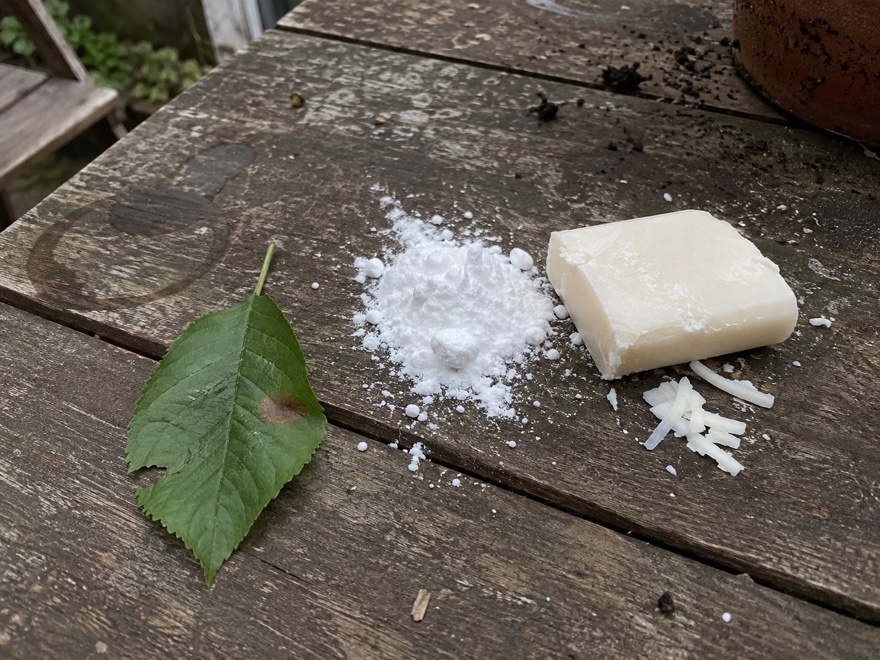
For 1 quart (1 L) of water:
- 1 teaspoon baking soda, never more
- 1 teaspoon potassium (green) soap, not ordinary bar soap, acts as a sticker so the spray clings to the leaf instead of beading off
- Wood ash version instead of soda: 1 tablespoon (about 7.5 g) wood ash from untreated wood per 2.6 gallons (10 L) of water, with a few drops of potassium (green) soap as the sticker
Nice additions if you have them:
- Liquid potassium (green) soap works the same way. Do not use ordinary bar soap.
Mix it: Dissolve the baking soda or wood ash fully in warm water first, then stir in the potassium (green) soap until it disappears. Pour into a spray bottle or pump sprayer once it cools to room temperature.
Shelf life: Mix fresh each time you spray. The solution loses strength within a day, especially once the soap is in it.
How to apply
Spray the whole tree, not just the spots you can see. Coccomycosis spreads through wind-blown spores, so leaves that look clean today may already be infected. Coat the top of each leaf and the underside, since the fungus produces spores mostly on the leaf underside in humid weather.
Spray in the evening, after the bees have left the trees, never in direct midday sun. The soap and alkaline solution can scorch leaf tissue if it dries too fast in strong heat.
The mechanism is simple. Baking soda and wood ash raise the pH on the leaf surface, and most fungal spores germinate poorly outside a narrow pH range. The soap keeps the mix in contact with the leaf long enough to work.
Repeat once a week (every 5 days on active mildew) as long as new spots keep appearing, then stop once new growth comes in clean. That is roughly three to five spray sessions across a bad outbreak, spaced closely enough that it is easy to lose track of which week you are on. easyDacha's task list lays out that full spray schedule against your actual tree and sends a reminder before each spray day, so you are not guessing whether it has been a week yet. Download and try easyDacha, a garden planner app built for exactly this kind of recurring care.
Expect to see fewer new spots within two to three sprays if you caught it early. Leaves that are already yellow and spotted will not turn green again, but you are protecting the healthy tissue that is left.
Why this spray works
Baking soda and wood ash shift the pH on the leaf surface higher, into a range where most fungal spores struggle to germinate. This does not kill an infection already inside the leaf tissue, but it slows new spores from taking hold.
Soap breaks the surface tension of the water so the spray spreads evenly instead of rolling off, and it helps the baking soda or ash stick around after the water evaporates.
Wood ash adds a small amount of potassium and calcium as a side benefit for leaf and fruit tissue strength, though that is secondary to its pH effect here.
Is this safe for cherry trees and the fruit?
Soda can harm plants and leave sodium in the soil, so test the spray on a few leaves first and never make it stronger than 1 teaspoon per quart (1 L). Wood ash is a common garden material and the ash version stays at 1 tablespoon per 2.6 gallons (10 L).
- Wash any fruit before eating, as you would with any garden produce
- Avoid spraying in full sun or above 85°F (29°C), since the combination of soap and heat can stress leaf tissue
- Keep the spray off open cuts or fresh pruning wounds, where a stronger antiseptic approach works better
- Do not increase the concentration hoping for a faster result. More is not better here, and a stronger mix is more likely to burn leaves
What NOT to do
Don't rely on this alone once infection is heavy. Past a third of the canopy showing spots, a copper-based treatment is the stronger tool.
Don't spray in a hot, sunny afternoon. Soap, alkaline salts, and direct sun together can scorch healthy leaf tissue.
Don't skip the leaf underside. Most spore production happens there, so a top-only spray misses the real target.
Don't double the dose to save trips. Overshooting the concentration risks leaf burn without any added benefit.
Best for which plants
- Sweet cherry and sour cherry (tart cherry), the primary target for coccomycosis, especially in humid summers
- Plum, susceptible to a related leaf spot fungus and responds to the same spray
- Other stone fruit (peach, apricot), useful as a general preventive spray if you see early leaf spotting, though confirm the specific disease first
This is not a houseplant treatment. It is built for outdoor fruit trees dealing with wet-season fungal pressure.
When cherry leaf spot keeps coming back
If spots return every summer, check three things. Look at how close the canopy is to the ground and to other trees, since poor air circulation keeps leaves wet longer and gives the fungus more time to germinate. Check whether you clean up fallen leaves each fall, since the fungus overwinters in leaf litter and reinfects the tree the next spring. Finally, confirm the diagnosis is actually coccomycosis and not a different leaf spot disease. A tree in USDA zone 6 or zone 7 with dense shade and poor airflow is a repeat offender for this exact problem.
Try easyDacha for your garden
Tracking a repeat treatment across a season is the part that trips people up, not the mixing. easyDacha, a vegetable garden app that also handles fruit tree care, builds your garden into your plan and schedules each spray with a reminder. Download and try easyDacha.
For more on treating fungal disease early, see how a milk spray fights powdery mildew on vegetables, how baking soda spray works against powdery mildew more broadly, and the full spring dormant spray window for fruit trees. If wood ash is new to you as a garden input, read how to use wood ash as fertilizer and pest repellent. For a stronger copper option once an infection is established, see how to make Bordeaux mixture at home. And if your tree's stress traces back to a tough season, how to protect plants in a heat wave covers the broader picture of keeping fruit trees resilient.
FAQ
What does coccomycosis look like on cherry leaves?
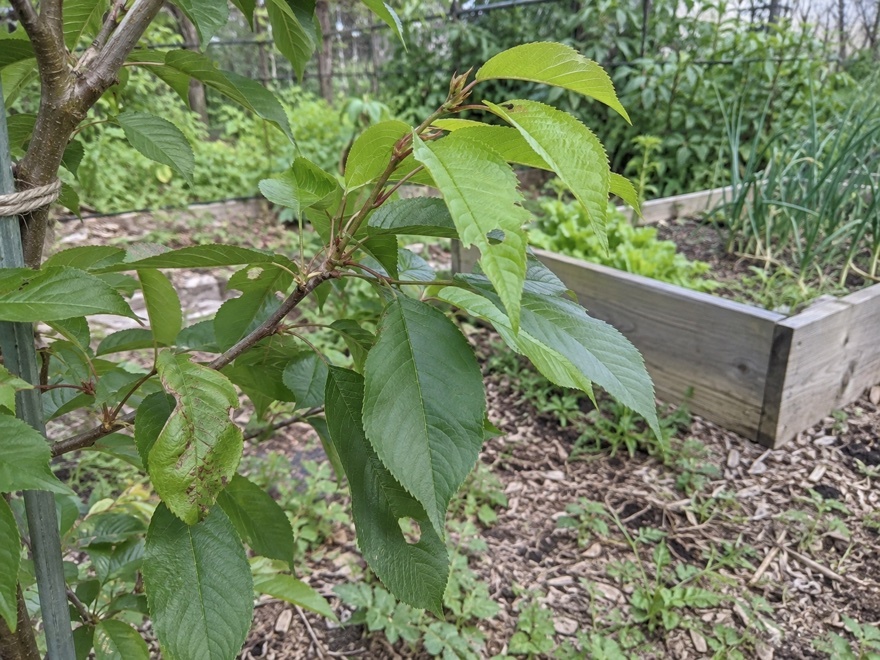
Small, round, red-brown to purple spots scattered across the leaf, often with yellowing around the spots before the leaf drops early. A bad case can strip most of a tree's leaves by late summer.
How often should I spray for cherry leaf spot?
Once a week (every 5 days on active mildew) while new spots are still appearing, then stop once the outbreak has clearly slowed and new leaf growth stays clean.
Is baking soda safe for fruit trees?
Use it with care. Soda can harm plants and leave sodium in the soil, so test on a few leaves first and never go stronger than 1 teaspoon per quart (1 L).
Can I use wood ash instead of baking soda?
Yes, they work through the same pH mechanism. Use 1 tablespoon (about 7.5 g) of wood ash from untreated wood in place of the baking soda, not both together.
Will this cure a tree that already has heavy leaf loss?
No. It protects healthy tissue from new infection but will not restore leaves already lost. Focus on stopping the spread and on fall cleanup to reduce next year's spore load.
Is there an app that can help me remember to spray my cherry tree?
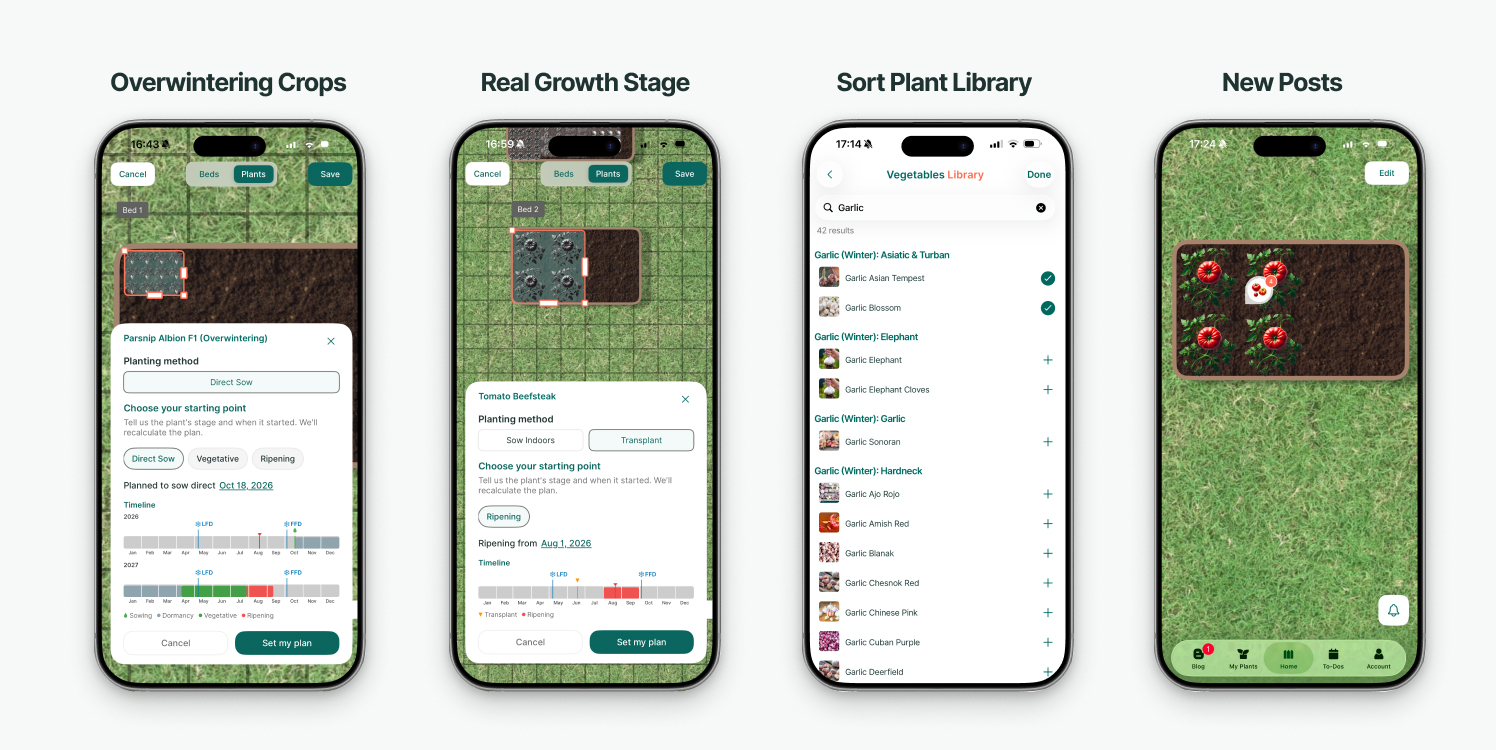
Yes. easyDacha is a gardening app that builds a task list around your actual plants, including recurring treatments like a cherry leaf spot spray, and reminds you before each spray day so nothing slips through the cracks.
Does this spray replace a copper fungicide?
No. This is a first, low-cost response for early or mild coccomycosis. On a tree with an already heavy, established infection, a copper-based treatment is the stronger option, and this spray works well as a lighter-touch follow-up once the outbreak is under control.
