
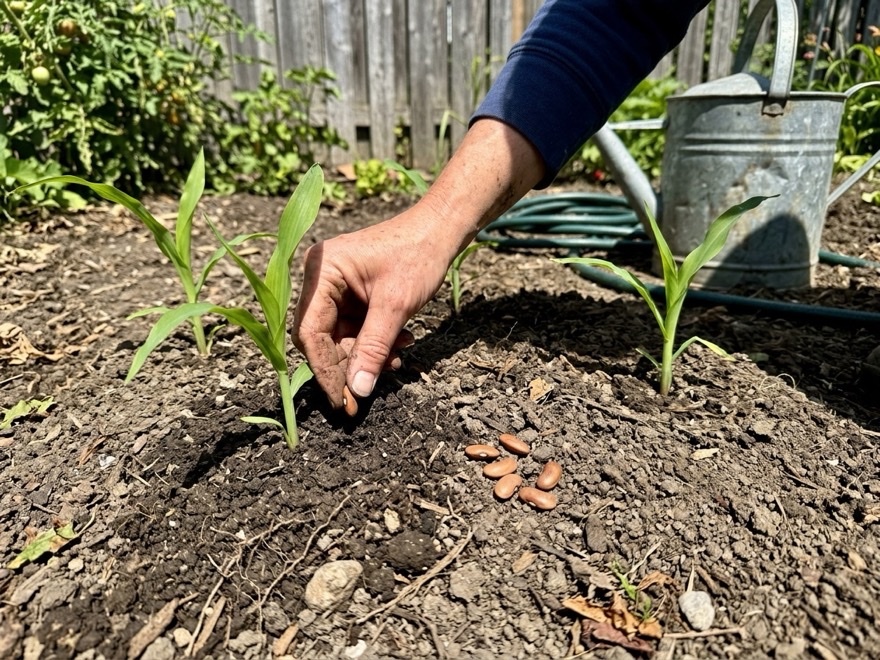
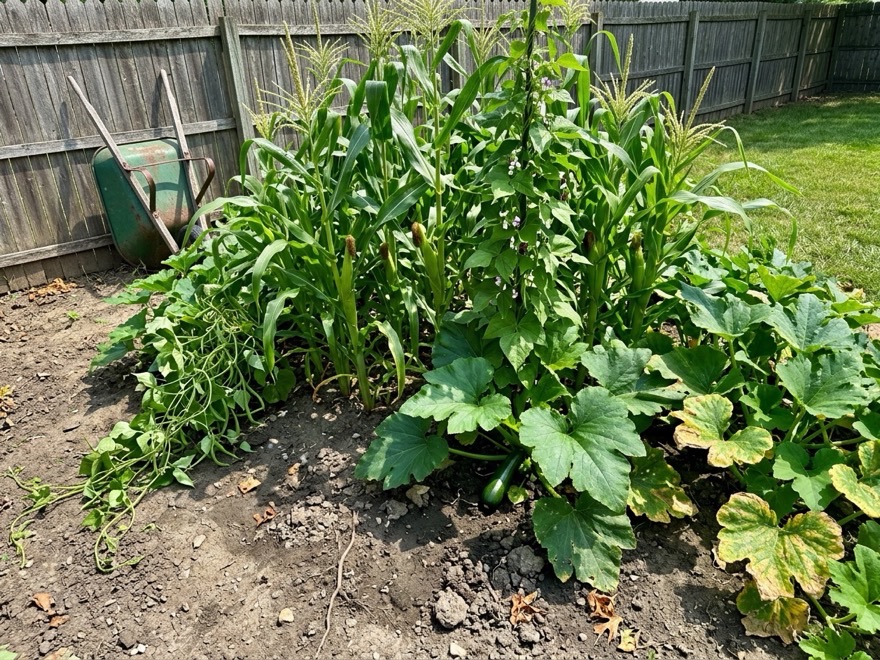
The corn fell over. The beans swallowed everything. The squash barely grew, and weeds filled the gaps. If your three sisters garden first year ended like this, you are in good company. Most three sisters garden mistakes come down to timing and plant choice, and both are easy to fix next season.
TL;DR: The most common three sisters garden mistakes are planting everything at once, using bush beans or giant pumpkins, and crowding the corn. Fix them by planting corn first, pole beans at 6 inches, and squash a week later.
Where the Three Sisters comes from
The Three Sisters is a planting tradition, not a hack. The University of Maryland Extension describes it as an innovation of several Native American peoples, particularly the Haudenosaunee, or Iroquois. Many Indigenous nations practiced versions of it, each adapting corn, beans, and squash to its own land. In Haudenosaunee tradition, the three crops are sisters who care for each other.
Treat the dates and spacing below as one workable starting point, not the only way. If you want to go deeper, learn from Indigenous growers and seed keepers.
Which of the three sisters garden mistakes did you make?
Match what you saw to the cause, then read the fix.
- Corn lying flat, bean vines on the ground: beans planted too early, or weak corn.
- Tiny squash, weeds everywhere: squash planted too late or never watered in.
- Beans that will not climb: bush beans instead of pole beans.
- Corn ears with gaps: corn in a single row, so pollen missed the silks.
- Pale corn leaves: you expected the beans to feed the corn.
- White powder on squash leaves: crowded vines and poor airflow.
Mistake 1: You planted all three at once
The three sisters planting order matters, and it is the answer to how to plant three sisters garden beds. Plant corn first, once frost danger has passed and nights reach about 55°F (13°C), says the Old Farmer's Almanac. Wait until the corn is 6 inches to 1 foot tall, then plant the beans. Plant the squash about a week after the beans.
Sources differ slightly. A Maryland Extension grower waited until the corn was 4 inches tall, then planted squash with the beans. Pick one plan and write the dates down.
The date depends on your USDA zone, so count forward from your own last frost date, not the calendar. Our guide to a personalized garden planting schedule shows how.
Mistake 2: The corn was too weak or too lonely
Corn that is too young or too thin gets pulled down. The Almanac warns that beans planted too early can overwhelm young corn stalks. The Maryland grower lost several stalks because the cornstalks were not strong enough for the bean vines.
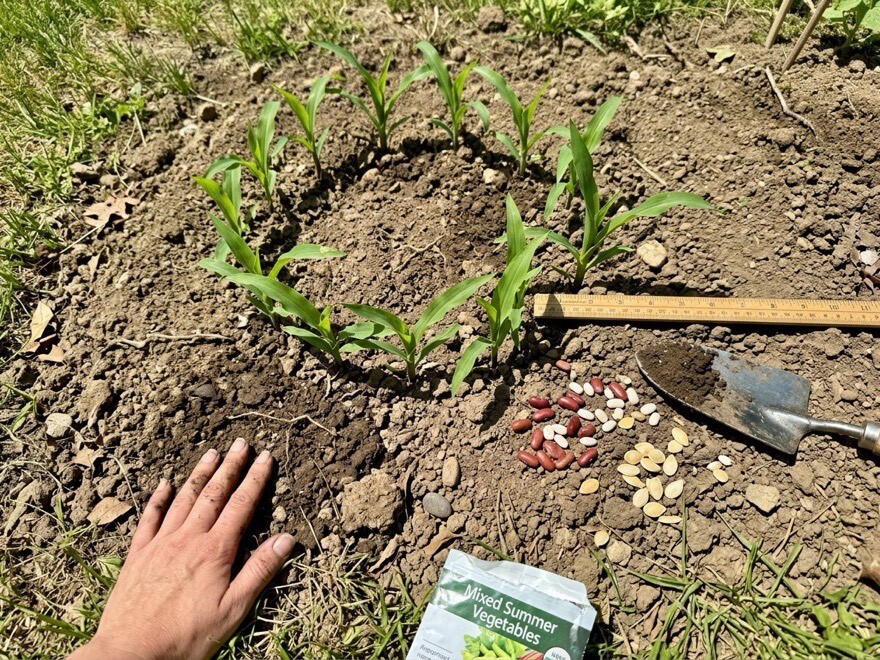
Give the corn a real head start. Build a mound about 1 foot (30 cm) high and 3 to 4 feet (about 1 m) wide. Sow six corn kernels 1 inch (2.5 cm) deep, about 10 inches (25 cm) apart in a circle roughly 2 feet (60 cm) across.
Corn is pollinated by wind. Utah State University recommends sweet corn in blocks of three or more rows, not one long row. Plant several mounds side by side, about 4 feet (1.2 m) apart, so pollen blows between them. A single lonely mound gives gappy ears.
Mistake 3: You used bush beans
Pole beans are the climbers, and bush beans will not do the job. The Almanac says bush beans do not climb, which defeats one of the core benefits of the method. Plant four pole bean seeds, evenly spaced, around each cornstalk.
Beans fix nitrogen, but that does not feed the corn this season. Washington State University Extension says legumes do not feed their neighbors. Fertilize the corn as usual. If your beans struggled, see our guide to rhizobium inoculant for beans.
Mistake 4: The squash was wrong or late
Squash is the sister that covers the ground, and it only works if it gets going on time. In the Maryland garden, the squash went in late, a dry spell delayed germination, and it never suppressed weeds. Plant squash within a week of the beans and keep the seeds watered until they sprout.
Pick the right type. The Almanac suggests small-leafed squash such as zucchini, Hubbard, or yellow crookneck. It calls pumpkins too vigorous and heavy for the mound and says to plant them in a separate bed. Space six squash seeds around the edge of the mound, about 18 inches (45 cm) apart. For winter squash, see when to harvest butternut squash.
Mistake 5: You skipped feeding and water
The corn is a hungry crop, and the mound is not self-sufficient. The Almanac says compost at planting is usually enough to start. Illinois Extension adds a side-dress of nitrogen fertilizer when the corn is 12 to 18 inches (30 to 45 cm) tall. Follow the fertilizer label for the rate.
Water matters most when corn is pollinating and filling ears. Clemson Extension recommends at least 1 inch (2.5 cm) of water per week for sweet corn, more in heat or sandy soil. Squash needs about the same. Keep the whole mound evenly moist.
Mistake 6: Wrong spot, crowded vines
Choose a spot with at least 6 hours of full sun a day, says the Almanac. Mounds 4 feet apart leave room for air to move. Crowded squash leaves hold humidity, and powdery mildew follows. Clemson Extension lists airflow and spacing among the defenses. If white powder shows up, try our baking soda spray for powdery mildew. Not sure about your sun? Our sun mapping guide helps.
Keep the sequence on a list
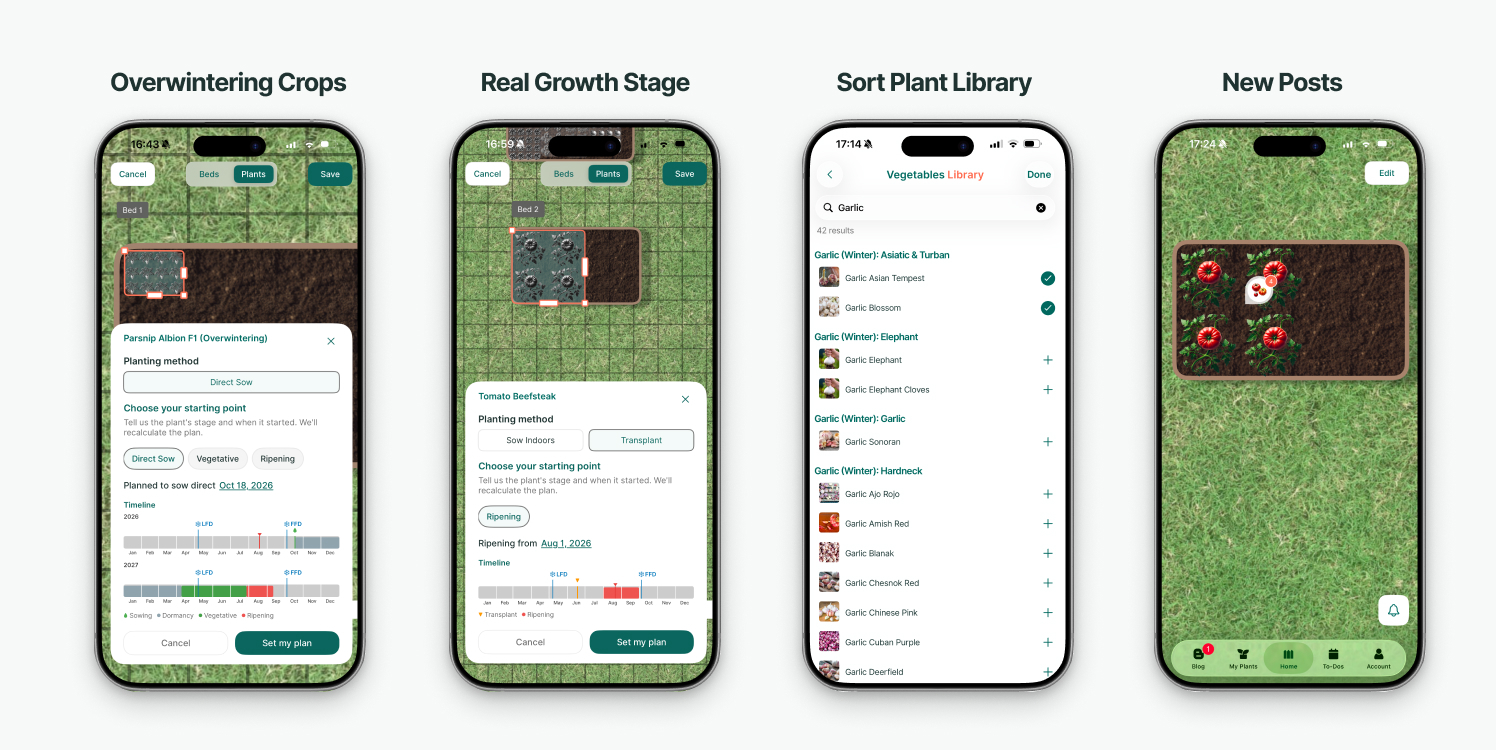
The hard part of a Three Sisters bed is the order: corn, then beans, then squash, each on its own date. easyDacha gives every crop its own care plan and planting dates calculated from your ZIP code's frost dates. As a garden planner app, it also lets you draw your beds on a map with automatic spacing. It shows your tasks for the next two weeks. Download easyDacha and add corn, pole beans, and squash to one bed.
What NOT to do
Don't plant bush beans. They will not climb the corn.
Don't put pumpkins in the mound. They are too vigorous and heavy. Give them their own bed.
Don't count on beans to feed the corn. Feed the corn like any other corn.
Don't copy someone else's dates. Count from your own last frost.
Best for which plants
- Corn: choose a sturdy variety and sow it in several mounds. Weak stalks collapsed in the Maryland garden.
- Beans: pole types only.
- Squash: zucchini, Hubbard, and crookneck types suit the mound. Pumpkins do not.
- Not suited: bush beans, pumpkins in the same mound, and a single short row of corn.
For other pairings that do work, see our companion planting guide.
Plant the sisters in the right order next year
Corn first, beans next, squash last: the order is the whole trick. easyDacha, the garden planner app, sets each planting date from your ZIP code and shows your tasks for the next two weeks. Download easyDacha
FAQ
What are the most common three sisters garden mistakes?
The most common three sisters garden mistakes are planting all three crops at once and using bush beans. Others are putting giant pumpkins in the mound and growing corn in a single row. Late squash and no feeding for the corn also cause trouble.
How do I plant a Three Sisters garden?
Plant corn in a mound after frost, when nights reach about 55°F (13°C). Add four pole beans per stalk when the corn is 6 inches to 1 foot tall. Plant six squash seeds around the edge about a week later.
Why did my corn fall over in my Three Sisters garden?
Beans planted too early or a weak corn variety usually cause it. Young corn cannot carry vigorous bean vines. Wait until the corn is at least 6 inches tall, and sow the corn in several mounds for sturdier stalks.
Do beans give nitrogen to corn in the same season?
No. Extension sources say legumes do not feed their neighbors. Fertilize the corn with compost at planting and a side-dress of nitrogen when it is knee high.
Where does the Three Sisters method come from?
It comes from Native American agriculture, particularly the Haudenosaunee, and many Indigenous nations practiced versions of it. Each adapted corn, beans, and squash to its own environment.
Is there an app to plan a Three Sisters garden?
Yes. easyDacha is a gardening app with a garden map, automatic spacing, and planting dates based on your ZIP code. It builds a care plan for each crop.