
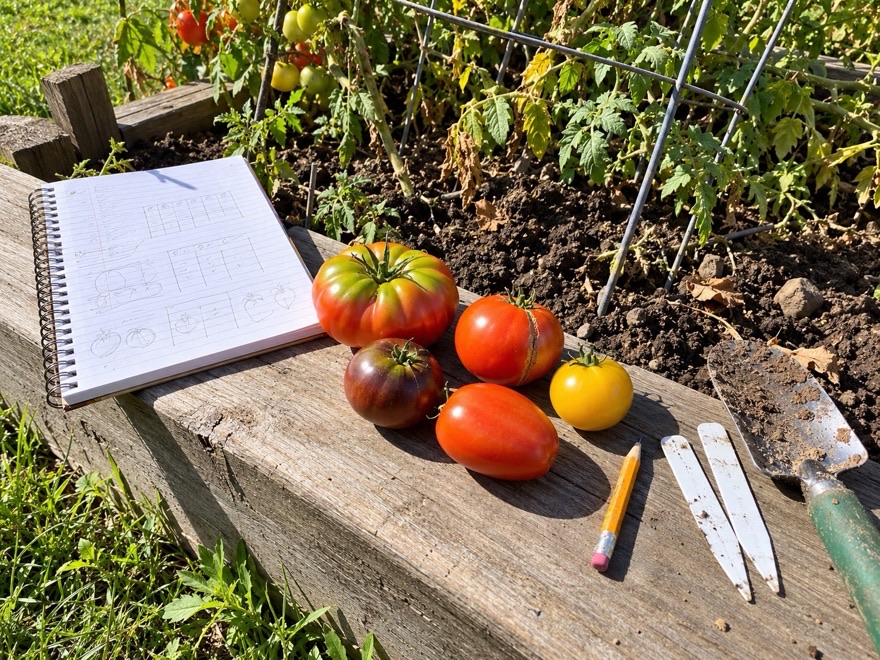
You grew several tomato varieties this summer. Now you cannot remember which one cracked after the rain, which one ripened first, or which one you actually liked eating. A vegetable garden journal fixes that, but only if you know what to track. Here is the short list for tomatoes, so next spring you choose varieties from your own records instead of the seed catalog.
TL;DR: What to track in a vegetable garden journal for tomatoes? Seven things per variety. Tag details, dates, first ripe fruit, yield, taste, problems, and a verdict on whether to grow it again.
Vegetable garden journal: what to track for each tomato variety
Give every variety its own entry with the same seven fields. Identical fields make varieties easy to compare in October, when you decide what to grow next year.
Iowa State Extension suggests recording varieties, planting dates, harvest dates, harvest amounts, weather conditions, and problem insects or diseases. Tomatoes add one more detail, which is the type of plant. Here are the seven fields:
- Tag details: name, plant type, days to maturity, resistance letters, seed source.
- Dates: sown and transplanted.
- First ripe fruit: the date.
- Yield: pounds picked.
- Taste: one honest line.
- Problems and weather: what went wrong and what the weather did.
- Verdict: grow again, maybe, or drop.
Before you plant: copy the tag details
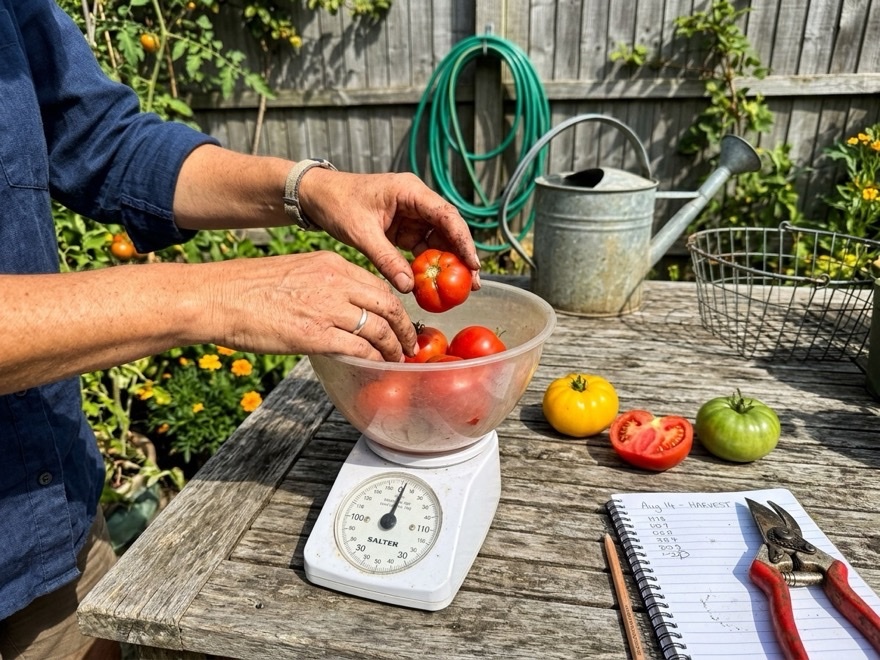
Copy the tag details the day you buy the seeds or plants. Tags get lost, and you will not remember them in August.
Write the plant type first. University of Georgia Extension says determinate varieties produce fruit that ripens over a short period of time. Indeterminate varieties produce fruit continually through the season. Nebraska Extension adds that determinate plants stay under about 3 feet (0.9 m). Semi-determinate plants usually reach 3 to 5 feet (0.9 to 1.5 m).
Next, copy the days to maturity and note whether the packet counts from sowing or from transplanting. The number is only a guide. University of Vermont Extension points out that dates to maturity vary with the conditions in your garden.
Copy the resistance letters as well. V stands for Verticillium wilt, F for Fusarium wilt, and N for nematodes. T means tobacco mosaic virus, and A means Alternaria, the fungus behind early blight. When a plant gets sick, these letters tell you what the variety was bred to handle.
Finish with the seed source: nursery, catalog, or saved seed. If a variety disappoints, you will know whether to blame the variety or the supplier. Our seed buying guide shows what to check on a packet before you buy.
During the season: record dates, not impressions
Dates are the most useful part of a tomato variety garden journal. They are also the easiest to forget.
Write four dates for each variety: sown, transplanted, first flower, and first ripe fruit. Put your last spring frost date and first fall frost date at the top of the page. A USDA zone 5 garden and a zone 9 garden run on very different calendars. Your dates only mean something next to your frost dates.
Then compare. If the packet promised a certain number of days and your tomatoes took longer, write the difference down. After two seasons you will see which varieties suit your summers. Our guide on when to transplant tomatoes outdoors helps you set the transplant date.
At harvest: weigh it, taste it, note what went wrong
Purdue Extension suggests a few plain questions. What grew well and what tasted best? What was the yield? What mistakes were made? Those fit a tomato page perfectly.
Weigh each variety's pick in pounds at every harvest. Counting fruit hides the difference between a plant with twelve tiny tomatoes and one with four big ones.
Taste on the day you pick, and write one line such as sweet, mealy, or watery. Your memory will not hold the difference by February.
Log problems with a date. Cracked fruit, blossom drop, hornworms, and leaf spots all belong here. Add the weather too, like a heat wave or a week of rain. If blossoms drop during a hot spell, your notes will show it was the heat and not the variety. Our guide on why tomato flowers fall off covers the fixes.
End of season: give each variety a verdict
In October, read each entry and give the variety one verdict: grow again, maybe, or drop. Add the bed it grew in. Iowa State Extension lists a crop rotation plan as a journal item, and tomatoes should not return to the same spot year after year. Here is why you should not plant tomatoes where they grew last year.
Use the verdicts to build next year's list. Keep one slot for a new variety so you keep learning. If you are torn between hybrids and heirlooms, F1 hybrids vs. heirlooms lays out the tradeoffs.
A blank entry you can copy
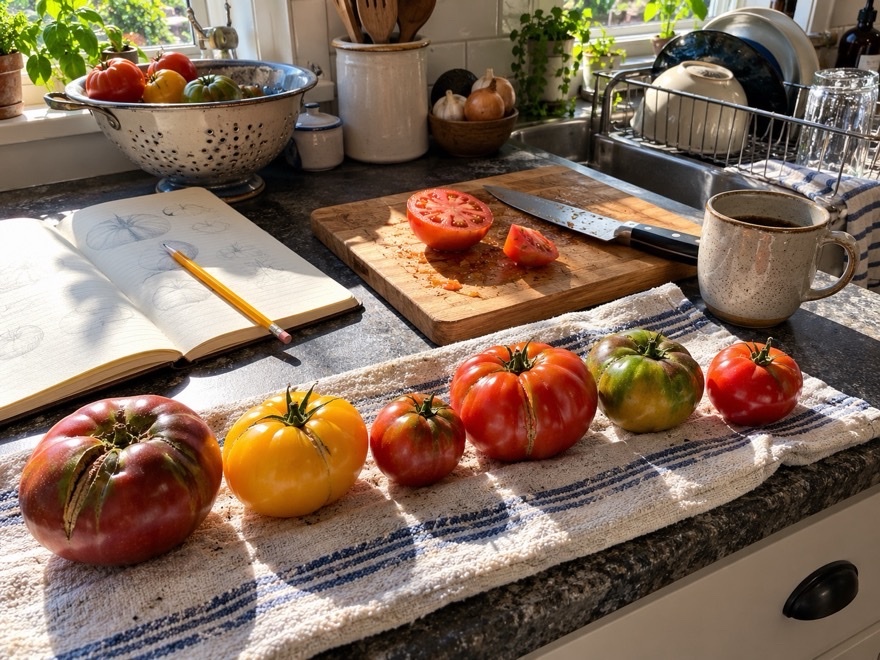
Paste this into a notebook, spreadsheet, or phone note once per variety:
- Variety and seed source:
- Type (determinate, semi-determinate, indeterminate) and days to maturity:
- Resistance letters:
- Sown / transplanted / first flower / first ripe:
- Pounds picked (add a line per harvest):
- Taste:
- Problems and weather:
- Bed:
- Verdict (grow again, maybe, drop):
Notebook, spreadsheet, or phone: pick the one you will open
Tomato variety tracking works in any format if you actually use it. Short garden notes on tomato varieties beat a long diary you abandon in July. A paper notebook lives in the shed. A spreadsheet sorts and adds up pounds for you. A phone note is always in your pocket. Choose the one you will open with dirty hands.
The same seven fields work for peppers, cucumbers, and beans. Start with tomatoes, because they have the most varieties and the biggest differences between them.
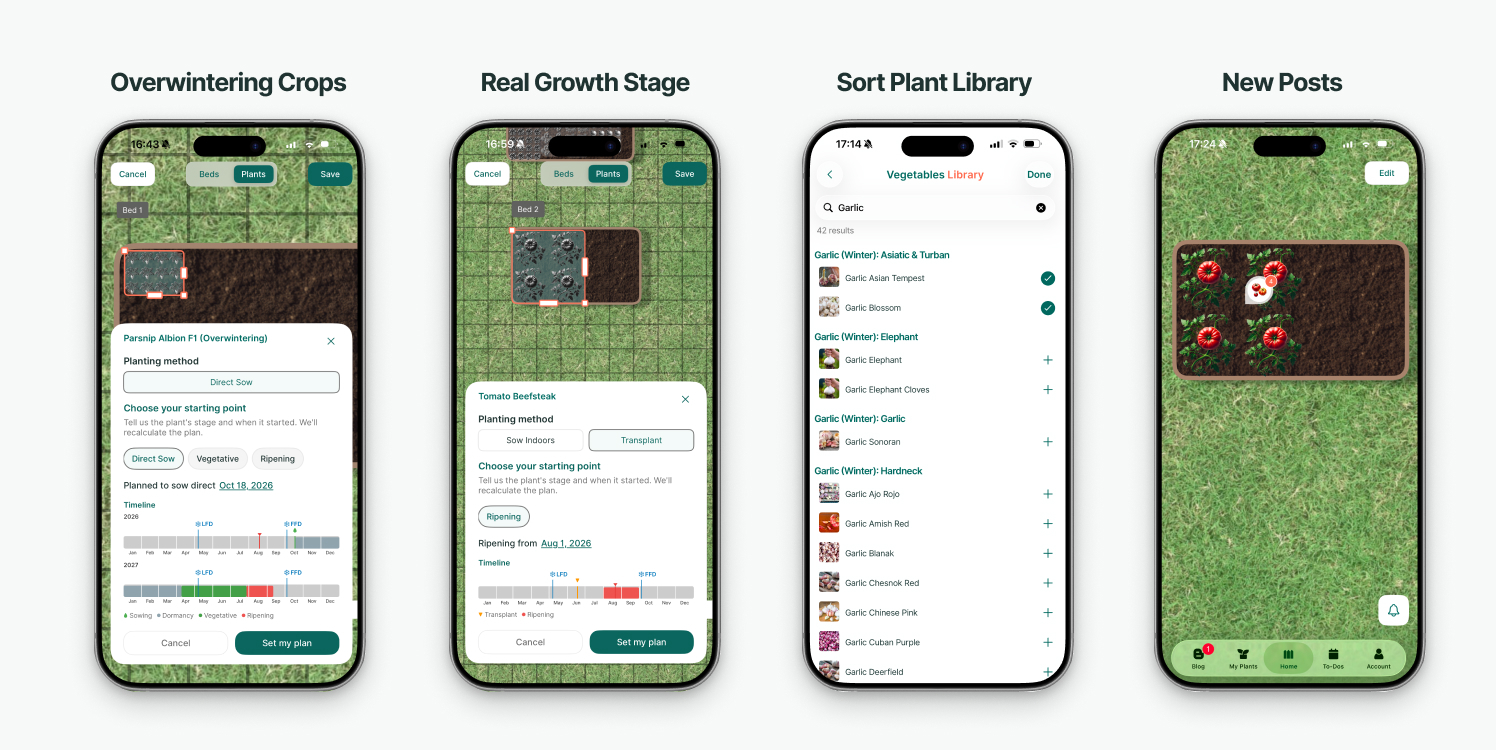
A journal records what happened. easyDacha, a garden planner app, plans what to do next. If your variety is not in the plant library, add it as a custom plant. It gets its own care plan, planting dates, and task list.
The seed and seedling inventory shows which seeds you have and what you already planted, so your shopping list matches your verdicts. Enter your ZIP code and easyDacha calculates planting dates from your local frost dates. Our guide to a personalized garden planting schedule walks through it. Download easyDacha →
Plan your best tomato season yet
Your journal tells you which varieties earned a spot. easyDacha, a vegetable garden app, turns that list into planting dates and a two-week task list for your beds. Try easyDacha →
FAQ
What should I write in a vegetable garden journal?
Record varieties, planting dates, harvest dates, harvest amounts, weather, and problem insects or diseases. Add your crop rotation plan and your mistakes. Extension services agree that dates and yields matter most for comparing one season with the next.
How do I keep garden notes on tomato varieties?
Use the same seven fields for every variety: tag details, planting dates, first ripe fruit, pounds picked, taste, problems and weather, and a final verdict. Write dates the day they happen and give your verdict once, in October.
Do I track determinate and indeterminate tomatoes differently?
Use the same fields, but record the type. Determinate varieties ripen over a short period, while indeterminate varieties fruit continually. Your yield notes will look different because of that, so the type helps you read them.
How long before my journal helps me compare varieties?
One season gives you a first read. Two or three seasons show patterns, because weather changes from year to year. University of Vermont Extension notes that recording harvest times and yields reveals patterns and trends over time.
Is there a gardening app for planning tomato varieties?
Yes. easyDacha is a gardening app. You can add your own plant varieties, track the seeds you have, and plan tasks from your ZIP code's frost dates. Keep your harvest notes in your journal and let the app plan the season.