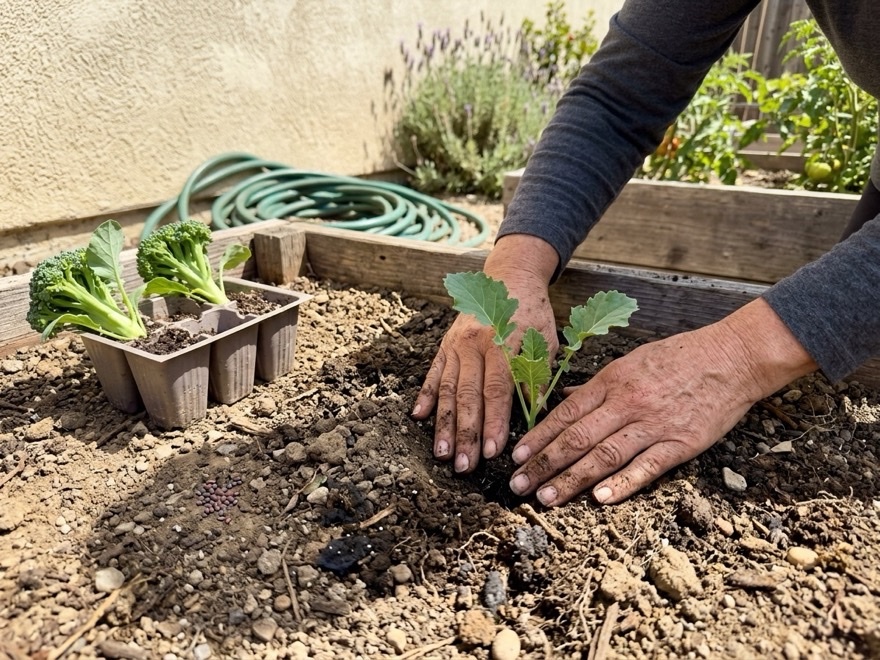
October in Southern California still feels like summer. The soil is warm, the tomatoes are tired, and it seems too early to start over. It is not. This is when the cool-season garden begins. Here is what to plant in October in Southern California so you harvest all winter and into spring. If you want a wider look at cold-season crops, our guide to planting vegetables for winter covers the basics.
TL;DR: What to plant in October in Southern California: carrots, beets, radishes, spinach, lettuce, kale, broccoli, cabbage, garlic, and short-day onions. Cooler days let seeds sprout and plants grow steadily through winter.
What to plant in October in Southern California: the short list
The fall list is cool-season vegetables. Cool season vegetables Southern California gardeners rely on grow best when average temperatures stay between 55 and 75°F (13 and 24°C). Many handle a slight frost once they are mature. A Southern California fall vegetable garden runs on these crops.
- Sow seeds in the ground: carrots, beets, radishes, and spinach.
- Plant lettuce, kale, and chard: all three are open from September on, so October is a safe month.
- Set out transplants: broccoli, cabbage, and cauliflower plants go in from September through February.
- Plant garlic cloves: October through November in San Diego County.
- Plant short-day onions: they need 12 to 14 hours of daily sun to form bulbs.
- Add peas on the coast: inland gardeners wait until January.
These windows come from the UC Master Gardeners of San Diego County planting guide. The guide notes that average temperatures are warmer now than when the dates were set. Treat each date as a starting point, not a deadline.
Coastal and inland planting windows
The coast and the inland valleys run on different calendars. Planning an October vegetable garden San Diego style? Use the coastal column. Inland gardeners use the right column.
If you garden inland, October is the last month to start those brassicas from seed. After that, buy transplants. Find your USDA zone and your own microclimate before you commit to a date, since a few blocks can change your frost risk.
Garlic and onions go in this month
Garlic planted in fall builds a strong root system. That root system drives spring leaf growth, and more leaves mean a larger bulb. In San Diego County, plant cloves from October through November.
Buy garlic from cloves, not seed. For onions, choose short-day varieties. Long-day types need 14 to 16 hours of sun and may give leaves with no bulb. At the coast, plant short-day onions between October and November. Inland, you have until December.
Handle early fall heat before you sow
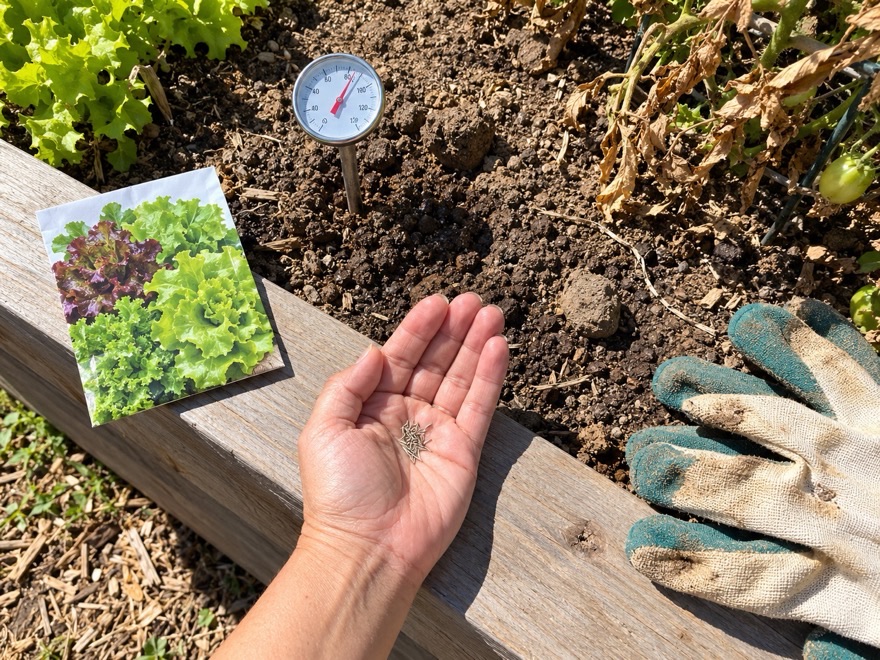
Warm October weather is the main problem for a Southern California fall vegetable garden. Lettuce seed germinates best between 68 and 77°F (20 and 25°C). Above 86°F (30°C), germination is inhibited. Hot lettuce also bolts and turns bitter.
When a heat spike is in the forecast, hold your lettuce seed for a cooler week. If hot weather is coming, our guide to protecting plants in a heat wave shows quick fixes for new seedlings.
Water deeply to build deep roots. Keep the soil moist while seeds sprout. Rain is not reliable in October, so check the soil with your finger between showers.
How to set up your October beds
Clear out spent summer plants and work compost into the bed before you sow. Spread your plantings over several weeks, not all at once. That gives you lettuce and spinach every week instead of one big pull. Our succession planting guide shows how to space the sowings.
Move brassicas to a new spot. Broccoli, cabbage, and cauliflower do best where no related crop has grown for the past four years. If you plant transplants, set them at the right depth and spacing. Our guide to when to plant seedlings covers timing and care after planting.
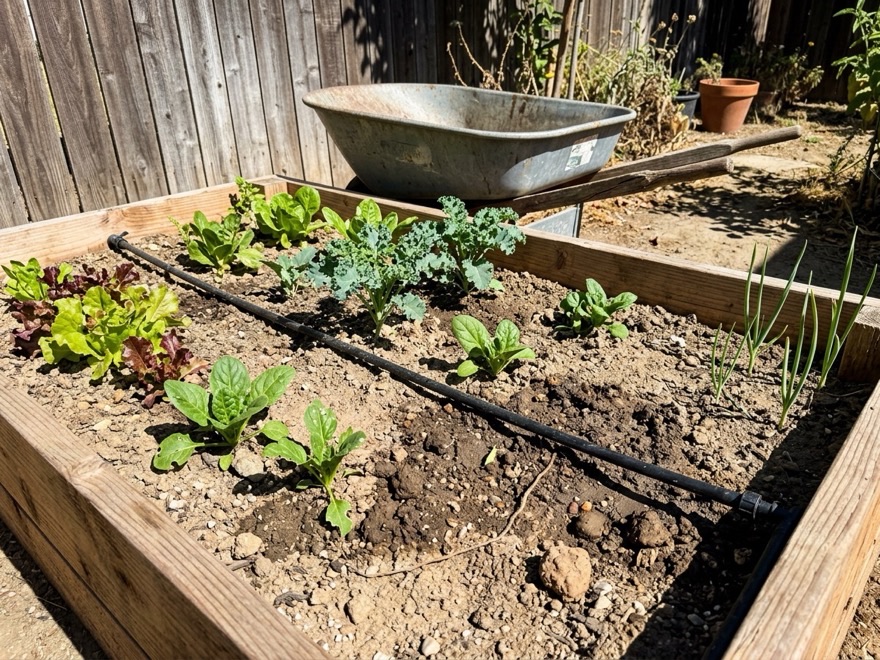
Kale is the easiest first crop for a nervous grower. Young plants survive light frost, and you can pick leaves for weeks. See the kale growing guide for spacing and picking.
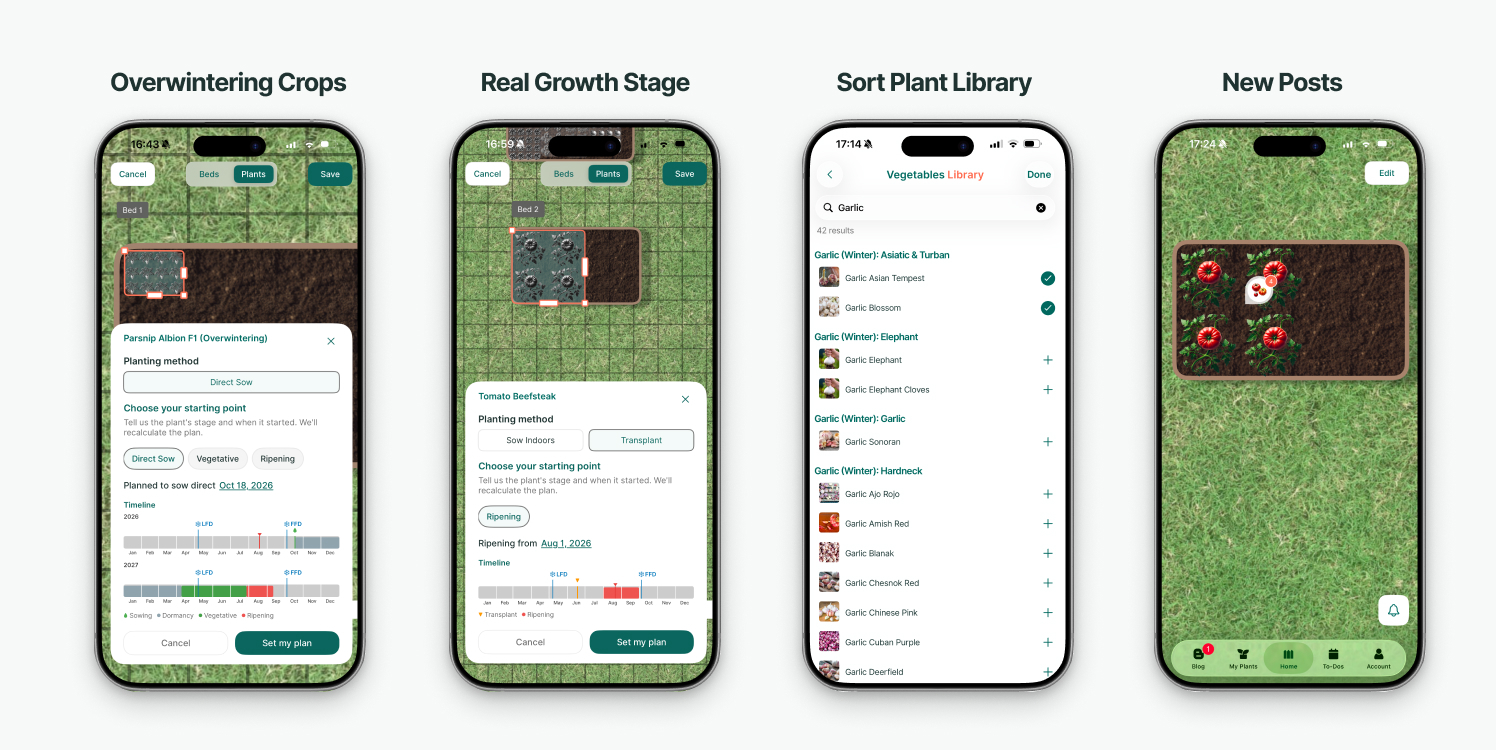
The hardest part of fall planting is knowing which date fits your yard. easyDacha is a garden planner app that calculates planting dates from your ZIP code and local frost dates. Add lettuce, kale, or garlic to a bed on your garden map, and spacing is calculated for you. Your care plan runs from planting to harvest, and your tasks for the next two weeks are always ready in the app. If you like to work from a calendar, read how to build a personalized garden planting schedule. Try easyDacha →
What NOT to do
Do not sow lettuce in a heat spike. Seed will not sprout above 86°F (30°C), and you lose the packet.
Do not plant peas inland in October. The inland window starts in January.
Do not plant broccoli or cabbage where related crops grew in the last four years. Soil problems build up in the same bed.
Do not buy long-day onions. They make leaves and no bulb in this climate.
Which plants suit an October bed
- Best bets: kale, spinach, radishes, beets, and carrots. They sprout in cooler soil and forgive small timing mistakes.
- Plants that need more care: lettuce, which suffers in heat, and young carrots, peas, and cauliflower plants, which frost can injure.
- Hardy to light frost: kale, spinach, radishes, and turnips.
- Not for October: summer crops. Pull them once they stop producing.
Plant your fall garden on the right dates
Fall planting works when you hit your window. easyDacha, the gardening app built around your beds and your ZIP code, gives you planting dates and a full care plan from seed to harvest. Open the app and your tasks for the next two weeks are ready.
FAQ
What vegetables can I plant in October in Southern California?
Plant carrots, beets, radishes, spinach, lettuce, kale, chard, broccoli, cabbage, and cauliflower. Add garlic cloves and short-day onions. On the coast you can also sow peas.
What is an October vegetable garden in San Diego like?
An October vegetable garden in San Diego is a cool-season garden. Garlic goes in from October to November, and short-day onions go in between October and November on the coast. Most leafy greens and root crops are open all fall and winter.
Is October too late to plant broccoli in Southern California?
No. Broccoli transplants can go in from September through February on the coast and inland. Seeds are best sown by December on the coast and by October inland.
How hot is too hot for lettuce seed?
Lettuce seed germinates best between 68 and 77°F (20 and 25°C). Above 86°F (30°C), germination is inhibited, so wait for a cooler week.
When should I plant garlic in Southern California?
In San Diego County, garlic cloves go in from October through November. Fall planting builds a strong root system, which leads to a larger bulb.
Is there an app that tells me what to plant in October in Southern California?
Yes. easyDacha is a garden planner app that works out planting dates from your ZIP code and local frost dates. It adds the tasks to your two-week list, so you know what to sow this week.