
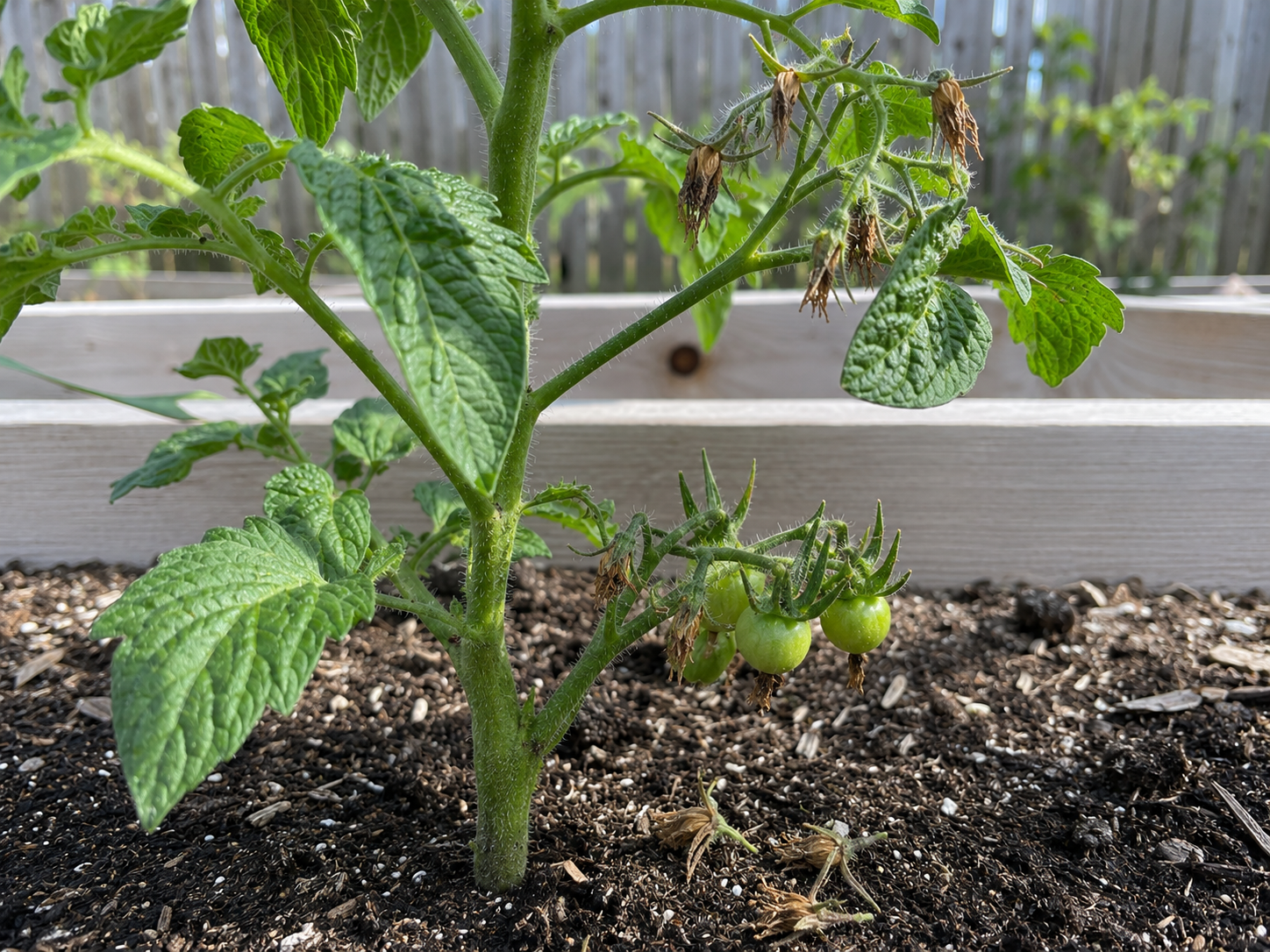
Most gardeners going through this have the right products. They buy something new anyway. The problem shows up again the following season. What they are missing is a way to use four different input types together so each one handles a different layer of the plant's needs at the stage when those needs are highest.
TL;DR: Blossom drop tomatoes heat is a proline and calcium delivery gap, not a fertilizer problem. This two-week rotation keeps amino acids, potassium, soil biology, and disease protection running on separate days so they don't cancel each other out.
Does Any of This Sound Familiar?
Flowers drop before fruit forms. The plant flowers heavily, looks healthy, and then the blossoms fall. Fruit sets on the first two clusters and then stops. Late blight shows up exactly when you can least afford two weeks of spray and recovery. New leaves are pale, older leaves go yellow in patches. You added fertilizer and nothing visibly changed.
All of these are rotation problems. Not product problems.
Before the Rotation Starts
When the first flower clusters form, apply these once. They do not repeat weekly.
Boron foliar. Dissolve 1/4 teaspoon (1.2 g) of unscented borax in 1 gallon (3.8 L) of water. Spray flowers and buds in the evening. Boron supports pollen tube formation. Apply once only. Excess boron damages roots.
Phosphorus drench. Apply bone citrate at 1 tablespoon (15 ml) per 1 quart (1 L) of water at the root zone. This triggers the plant's shift from vegetative growth to fruit set. Apply once at the first flower cluster.
Stop nitrogen completely. Fermented weed tea, fish emulsion, and any other nitrogen source stop now. Nitrogen at the flowering stage pushes leaf growth at the expense of fruit set.
Stop the mineral concentrate from the vegetative stage. That feed runs through Stage 2. At first flower, the plant's mineral needs shift entirely to potassium and calcium. Switch to the rotation inputs below.
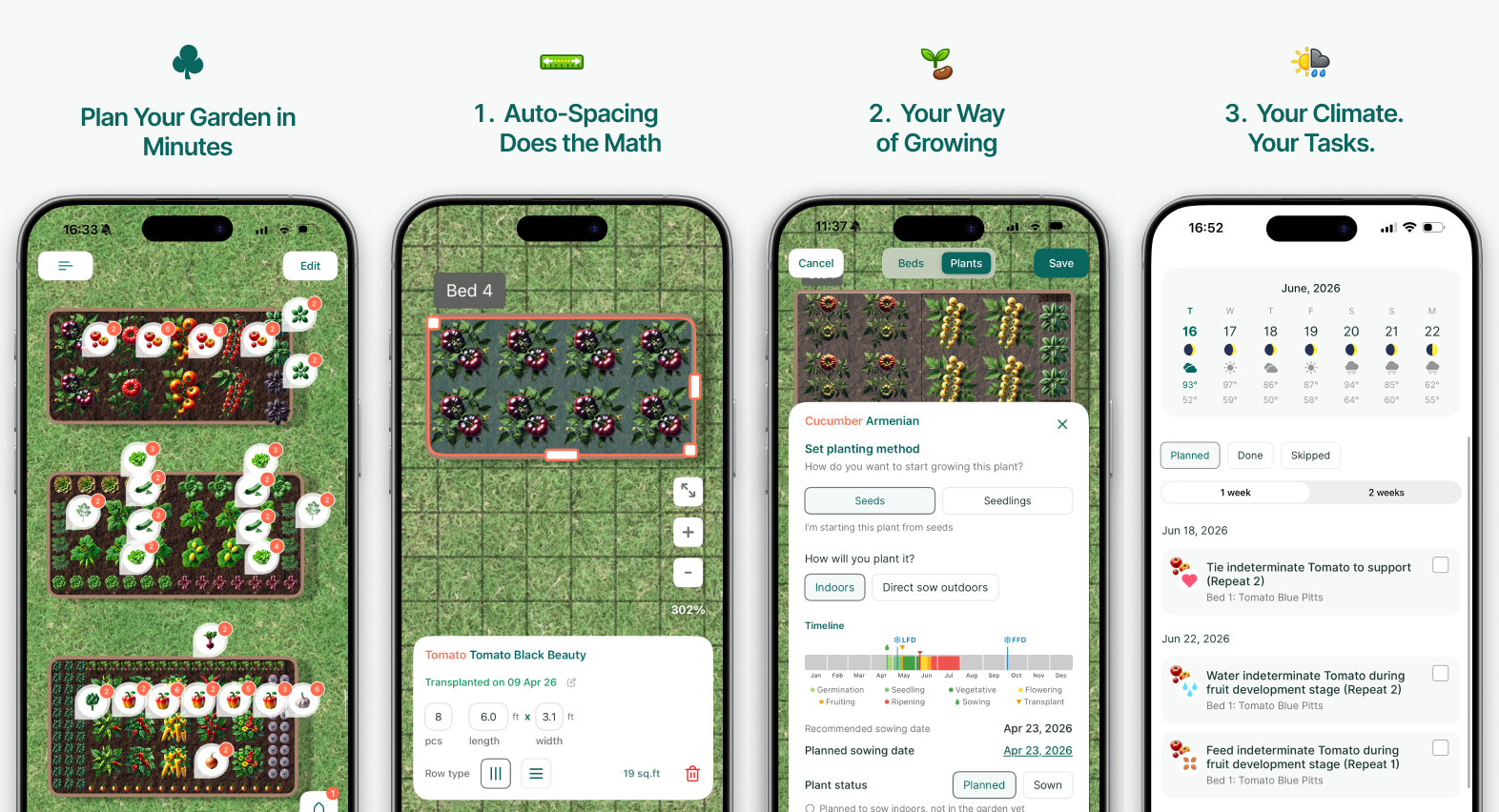
If tracking all of this manually feels like a lot, easyDacha gives you a day-by-day care plan for each plant, matched to its current growth stage. It tells you what to apply, when to act preventively, and keeps a plan ready for every day of the season. See what the gardening app looks like for tomatoes.
The Two-Week Rotation
Week One
Monday morning
What: Trichoderma OR Clonostachys rosea root drench + molasses + humic/fulvic acid
Why: Trichoderma suppresses soil-borne pathogens and improves nutrient uptake at the root zone. Molasses feeds the fungi immediately after application.
How: Grow Trichoderma at home OR Clonostachys preparation. Add 2 tablespoons (30 ml) molasses + 1 tablespoon (15 ml) humic/fulvic acid per 1 gallon (3.8 L). Do not apply within 48 hours of copper fungicide.
Why: Trichoderma suppresses soil-borne pathogens and improves nutrient uptake at the root zone. Molasses feeds the fungi immediately after application.
How: Grow Trichoderma at home OR Clonostachys preparation. Add 2 tablespoons (30 ml) molasses + 1 tablespoon (15 ml) humic/fulvic acid per 1 gallon (3.8 L). Do not apply within 48 hours of copper fungicide.
Monday evening
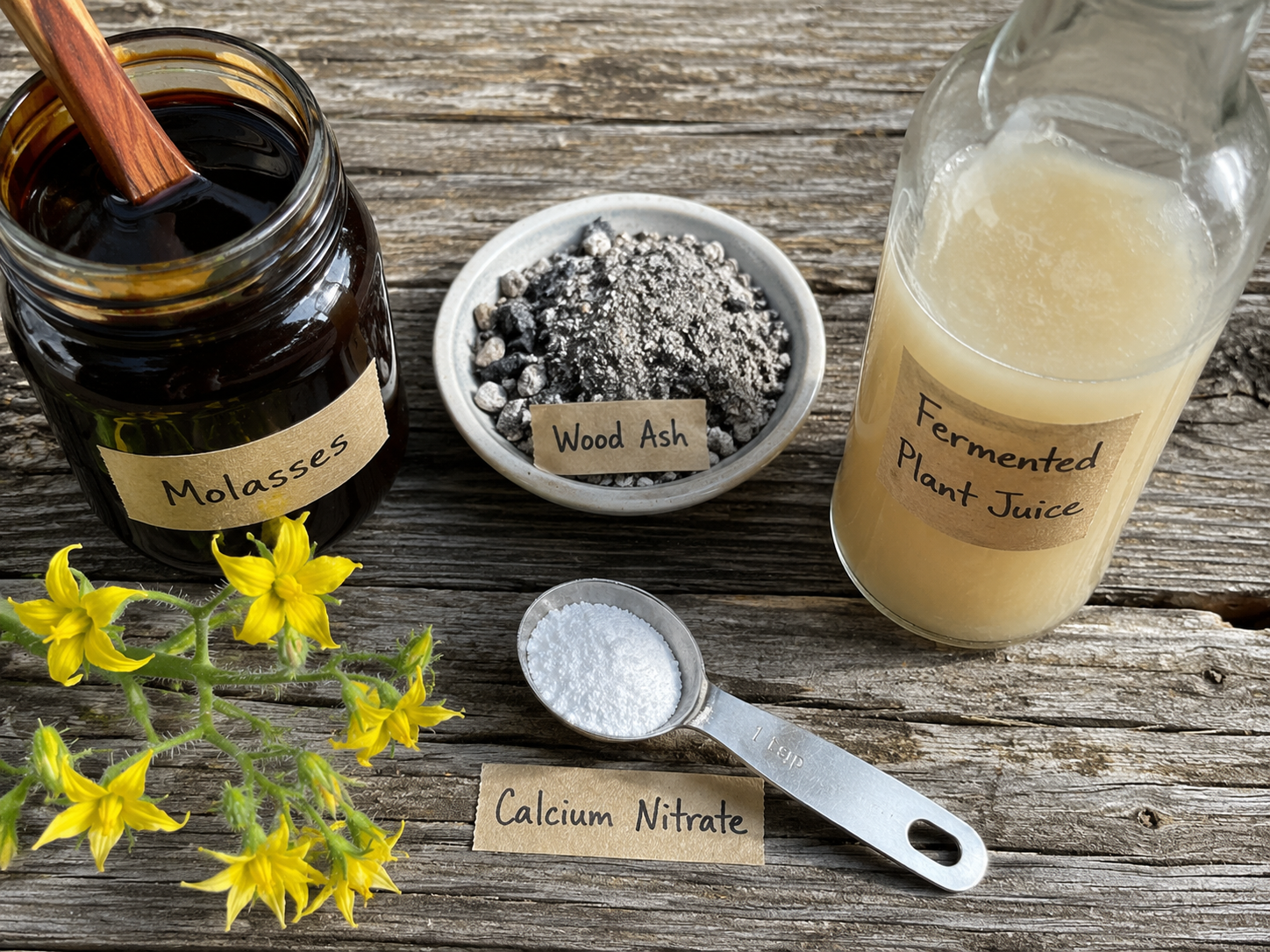
What: Amino acid + calcium nitrate + kelp foliar
Why: Proline in the amino acid concentrate protects pollen viability during heat. Calcium nitrate supports cell wall development in forming buds. Kelp adds natural growth hormones under stress.
How: Gelatin amino acid recipe. 1 tablespoon (15 ml) each of amino acid concentrate, calcium nitrate, and kelp per 1 gallon (3.8 L). Spray leaf undersides and buds. Evening only.
Why: Proline in the amino acid concentrate protects pollen viability during heat. Calcium nitrate supports cell wall development in forming buds. Kelp adds natural growth hormones under stress.
How: Gelatin amino acid recipe. 1 tablespoon (15 ml) each of amino acid concentrate, calcium nitrate, and kelp per 1 gallon (3.8 L). Spray leaf undersides and buds. Evening only.
Tuesday morning
What: Molasses root drench
Why: Soil bacteria need a carbon source every week to stay active through the continuous demands of a fruiting plant.
How: 2 tablespoons (30 ml) per 1 gallon (3.8 L) at the root zone.
Why: Soil bacteria need a carbon source every week to stay active through the continuous demands of a fruiting plant.
How: 2 tablespoons (30 ml) per 1 gallon (3.8 L) at the root zone.
Wednesday evening
What: Beauveria bassiana foliar
Why: Beauveria controls thrips, whiteflies, and soft-bodied insects that disrupt pollination and vector disease. UV light destroys it within hours. Evening is the only effective timing.
How: Homemade Beauveria. Do not combine with copper fungicide. Wait 48 hours in either direction.
Why: Beauveria controls thrips, whiteflies, and soft-bodied insects that disrupt pollination and vector disease. UV light destroys it within hours. Evening is the only effective timing.
How: Homemade Beauveria. Do not combine with copper fungicide. Wait 48 hours in either direction.
Thursday evening
What: Fermented milk + Bacillus subtilis foliar
Why: Lactic acid bacteria and Bacillus compete with Botrytis and powdery mildew directly on the leaf surface. This is the primary defense against gray mold during humid fruiting weeks.
How: Fermented milk spray. 1/3 cup (100 ml) fermented milk per 1 gallon (3.8 L). Cover all leaf surfaces.
Why: Lactic acid bacteria and Bacillus compete with Botrytis and powdery mildew directly on the leaf surface. This is the primary defense against gray mold during humid fruiting weeks.
How: Fermented milk spray. 1/3 cup (100 ml) fermented milk per 1 gallon (3.8 L). Cover all leaf surfaces.
Friday evening
What: Wood ash root drench (neutralized) OR iodine-milk spray
Why: Wood ash delivers potassium and calcium for fruit cell development. Use iodine-milk instead if late blight has been spotted within 30 miles (50 km).
How: Wood ash fertilizer. Steep 1 cup (240 ml) ash in 1 gallon (3.8 L) for 24 hours. Neutralize with apple cider vinegar until fizzing stops. Strain and apply. OR iodine-milk spray: 5 drops iodine + 1 tablespoon (15 ml) milk per 1 quart (1 L).
Why: Wood ash delivers potassium and calcium for fruit cell development. Use iodine-milk instead if late blight has been spotted within 30 miles (50 km).
How: Wood ash fertilizer. Steep 1 cup (240 ml) ash in 1 gallon (3.8 L) for 24 hours. Neutralize with apple cider vinegar until fizzing stops. Strain and apply. OR iodine-milk spray: 5 drops iodine + 1 tablespoon (15 ml) milk per 1 quart (1 L).
Saturday morning
What: Bacillus subtilis root drench + turmeric
Why: Bacillus alternates with Trichoderma on a weekly schedule. They don't go in the same tank. Turmeric increases Bacillus efficacy.
How: Bacillus subtilis with turmeric. 30 to 60 ml per 1 gallon (3.8 L). Add 1/4 teaspoon turmeric per quart (1 L).
Why: Bacillus alternates with Trichoderma on a weekly schedule. They don't go in the same tank. Turmeric increases Bacillus efficacy.
How: Bacillus subtilis with turmeric. 30 to 60 ml per 1 gallon (3.8 L). Add 1/4 teaspoon turmeric per quart (1 L).
Week Two
Monday morning
What: Bacillus subtilis root drench + turmeric + humic/fulvic acid
Why: Week Two shifts from fungal (Trichoderma, Week One) to bacterial (Bacillus, Week Two). Alternating prevents any pathogen from adapting to a single suppressive organism.
How: Same as Saturday Week One: Bacillus with turmeric. Add 1 tablespoon (15 ml) humic/fulvic acid per 1 gallon (3.8 L).
Why: Week Two shifts from fungal (Trichoderma, Week One) to bacterial (Bacillus, Week Two). Alternating prevents any pathogen from adapting to a single suppressive organism.
How: Same as Saturday Week One: Bacillus with turmeric. Add 1 tablespoon (15 ml) humic/fulvic acid per 1 gallon (3.8 L).
Monday evening
What: Amino acid + calcium nitrate + kelp foliar (same as Week One)
Why: Amino acid foliar runs every week through the entire flowering and fruiting period. Proline accumulation in bud tissue is cumulative. One missed week during a heat event removes the plant's buffering capacity exactly when it needs it most.
How: Same formula as Week One. Gelatin amino acid recipe. Evening only.
Why: Amino acid foliar runs every week through the entire flowering and fruiting period. Proline accumulation in bud tissue is cumulative. One missed week during a heat event removes the plant's buffering capacity exactly when it needs it most.
How: Same formula as Week One. Gelatin amino acid recipe. Evening only.
Tuesday morning
What: Molasses root drench (same as Week One)
Why: Carbon availability for soil bacteria does not fluctuate with the biological product schedule.
How: 2 tablespoons (30 ml) per 1 gallon (3.8 L).
Why: Carbon availability for soil bacteria does not fluctuate with the biological product schedule.
How: 2 tablespoons (30 ml) per 1 gallon (3.8 L).
Wednesday evening
What: Neem oil OR garlic-ginger spray OR fermented mustard spray
Why: Week Two alternates pest prevention from Beauveria (Week One) to a botanical repellent. Alternating mode of action prevents insect populations from adapting.
How: Neem: 2 to 3 ml per 1 quart (1 L) plus emulsifier. Do not combine with Beauveria. OR garlic spray at 100 ml per 1 quart (1 L). OR fermented mustard spray at 1 tablespoon (15 ml) per 1 quart (1 L). Evening only.
Why: Week Two alternates pest prevention from Beauveria (Week One) to a botanical repellent. Alternating mode of action prevents insect populations from adapting.
How: Neem: 2 to 3 ml per 1 quart (1 L) plus emulsifier. Do not combine with Beauveria. OR garlic spray at 100 ml per 1 quart (1 L). OR fermented mustard spray at 1 tablespoon (15 ml) per 1 quart (1 L). Evening only.
Thursday evening
What: Wood ash foliar (neutralized) + amino acids
Why: Week Two delivers potassium through a foliar route. The plant absorbs potassium through leaf tissue quickly. Amino acids in the same spray support uptake.
How: Wood ash steeped, neutralized, strained. Add 1 tablespoon (15 ml) amino acid concentrate. Apply to all leaf surfaces, avoiding open flowers.
Why: Week Two delivers potassium through a foliar route. The plant absorbs potassium through leaf tissue quickly. Amino acids in the same spray support uptake.
How: Wood ash steeped, neutralized, strained. Add 1 tablespoon (15 ml) amino acid concentrate. Apply to all leaf surfaces, avoiding open flowers.
Friday evening
What: Iodine-milk spray OR fermented milk (alternate from Week One)
Why: Iodine-milk is a direct prophylactic against late blight. Applied every two weeks during fruiting season, it reduces late blight progression in high-pressure years.
How: Iodine-milk spray. 5 drops iodine + 1 tablespoon (15 ml) milk per 1 quart (1 L). All leaf surfaces including undersides.
Why: Iodine-milk is a direct prophylactic against late blight. Applied every two weeks during fruiting season, it reduces late blight progression in high-pressure years.
How: Iodine-milk spray. 5 drops iodine + 1 tablespoon (15 ml) milk per 1 quart (1 L). All leaf surfaces including undersides.
Saturday morning
What: Trichoderma OR aerated compost tea root drench
Why: Saturday closes Week Two with the fungal biological, alternating back from Bacillus. Both deliver living biology to the root zone and build soil structure over time.
How: Trichoderma at home per preparation instructions. OR compost tea. Apply 1 gallon (3.8 L) per plant at the root zone.
Why: Saturday closes Week Two with the fungal biological, alternating back from Bacillus. Both deliver living biology to the root zone and build soil structure over time.
How: Trichoderma at home per preparation instructions. OR compost tea. Apply 1 gallon (3.8 L) per plant at the root zone.
How to Apply
Start the rotation the week the first flower clusters open. The two-week cycle repeats without modification until harvest.
Morning applications go at the root zone. Evening applications go on the foliage, covering the top and underside of all leaves and buds. Do not combine the morning drench and evening foliar. They serve different plant systems.
During heat events above 90°F (32°C), increase the amino acid foliar to every 3 to 4 days instead of weekly. Hand-pollinate before 9 AM while pollen is still viable. Pause all mineral fertilizers while temperatures stay above 95°F (35°C). Root uptake collapses in extreme heat and minerals accumulate without being absorbed.
Why This Rotation Works
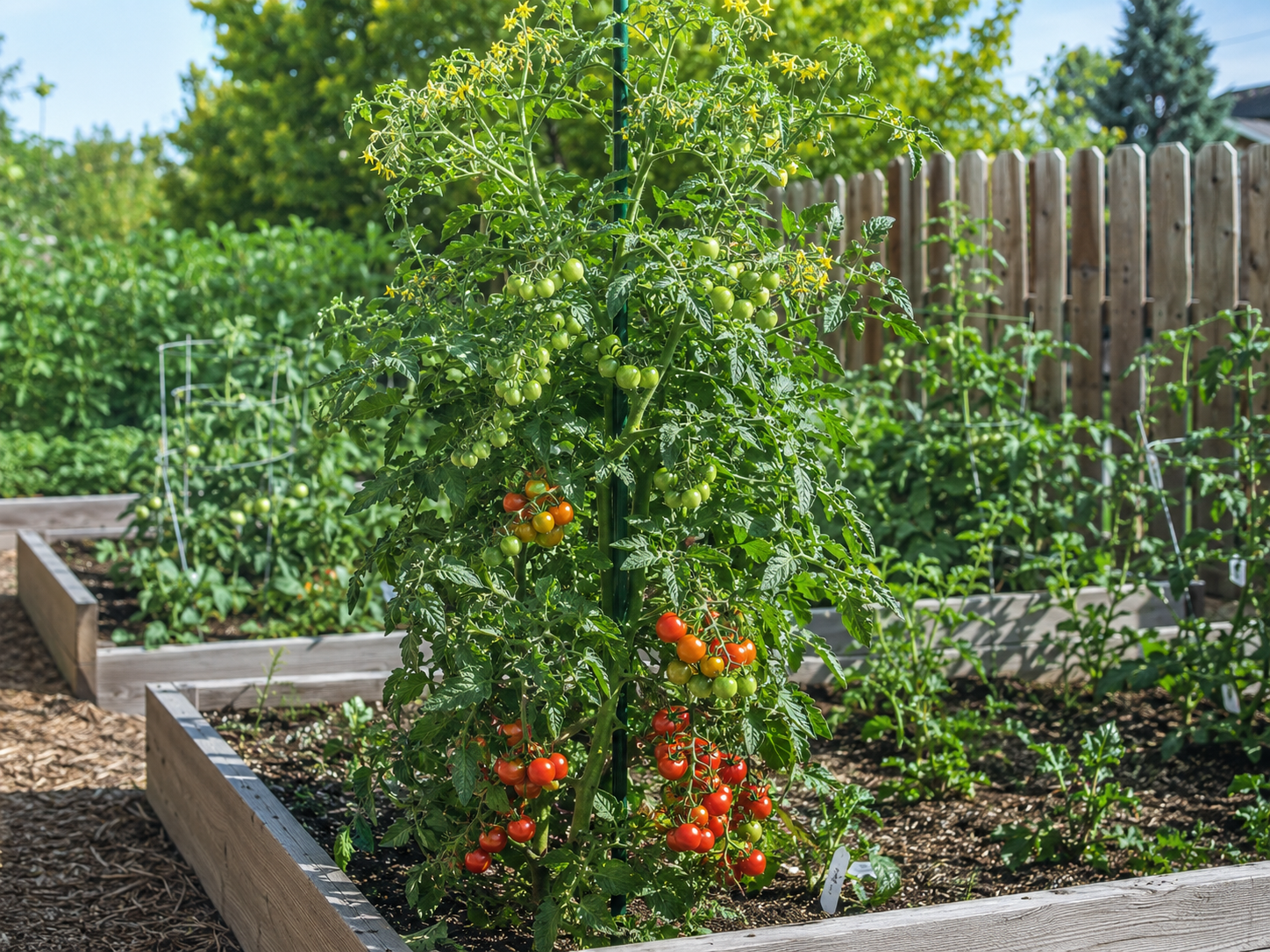
Blossom drop from heat is a proline gap. Proline is the amino acid that protects plant cells against thermal damage. When it runs low during a heat event, pollen viability collapses and flowers drop. Weekly amino acid foliar replenishes proline before that threshold is reached, not after the blossoms are already on the ground.
Fruit stopping after two clusters is a potassium and calcium delivery gap. The plant uses residual vegetative-stage stores for the first clusters. The wood ash drench and the calcium nitrate foliar replenish both before the upper clusters form.
Late blight by the time you see it is already 7 to 10 days old. The fermented milk and iodine-milk in the rotation are preventive. Applied on schedule, they compete with and suppress disease spores before infection establishes.
The rotation also solves the compatibility problem. Copper fungicide applied one day kills the Bacillus you add two days later. Neem oil in the same tank as Beauveria degrades the Beauveria before it can work. This schedule keeps incompatible inputs on separate days so each one is actually alive and functional when it hits the plant.
Is This Safe for Edible Crops?
Yes. Every input in this rotation is food-safe.
Fermented milk, molasses, wood ash, and amino acid concentrate leave no residue that affects flavor or safety. Beauveria bassiana is approved for edible crops by the US EPA and OMRI-listed for organic production. Calcium nitrate is used in hydroponic food production worldwide. Iodine-milk spray uses trace iodine at doses far below a wound antiseptic rinse. Neem oil applied to foliage and not to developing fruit at standard dilution is considered food-safe for most vegetable crops.
Wash tomatoes before eating as you normally would. No additional precautions are needed.
What NOT to Do
Don't apply copper fungicide and Trichoderma or Bacillus in the same week. Copper kills beneficial biology along with pathogens. Wait 48 hours in either direction between copper and any biological product.
Don't mix neem oil with Beauveria bassiana. Neem degrades Beauveria before it can infect insects. They alternate by week, not by day.
Don't continue nitrogen inputs at the flowering stage. Fermented weed tea, fish emulsion, and high-nitrogen organic feeds stop at the first flower. Nitrogen delays fruit set and increases blossom drop.
Don't apply foliar sprays in direct sun or midday heat. Wet leaves under high heat burn. All foliar applications go on in the evening, without exception.
Best for Which Crops
This rotation applies directly to all determinate and indeterminate tomato types: beefsteak, cherry, paste, heirloom, and hybrid varieties.
Peppers: same rotation. Peppers are equally sensitive to blossom drop in heat. The amino acid foliar schedule matters even more for peppers in zone 6 and above because their heat threshold for pollen damage is lower than tomatoes.
Eggplant: same rotation. Reduce the wood ash drench to every 10 to 14 days. Eggplant is more sensitive to excess potassium than tomatoes.
Tomatillos: same rotation. No adjustments needed. Tomatillos are more disease-resistant than tomatoes but still benefit from the full biological schedule.
When Problems Keep Coming Back
Blossom drop despite consistent amino acid foliar during heat usually means nighttime temperatures are also elevated. If night temperatures stay above 70°F (21°C) for more than three days, the rotation slows the problem but cannot eliminate it. Look at variety selection for next season: heat-tolerant varieties like Solar Fire, Heatmaster, and Juliet cherry handle the same conditions with significantly higher fruit set.
Fruit stopping after two clusters despite weekly wood ash and calcium usually points to inconsistent watering. Potassium and calcium reach fruit cells through the water stream. If the plant cycles between dry and saturated, the delivery breaks down. Mulch heavily around the base and set a fixed watering interval, not a feel-the-soil approach.
Late blight appearing every season despite the iodine-milk rotation means the primary spore source is nearby. Look for volunteer tomato or potato plants in the area, or a neighboring garden that is not managing late blight. No foliar rotation prevents late blight when the inoculum load is extremely high. Choose blight-tolerant varieties for zone 5 and zone 6 gardens where pressure is consistent.
FAQ
Why do tomato flowers fall off during heat?
Tomato flowers drop when pollen becomes non-viable. That happens when day temperatures exceed 85 to 90°F (29 to 32°C) and night temperatures stay above 70°F (21°C). The plant stops setting fruit under those conditions regardless of nutrition. Proline, an amino acid, is the primary compound that protects pollen cells from heat damage. Weekly amino acid foliar supplementation maintains proline levels in bud tissue before and during heat events. For the full breakdown of blossom drop causes including cold snap triggers and variety thresholds, see why tomato flowers fall off.
Why does fruit set on the first two clusters and then stop?
The plant draws on potassium and calcium stores from the vegetative stage to fuel the first clusters. Once those stores run short, fruit set stops on higher clusters. The wood ash drench and calcium nitrate foliar in the rotation replenish both. If fruit set still stops after two weeks of the full rotation, apply one extra calcium nitrate foliar: 1 tablespoon (15 ml) per 1 gallon (3.8 L) in the evening. Do not repeat that extra application more than once.
Can I use a single balanced organic fertilizer instead of rotating inputs?
A balanced organic fertilizer covers the NPK baseline but misses four things this rotation provides: amino acid stress protection for pollen, living soil biology for root zone health, preventive disease suppression on leaf surfaces, and biological pest control. Those functions require living inputs (Trichoderma, Bacillus, Beauveria) that a granular or liquid fertilizer does not contain. The rotation is not about fertilizer complexity. It is about providing the inputs that a granular feed cannot.
I missed a week of the rotation. Do I need to start over?
No. Resume at the next scheduled application. The biological rotation, Bacillus and Trichoderma alternating, is the most important thread to keep consistent. If you missed a biological drench week, apply it now regardless of where you are in the two-week cycle, then continue forward. The foliar sprays pick back up without losing ground on the schedule.
How do I know if blossom drop is from heat or from a nutrition gap?
Heat-related drop happens fast. Multiple clusters drop at once during a heat wave and the flowers look healthy right before they fall. Nutrition-related drop is slower: flowers look pale or weak before falling, and drop comes one cluster at a time over several days. Heat drop responds to amino acid increase and morning hand-pollination. Nutrition-related drop responds to calcium nitrate foliar and potassium drench.
Do tomatoes in zone 5 and zone 6 need a different rotation?
The rotation is the same, but timing shifts. In zone 5, fruiting season is shorter and late blight pressure arrives later. Run the full rotation from first flower to first frost. In zone 6, heat events are longer and more frequent. Increase amino acid foliar to every 3 days during July and August heat peaks rather than weekly. Variety choice matters more in zone 5 and zone 6 than in warmer climates: shorter-season varieties finish before the worst disease pressure arrives.
Is there an app that helps manage a tomato feeding rotation?
easyDacha gives you a day-by-day care plan for each tomato plant: feeding, protection, and biological inputs matched to the current growth stage. The garden planner app tells you what to do preventively and when, so you are not building the schedule from scratch. Try easyDacha app.